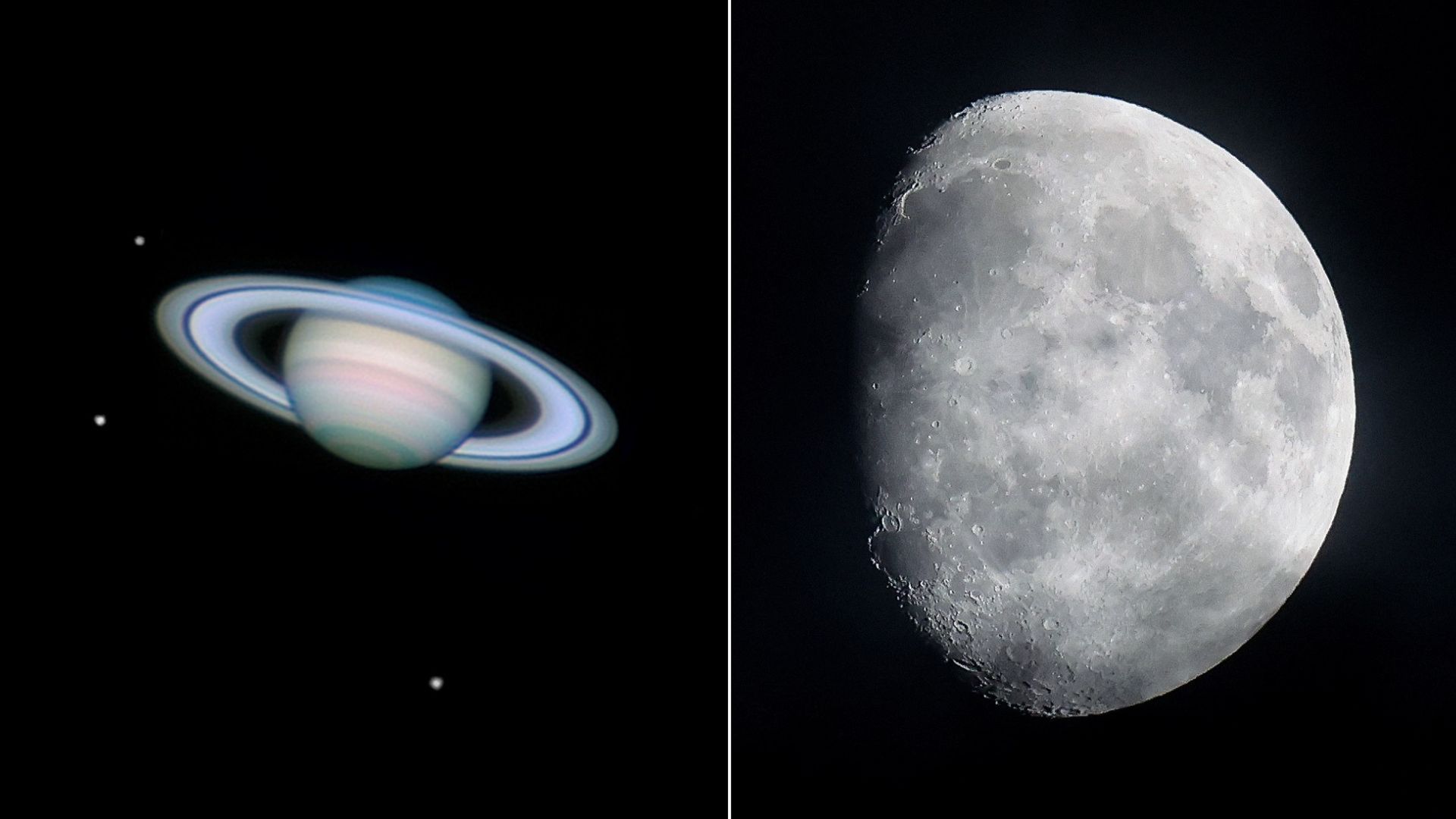
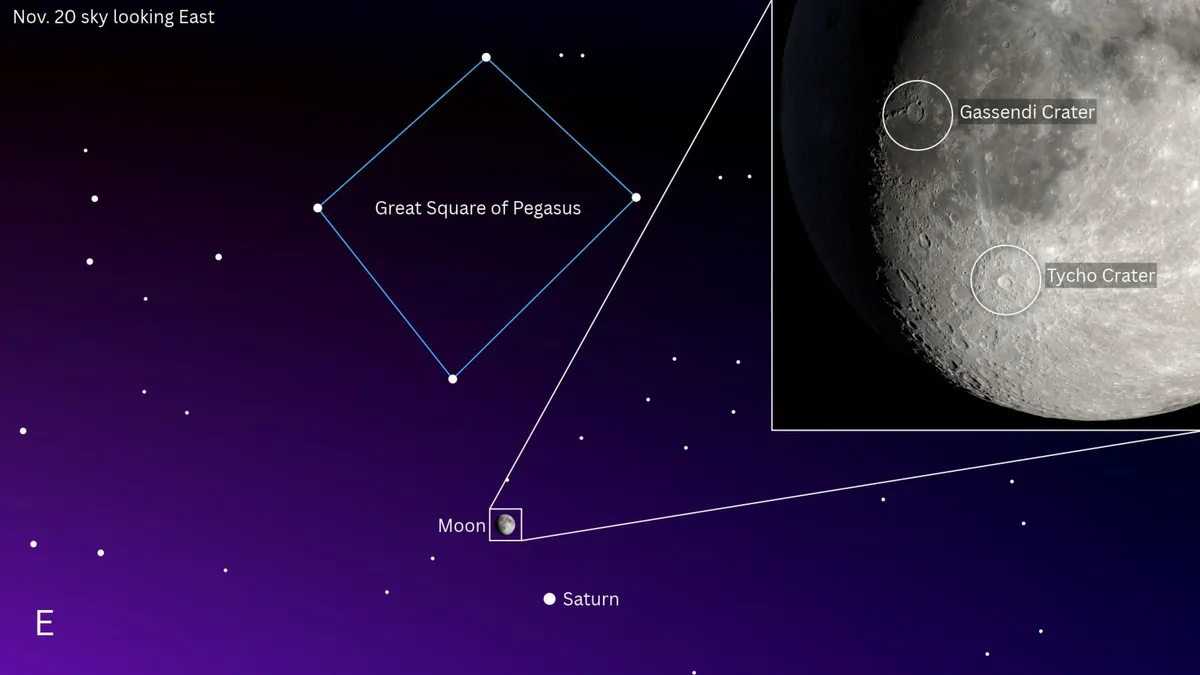
The moon shines close to the ringed giant Saturn after sunset on Nov. 20, presenting a spectacular naked-eye display as the stars of the Great Square of Pegasus twinkle nearby.
Saturn's steady light will appear a little over 5 degrees from the 82%-lit moon in the southeastern sky after the sun dips below the horizon for viewers in the U.S. — roughly the width of your three middle fingers held at arm's length.
Moonlight will hide fainter stars from view, though you should be able to spot Algenib, Markab, Alpheratz and Scheat arrayed in a diamond formation above the lunar disk, marking out the asterism of the Great Square of Pegasus in the November sky.
The moon will present a spectacular target through the eyepiece of a 6-inch telescope, as the terminator line separating night from day creeps ever closer to its western edge.…