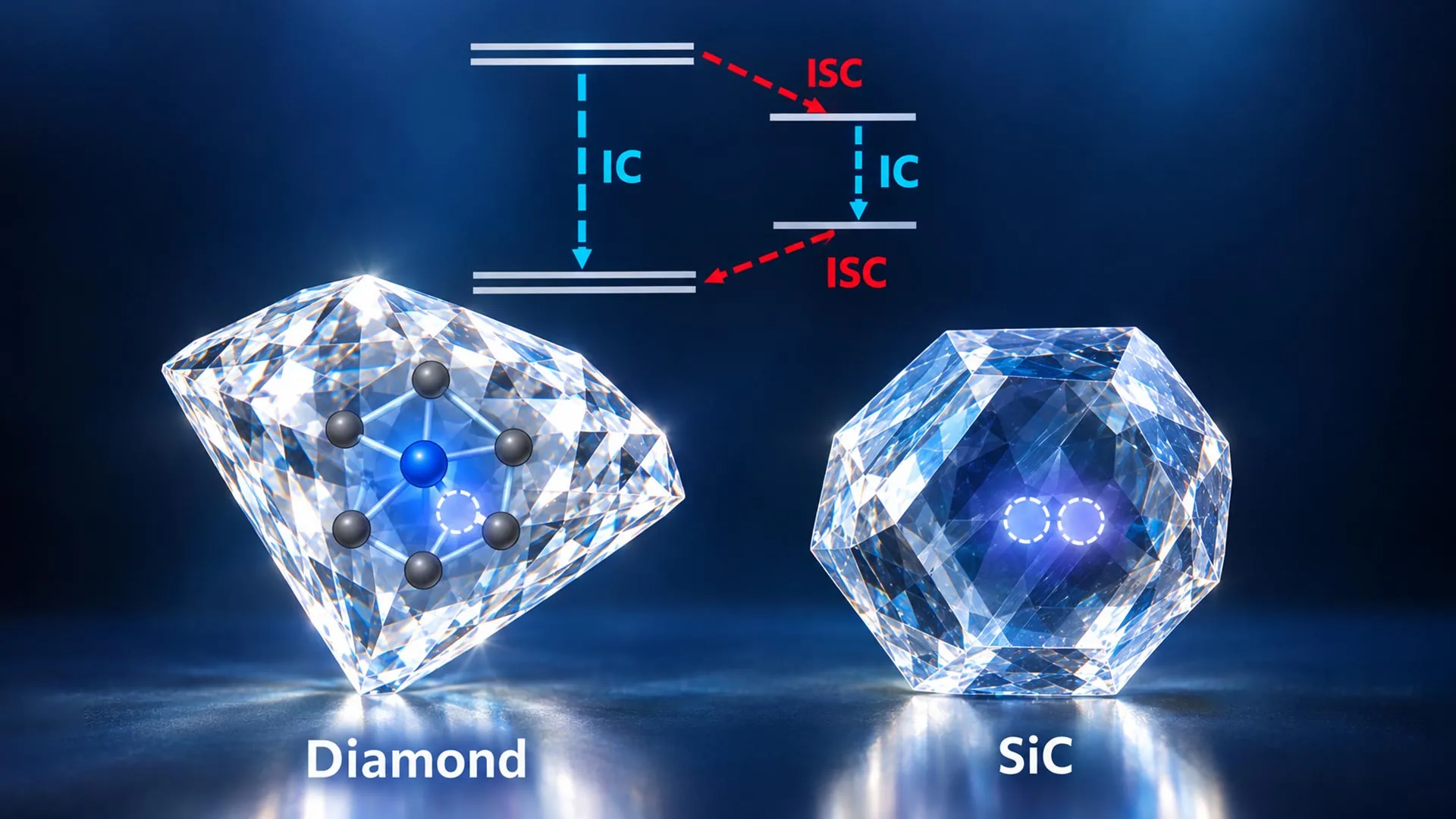
When light strikes a tiny imperfection inside a material such as diamond or silicon carbide, it can transfer energy to electrons and push them into an excited state. These imperfections, known as spin defects, could become valuable building blocks for future quantum technologies, including quantum sensors. Because they can function as stable qubits whose states can be read, scientists are eager to understand exactly how they behave. However, predicting how their energy changes over time has remained a major challenge.
Researchers at the University of Chicago Pritzker School of Molecular Engineering (UChicago PME) have now developed a computational method that provides a more complete picture of what happens when these defects interact with light. Their approach can simulate the entire optical cycle, including a particularly difficult process known as internal conversion.
The findings, published in Physical Review Letters , could help scientists design better materials for quantum technologies.…