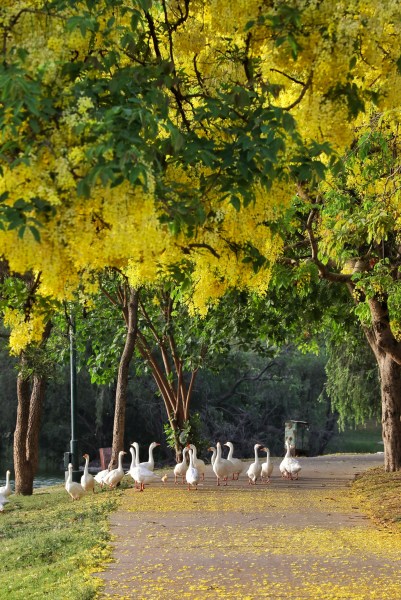
This is the time of the year when Delhi’s air has a sharp tang, a piercing heady scent that is seemingly everywhere in the evening . This is the fragrance of the Saptaparni tree, which blooms in October and announces the creeping winter to the city’s residents.
Delhi is, by nature, a monsoon forest. The rules of that forest explain why the city looks the way it does: trees here drop their leaves in response to dryness, not cold, and many flower in the dry season, usually with bare branches that make the blooms conspicuous.
The Capital has four distinct seasons and trees that are messengers of each, with foliage and flowers marking the passing of time.
Autumn: Saptaparni and Arjuna
Autumn in Delhi belongs to the Saptaparni. The exuberance of its fragrance is matched by the excess of its flowers, blooming in copious clusters across the length of the tree.
Saptaparni is something of an exception to the monsoon forest rule.…