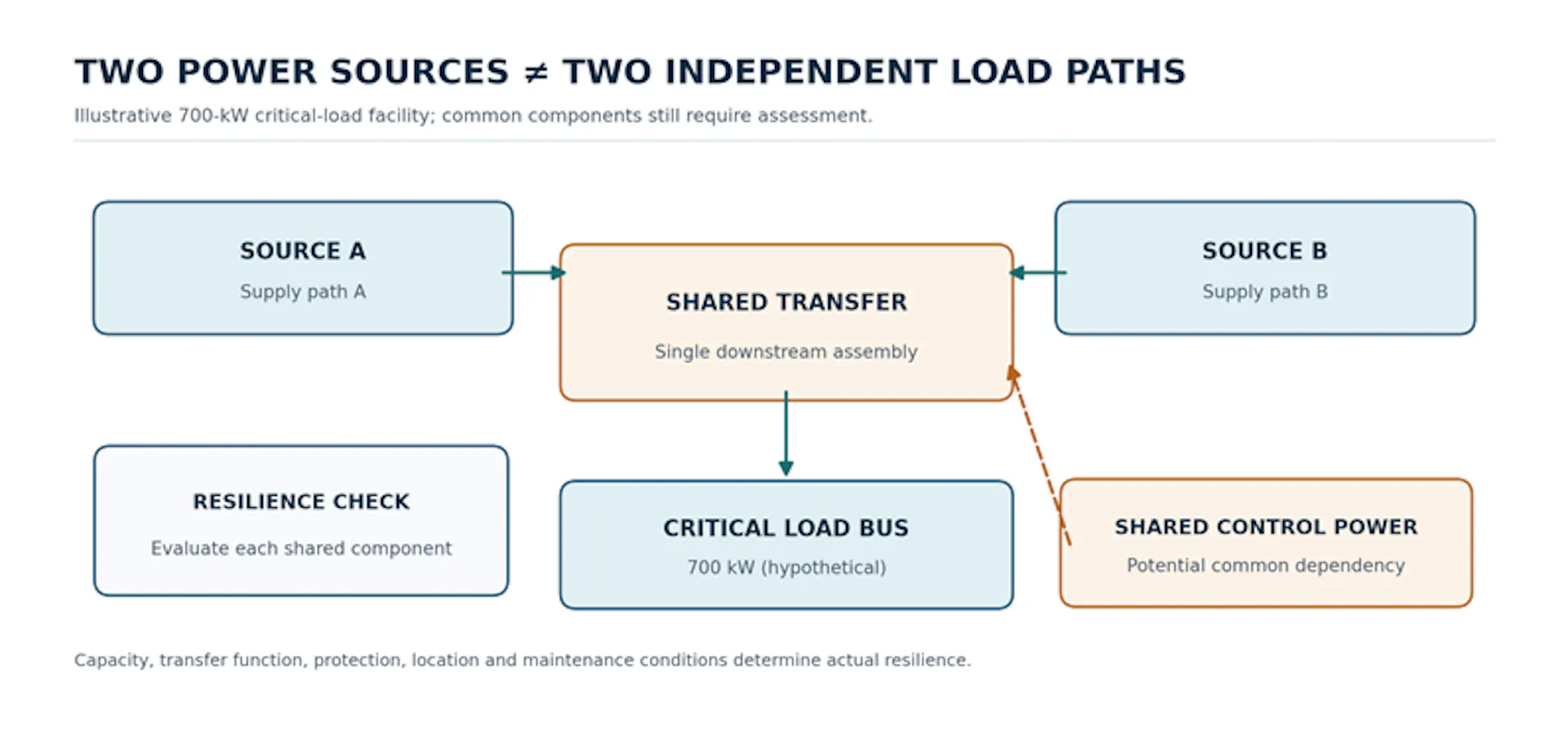
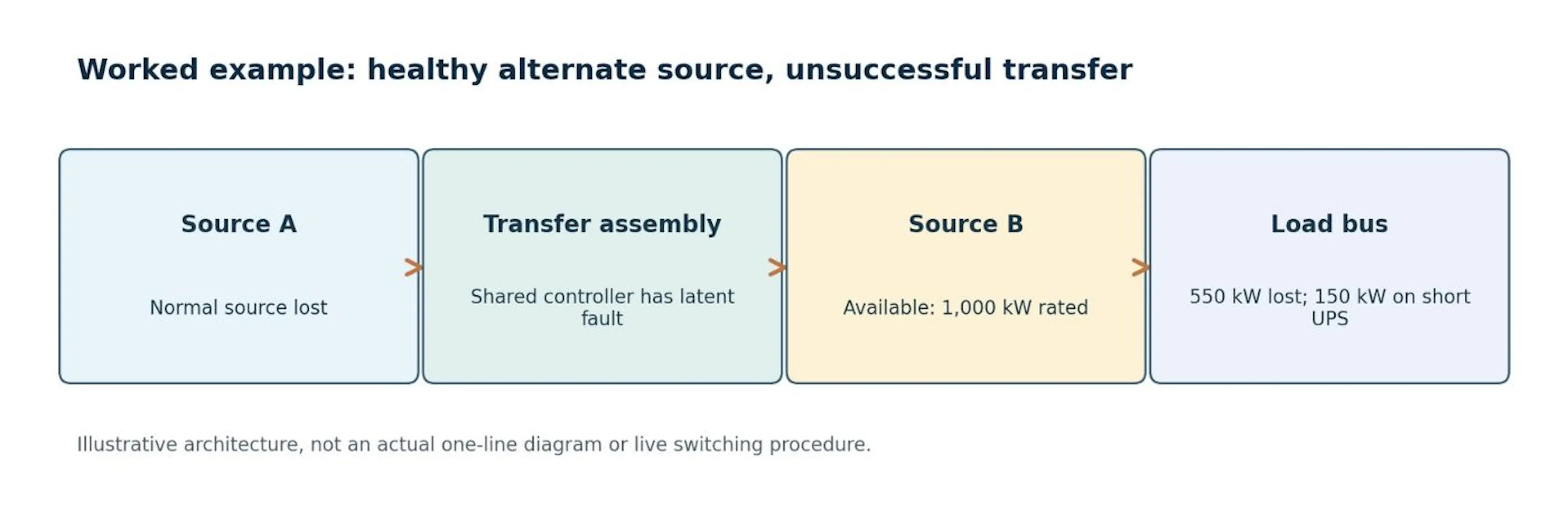
In August 2011, a data center in Dallas lost power for roughly five hours. The facility had the usual markers of resilience — multiple utility service entrances, backup generators, and UPS systems — yet a single automatic transfer switch failed, and the building went dark anyway. Restoration was slow for a telling reason: as the operator later explained, bypassing a transfer switch "is not a simple fix." The redundancy on the one-line diagram was real. It just did not sit where the failure occurred.
That is the uncomfortable pattern behind many critical-infrastructure outages. The Uptime Institute, which tracks major outages across the industry, consistently finds that power remains the single largest cause — and that the failures rarely trace to a shortage of generating capacity. They trace to the distribution, transfer, and control path between the sources and the load, and to the people operating it.…