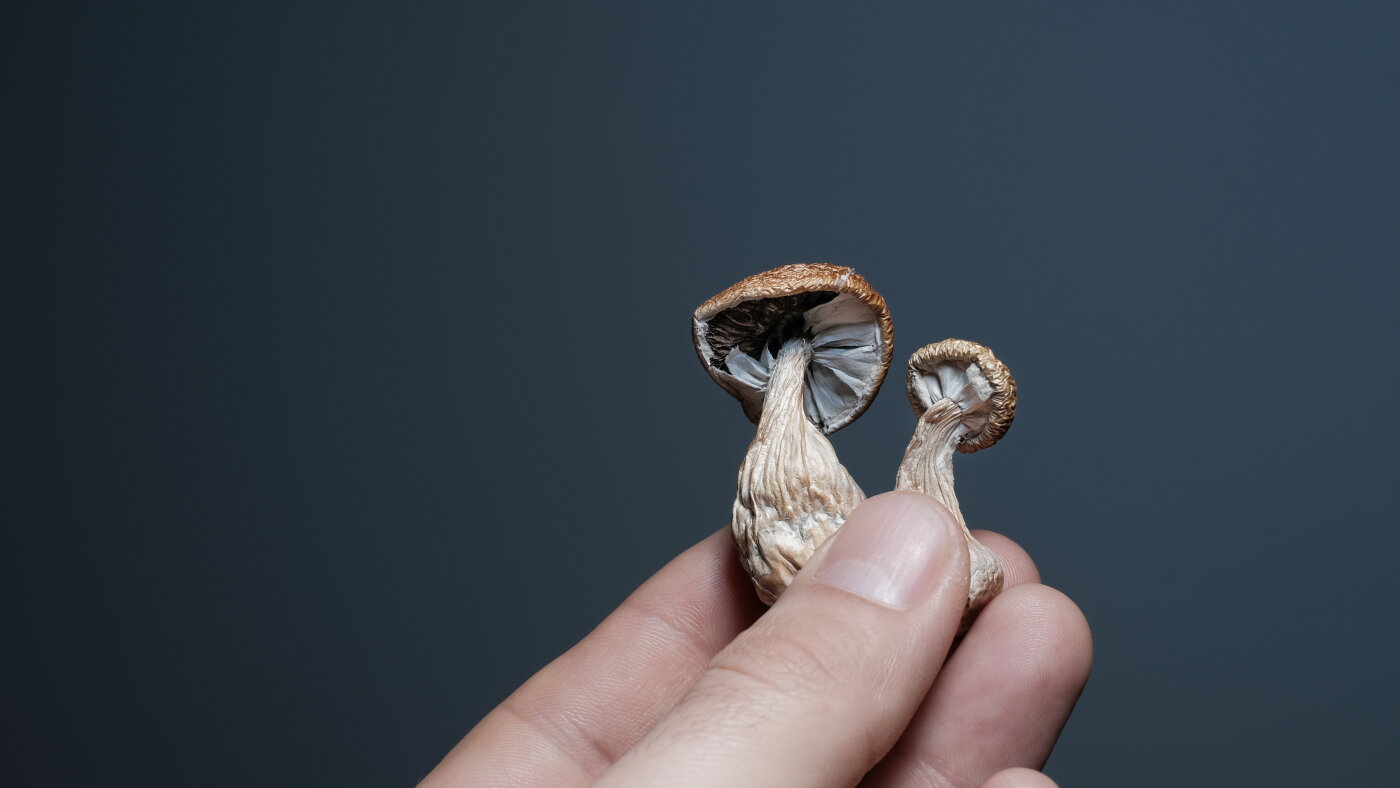
Researchers are publishing some of the first data in humans that signals psilocybin holds potential for patients with neurodegenerative diseases. Cannabis-Pic/Getty Images hide caption
Cannabis-Pic/Getty Images
Efforts to understand how classic psychedelics like psilocybin and LSD summon powerful changes in consciousness tend to focus on what's happening inside our head.
That's because these compounds bind tightly to serotonin receptors that densely populate certain structures of the brain, and a growing number of studies demonstrate they can exert long-lasting changes in mental health and well-being for people with a range of psychiatric conditions.
Increasingly researchers have started to probe how these drugs elicit other physiological changes, given that many cells and tissues beyond the brain possess those same receptors, known as 5-HT2A.
Now, new research offers some of the first evidence in humans that psychedelics may also hold potential for treating diseases characterized by inflammation and…