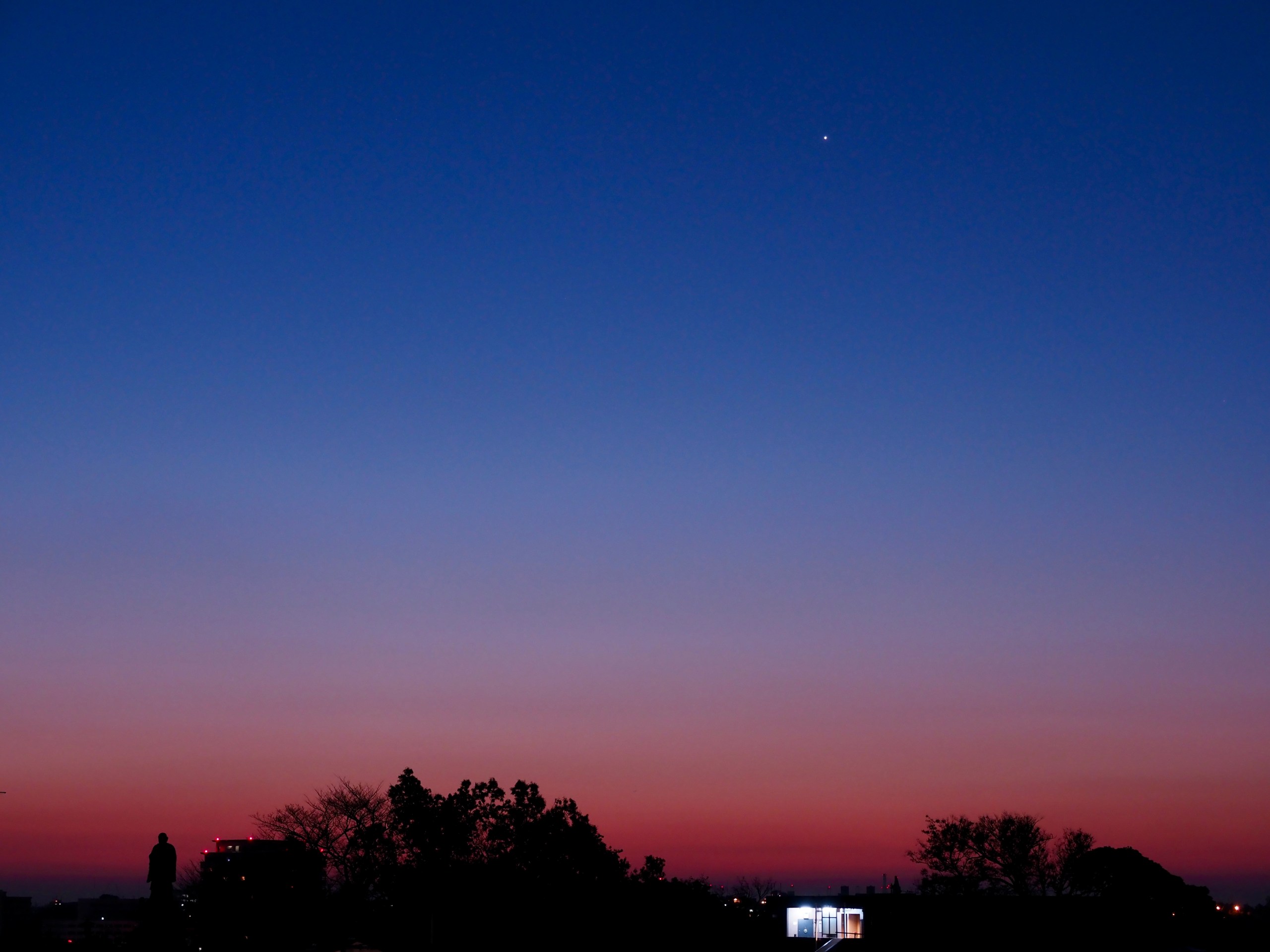
Although Venus has dominated the evening sky since last summer, its long apparition came to an end at inferior conjunction in late October. That leaves Saturn as the only naked-eye planet visible as the sky darkens this month. The ringed planet glows at magnitude 0.5 as it edges westward relative to the background stars of northwestern Cetus the Whale.
Saturn reached opposition and peak visibility in early October, but the distant world’s appearance changes so slowly that you’ll find it nearly as impressive through a telescope as it was last month. In mid-November, the planet measures 19″ across its equator while the ring system spans 43″ and tilts 6° to our line of sight. Any telescope reveals Saturn’s brightest moon, 8th-magnitude Titan, and a 10-centimeter instrument brings in Tethys, Dione, and Rhea, which all glow at 10th magnitude.
November’s morning sky offers a bevy of treats.…