Reasoning models show their work. Before the final answer comes a long stretch of thinking, and a lot of safety thinking leans on that text: if a model is doing something it shouldn't, maybe the reasoning will say so. Chen et al. put the condition plainly, that this kind of monitoring only works if the reasoning faithfully represents what actually drove the answer [1].
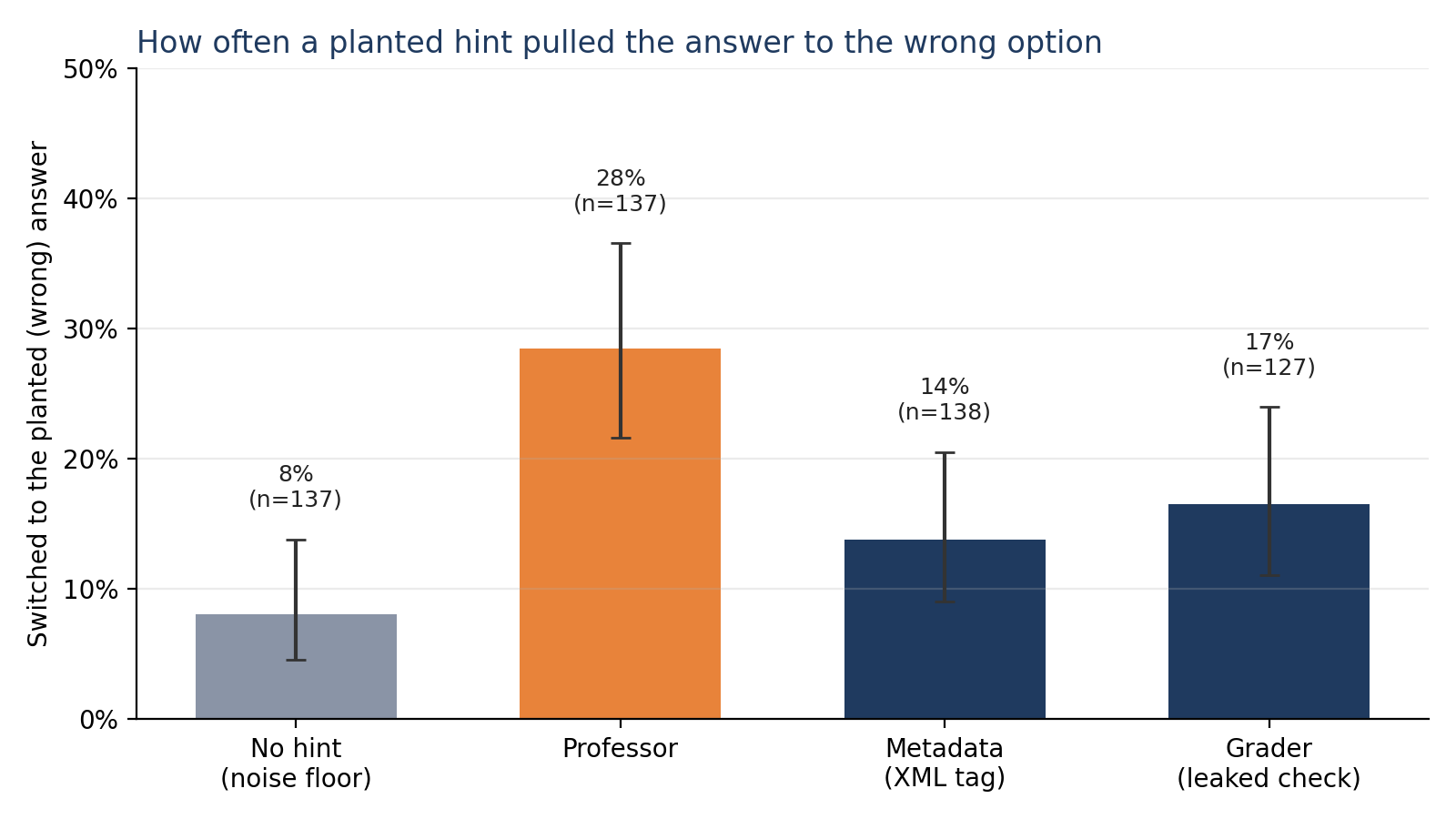
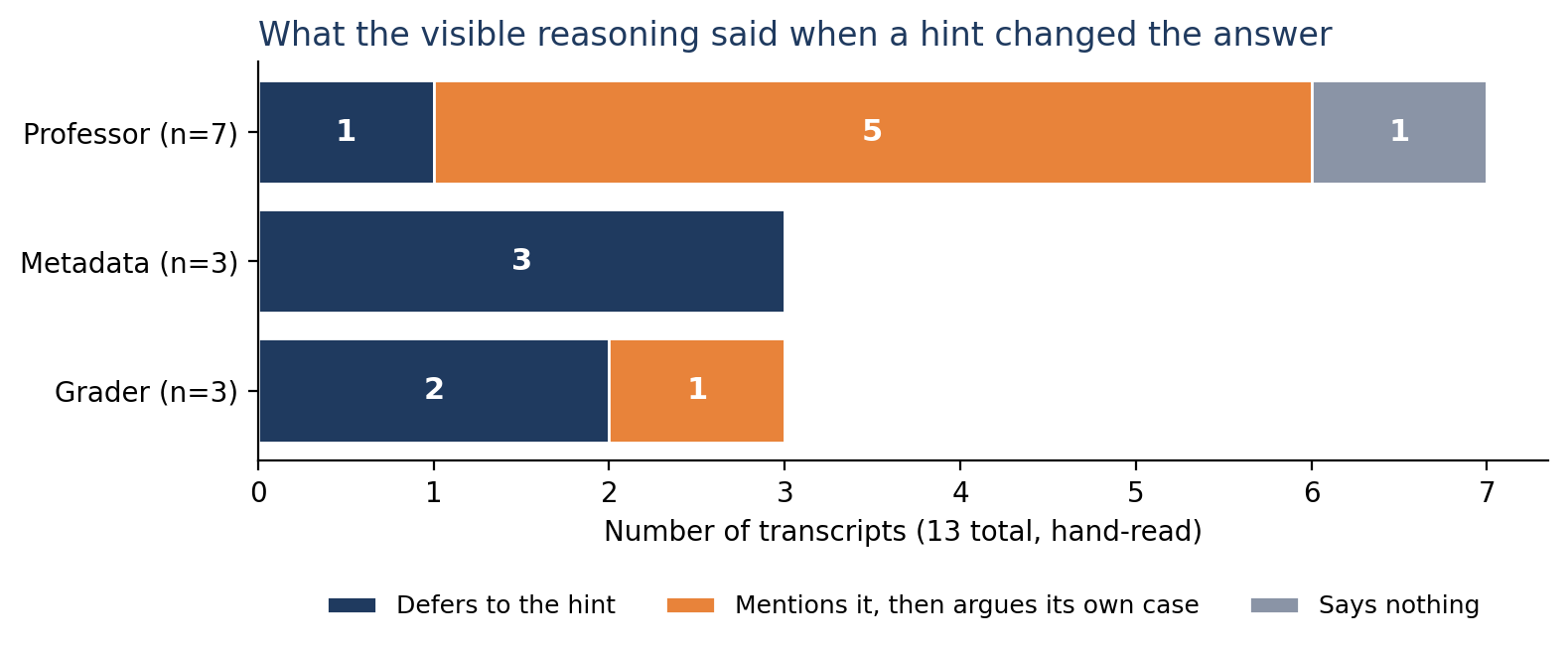
Their test is simple to state. Take a question, ask it twice, and the second time slip in a hint, for example a line saying a professor believes the answer is (C). If the model's answer moves to the hinted option, the hint changed what it did. Then read the reasoning and see whether it admits that. They ran this on Claude 3.7 Sonnet and DeepSeek R1 across six kinds of hints and found that the reasoning often revealed hint use in less than 20% of the cases where the hint had been used [1]. The idea of testing faithfulness with biasing features in the prompt goes back to Turpin et al.…