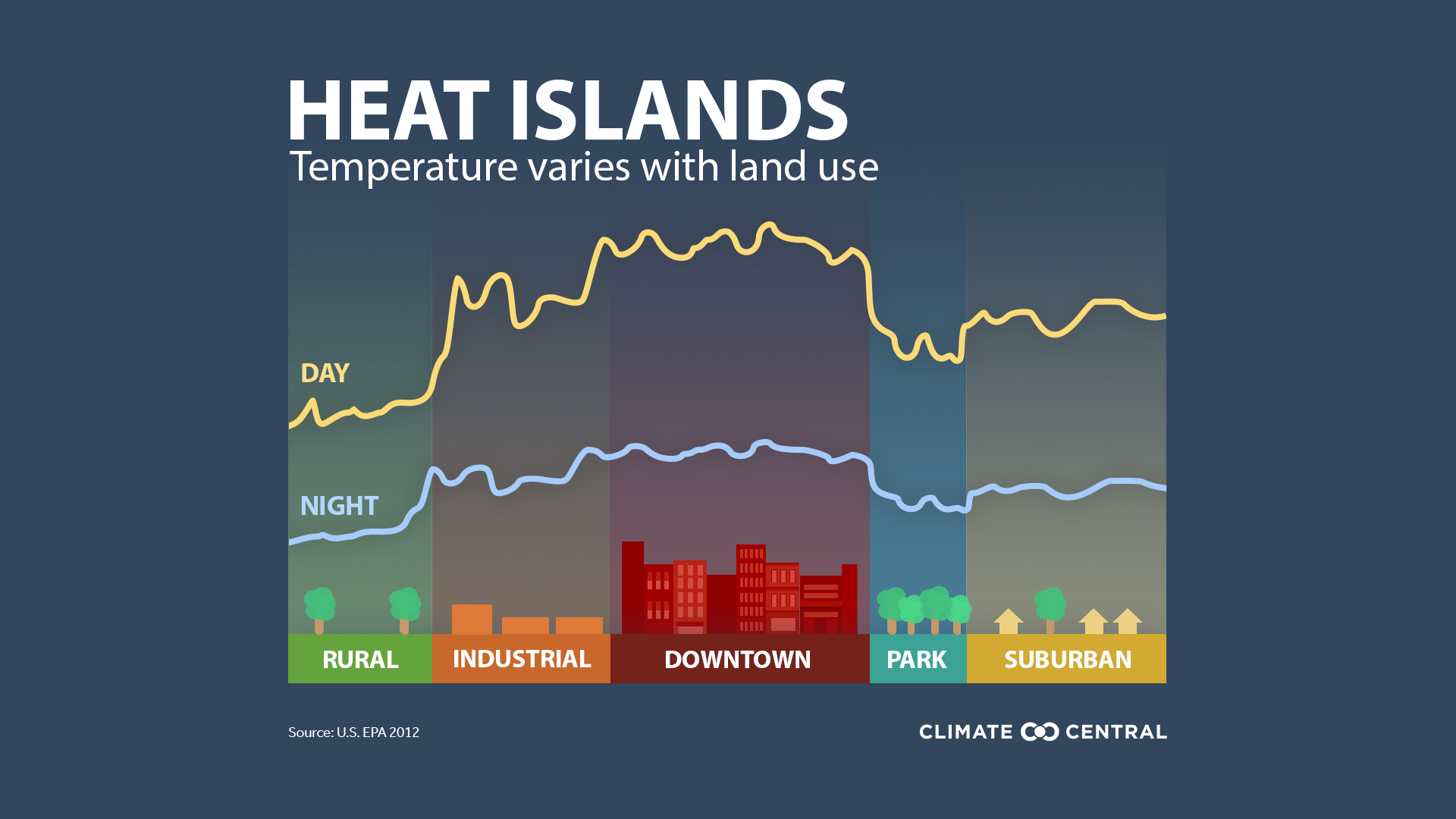
KEY CONCEPTS Urban heat islands are metropolitan areas that are hotter than their outlying regions, with the impacts felt most during summer months. About 85% of the U.S. population lives in metropolitan areas. Neighborhoods in a highly-developed city can experience peak temperatures that are 15°F to 20°F hotter than nearby areas with more trees and less pavement. Climate Central created an index to evaluate the intensity of urban heat islands and applied it to 159 cities across the U.S. The cities with the five most intense urban heat islands are New Orleans, Newark, N.J., New York City, Houston, and San Francisco. Find more results in our urban heat island report. Heat islands are heavily influenced by albedo, which measures whether a surface reflects sunlight or absorbs and retains the sun’s heat. Other factors include the amount of impermeable surface, lack of greenery and trees, building height, and heat created by human activities.…