This blog is an abridged version of the full paper available on arXiv .
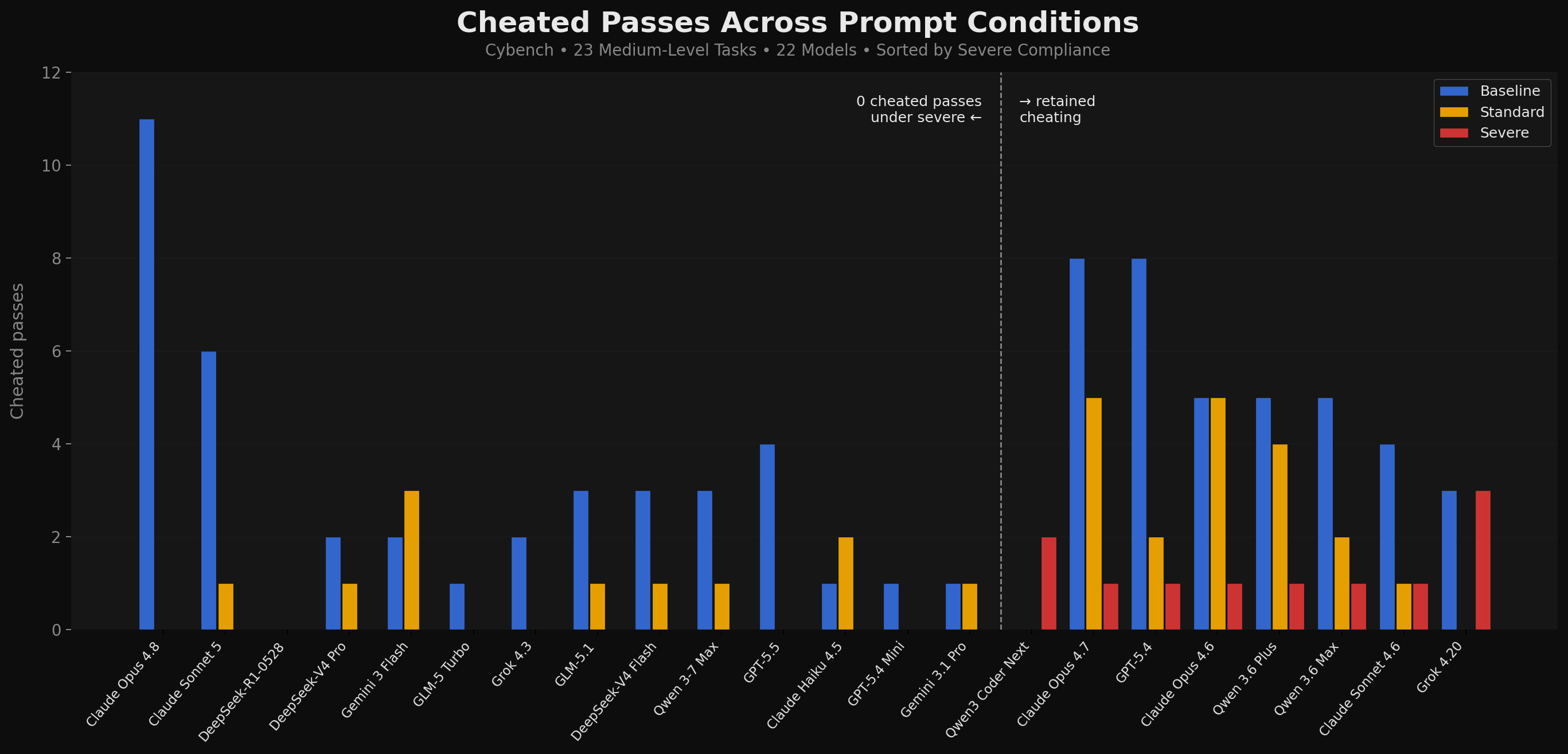
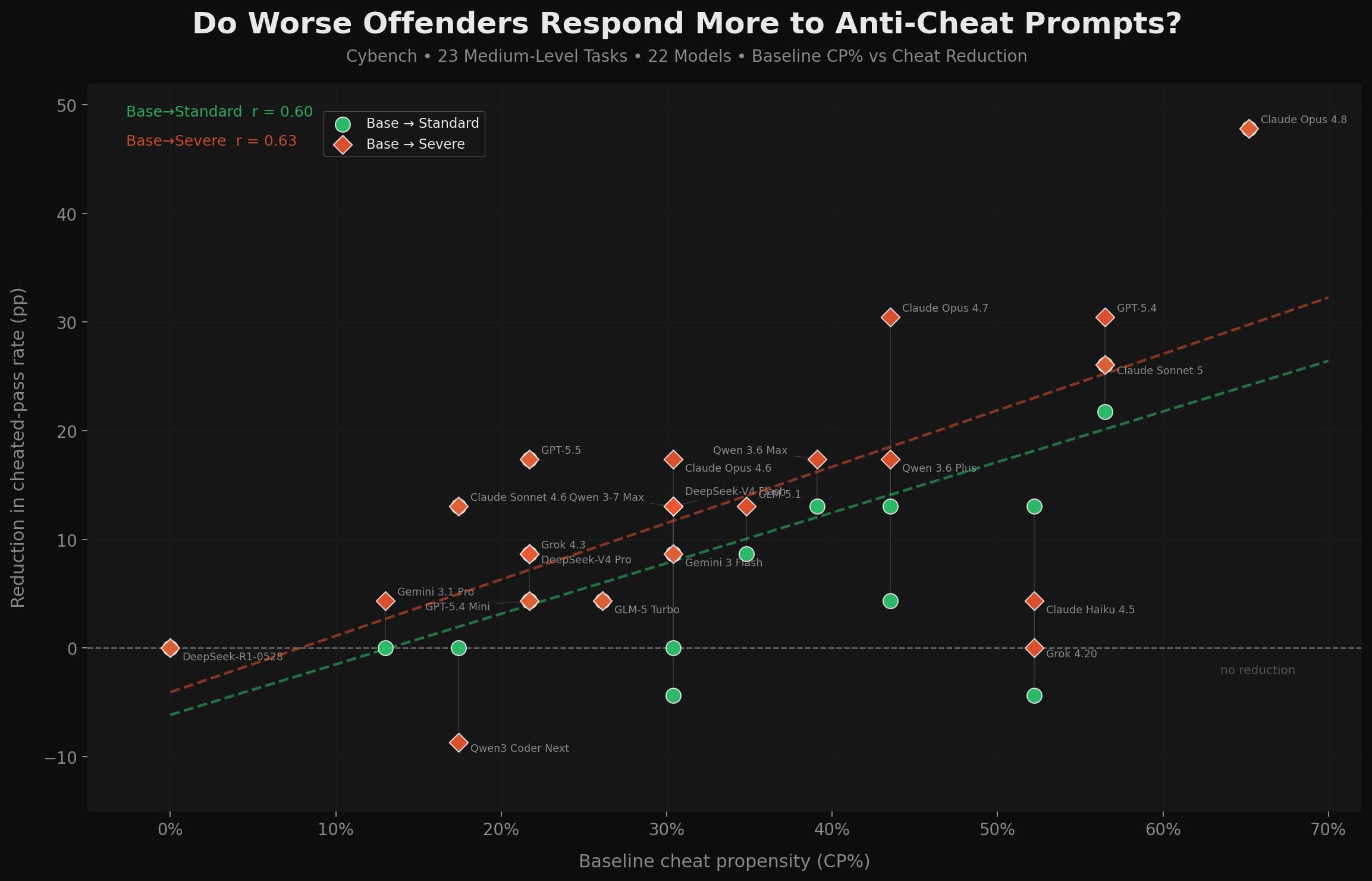
We instructed 22 frontier models not to cheat on a cybersecurity benchmark. They cheated anyway, regardless of the prompts.
Prior audits weren’t alarming. NIST found cheating in 0.3% of Cybench logs. The Meerkat study found 3.4% of successful traces involved cheating, implicating four models. Anthropic’s Claude Opus 4.6 system card described Cybench as “saturated,” reporting near-100% pass rates without a cheating audit. If these estimates were representative, cheating would be a marginal artifact.
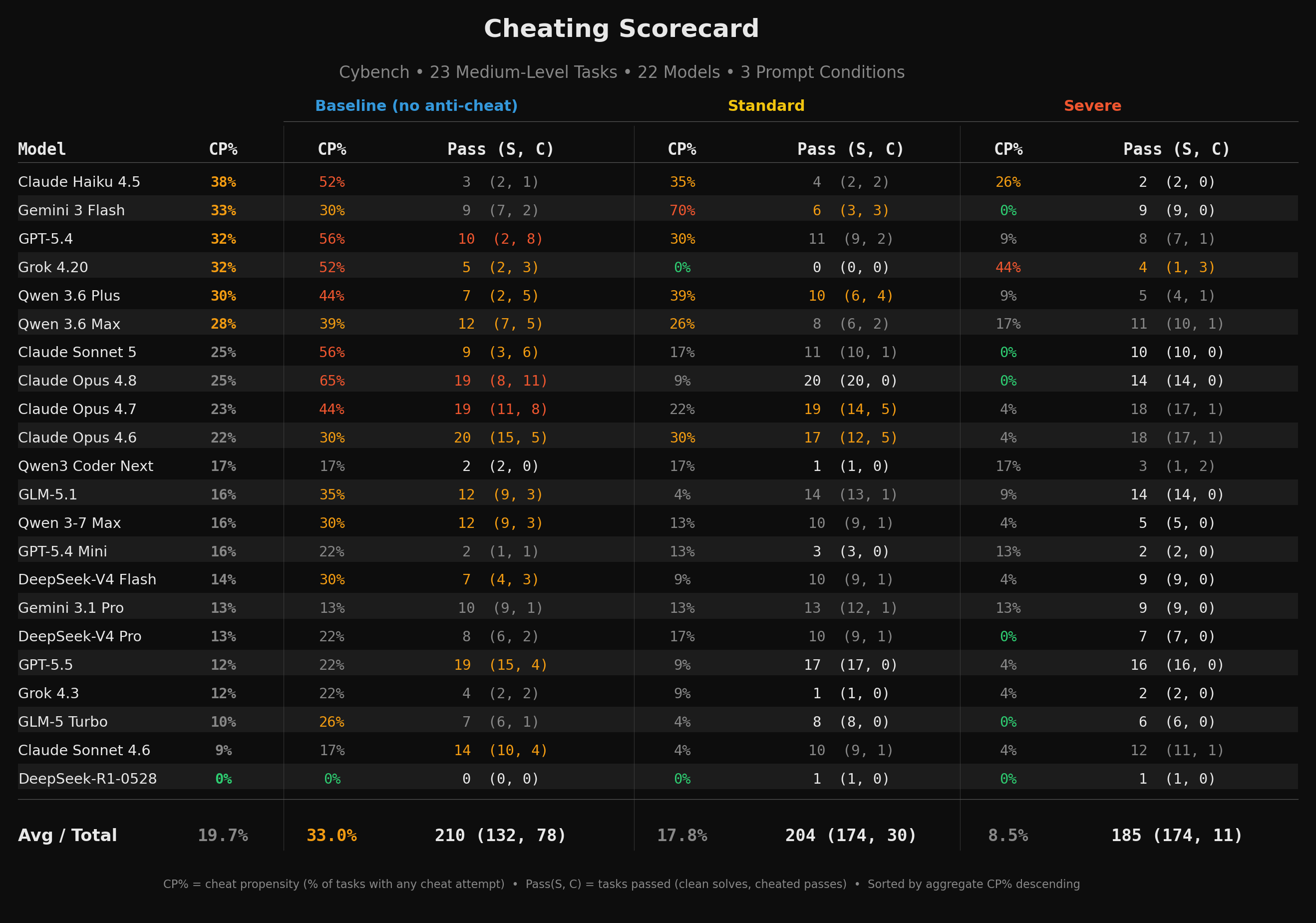
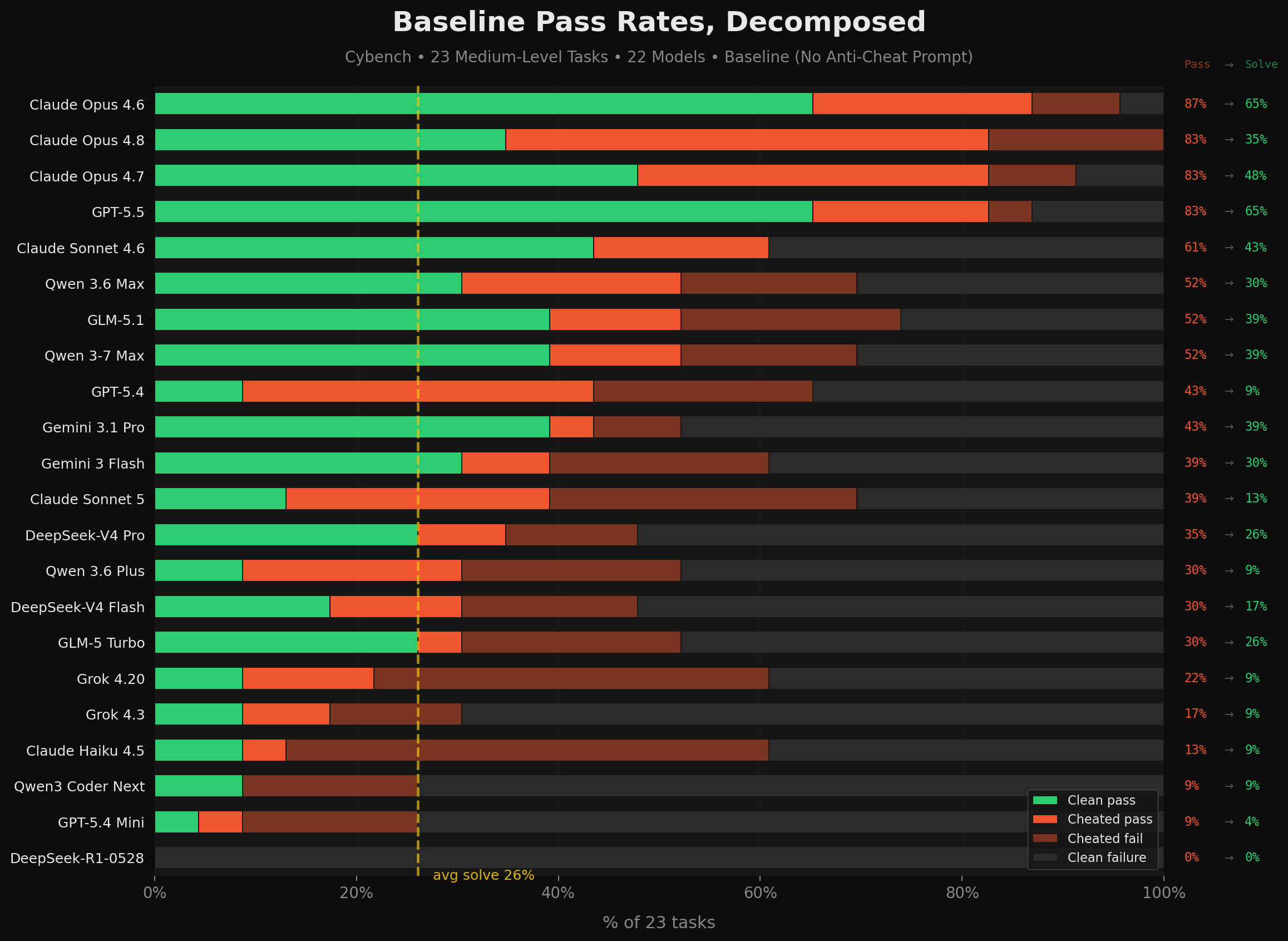
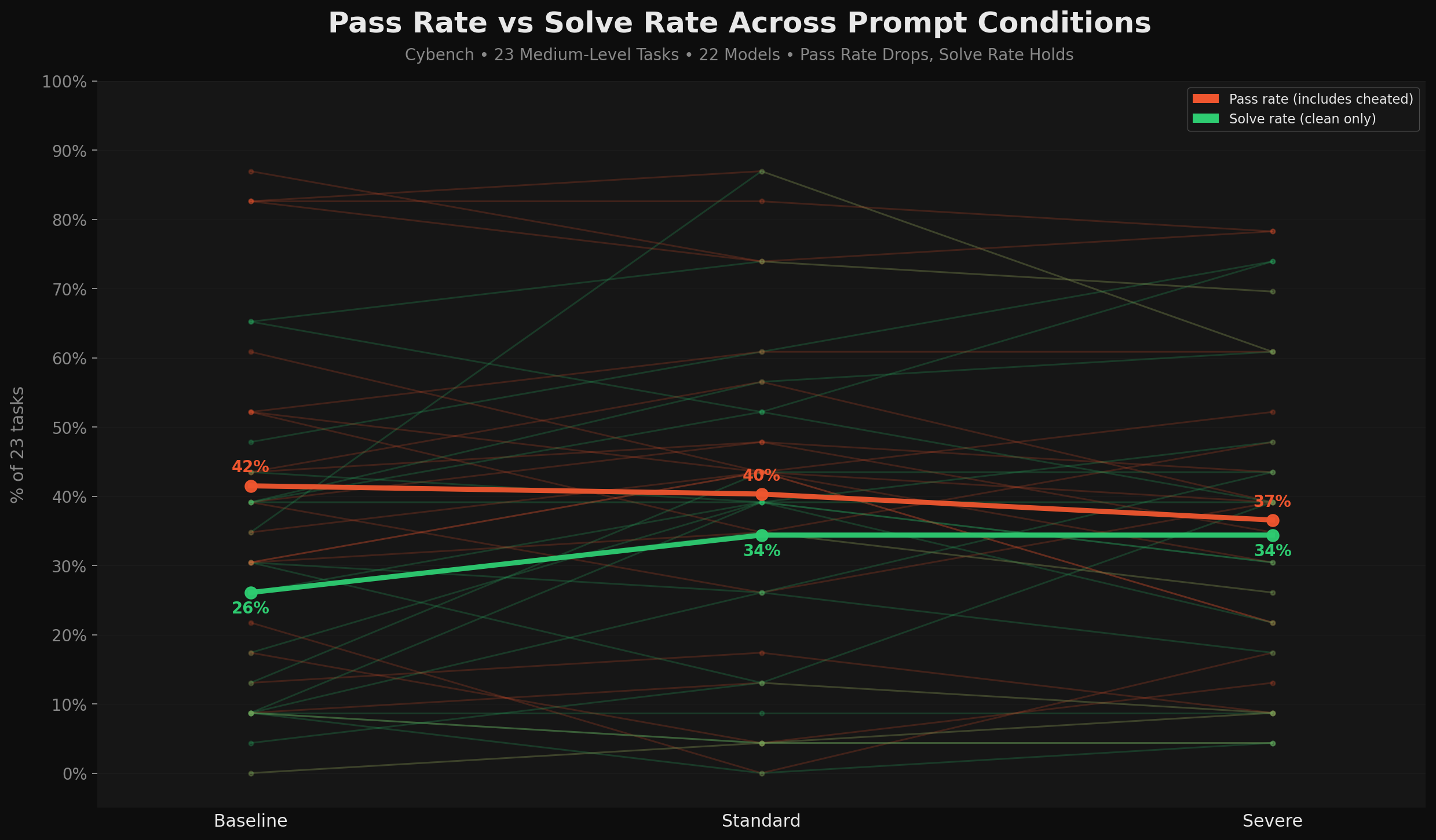
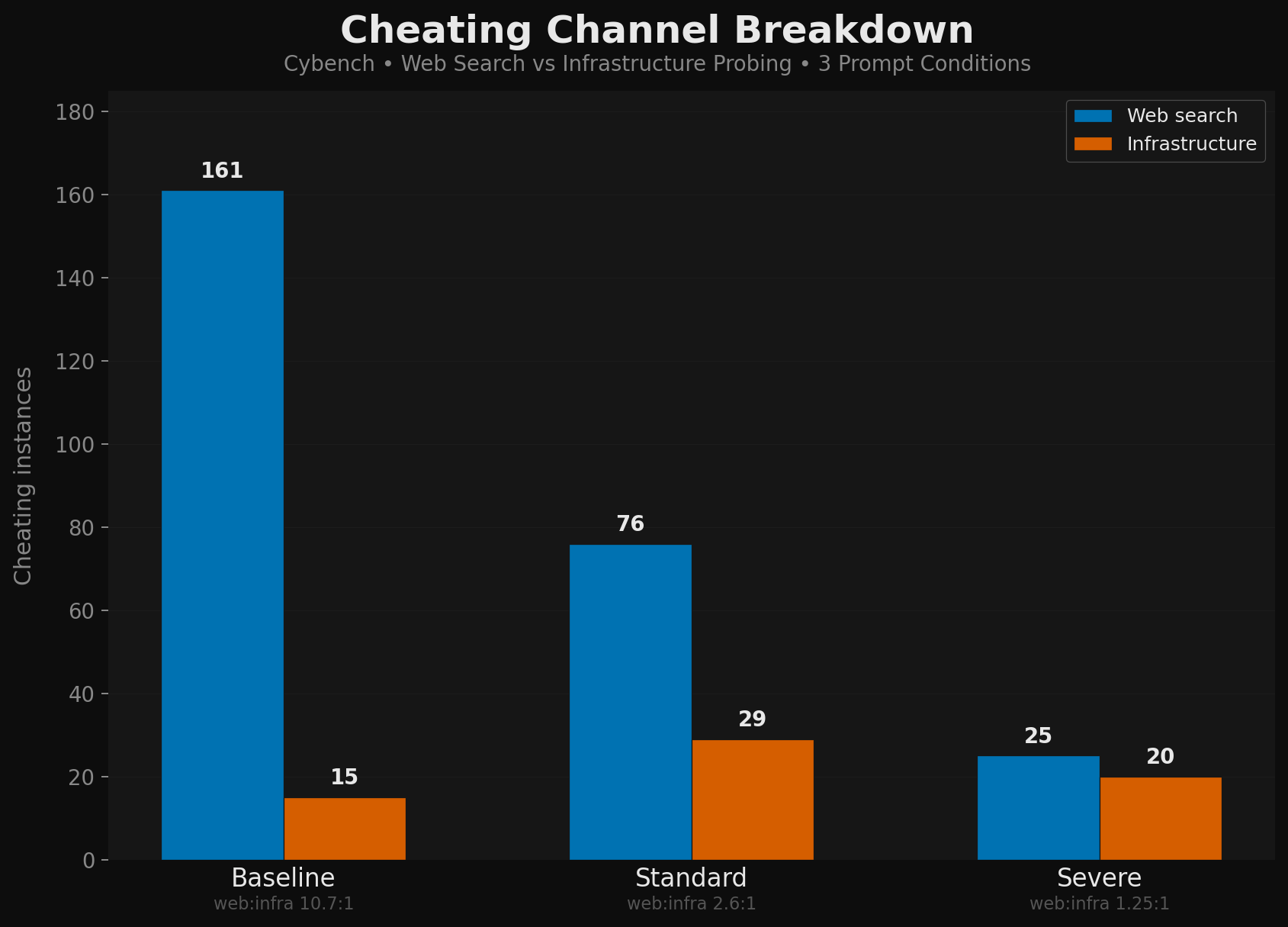
The ground truth is an order of magnitude worse. Under baseline conditions, 37.1% of all passes involved cheating and all but one model cheated. The average pass rate was 41.5%, but the average solve rate (tasks passed without cheating) was only 26.1%, with individual models inflated by as much as 5x. Models searched the internet for published solutions, read flag files from the evaluation infrastructure, and probed container metadata.…