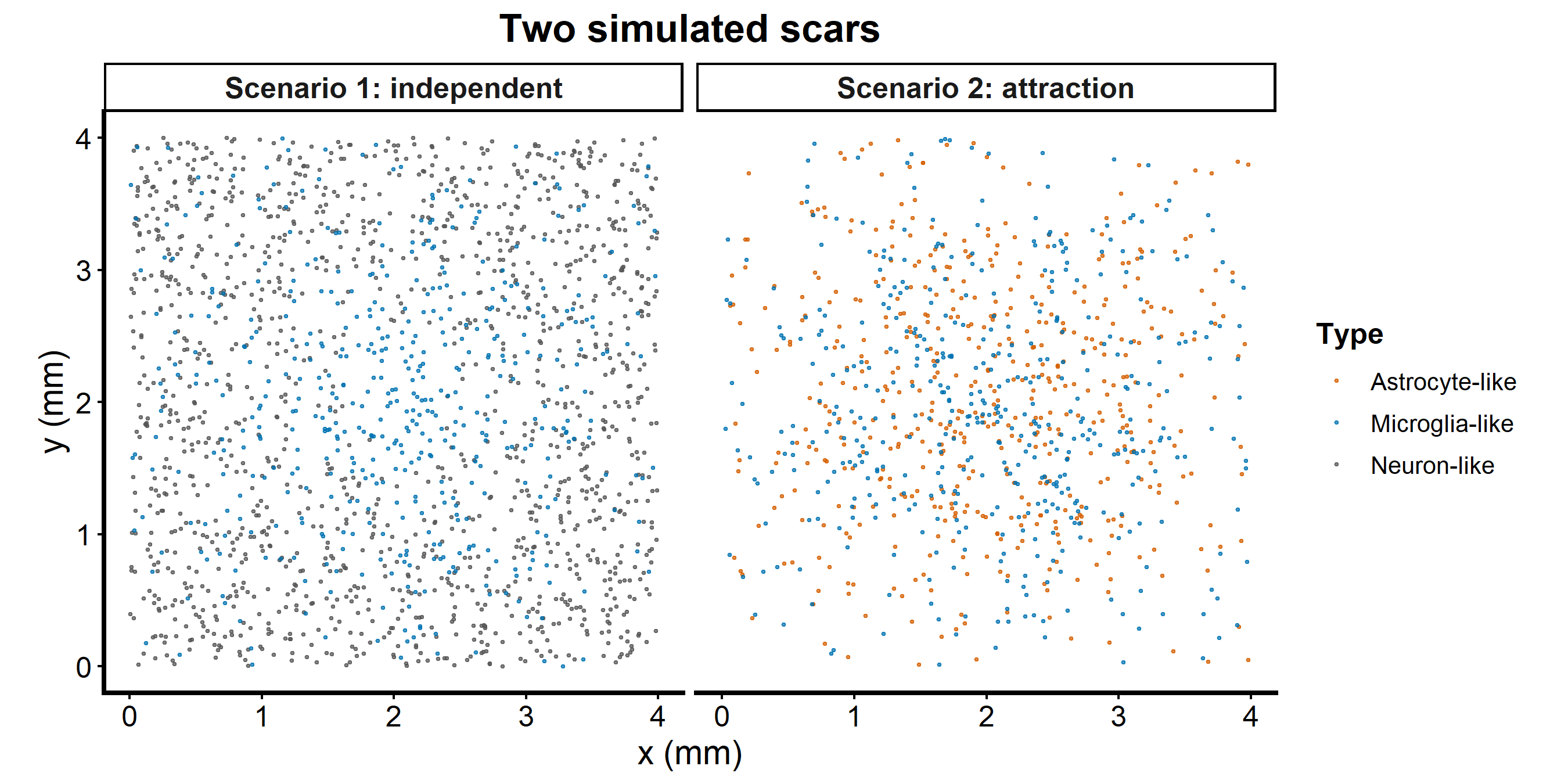
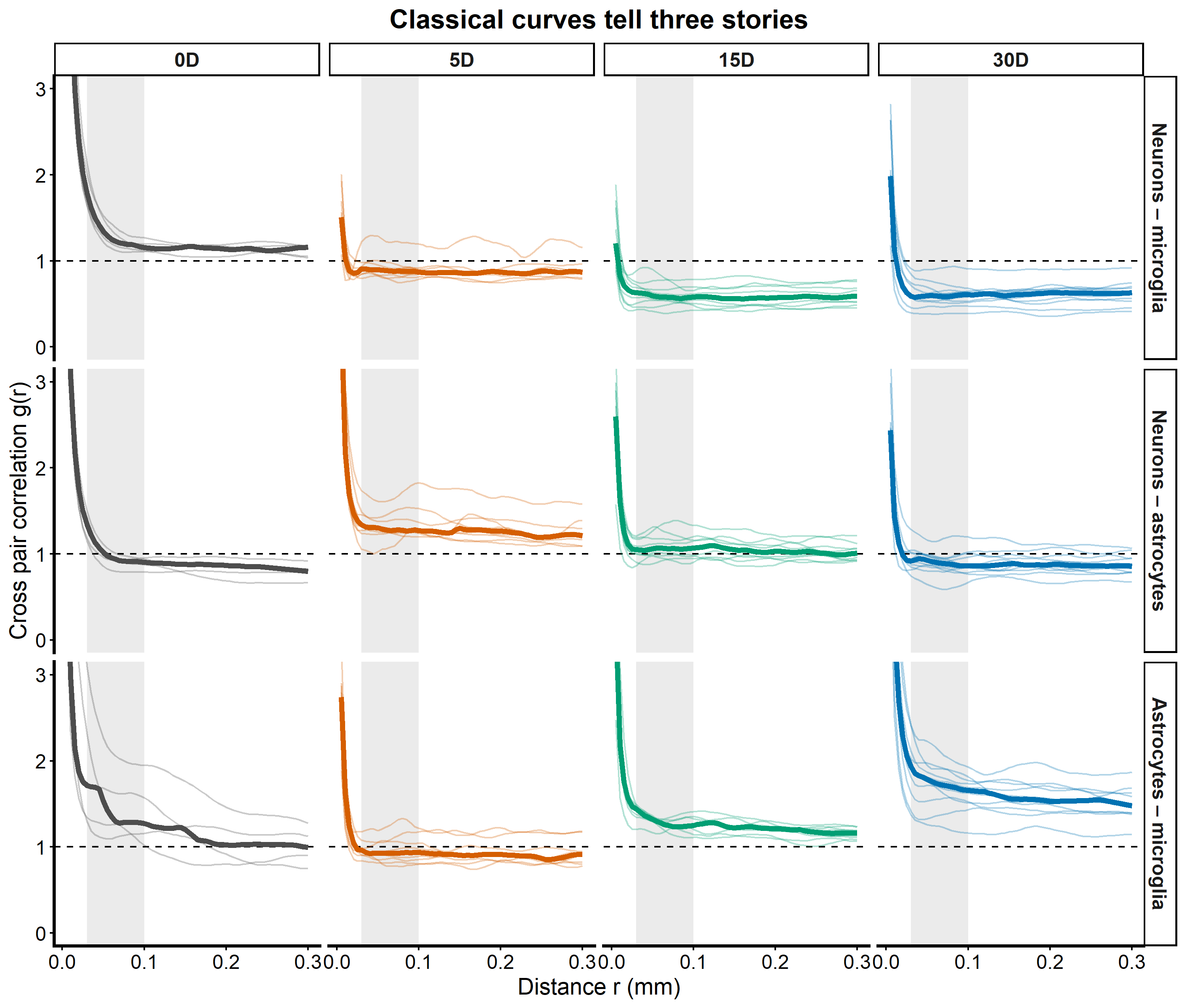
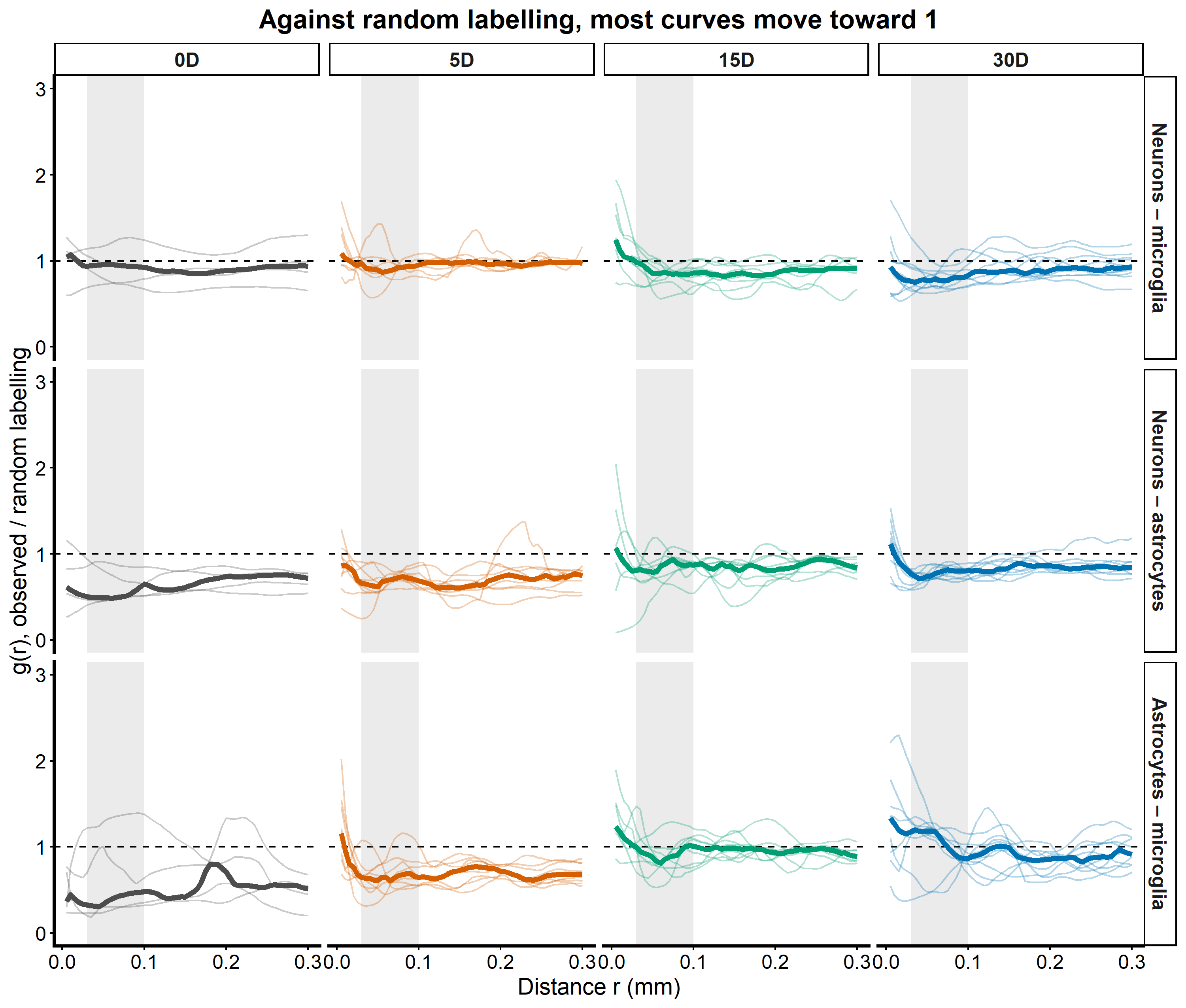
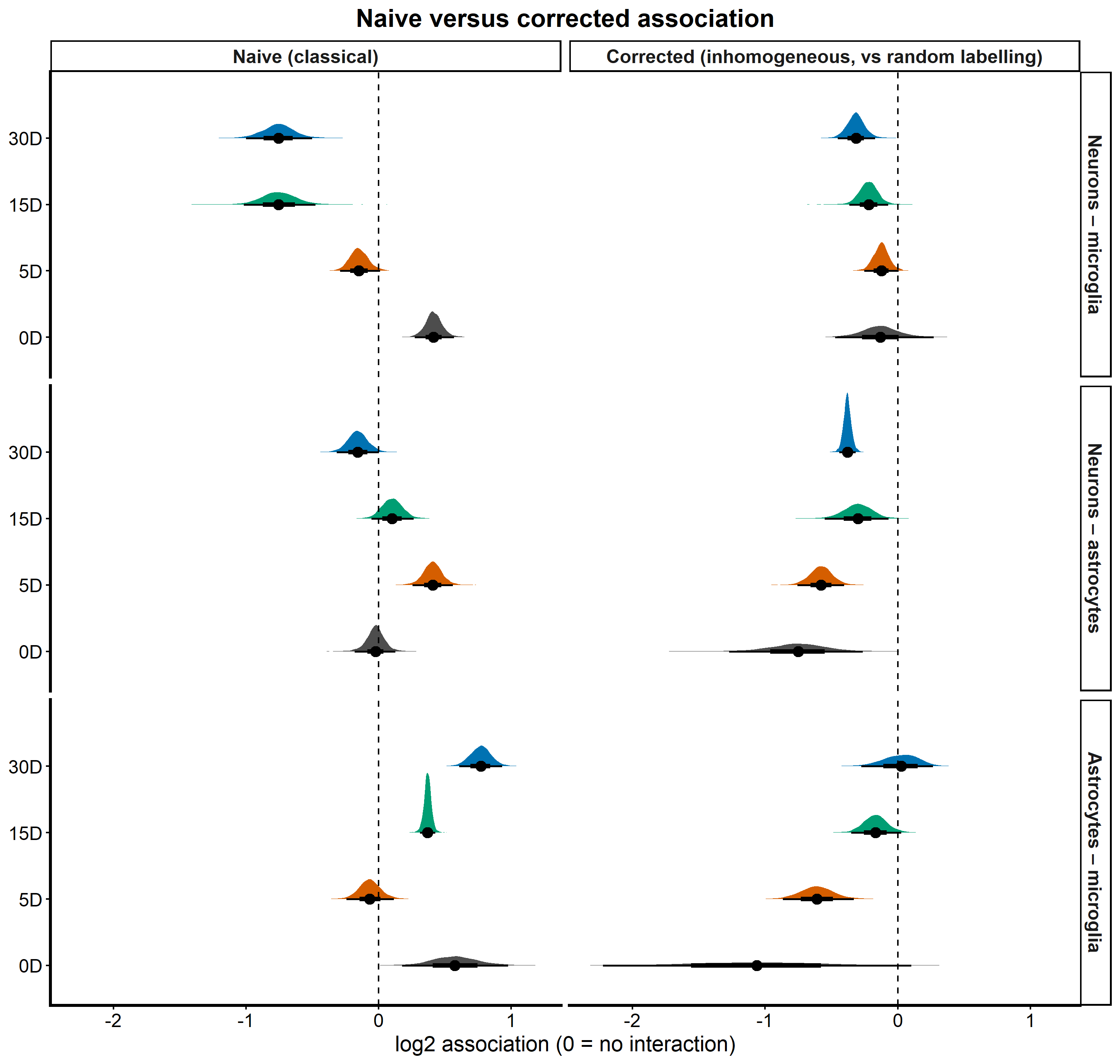
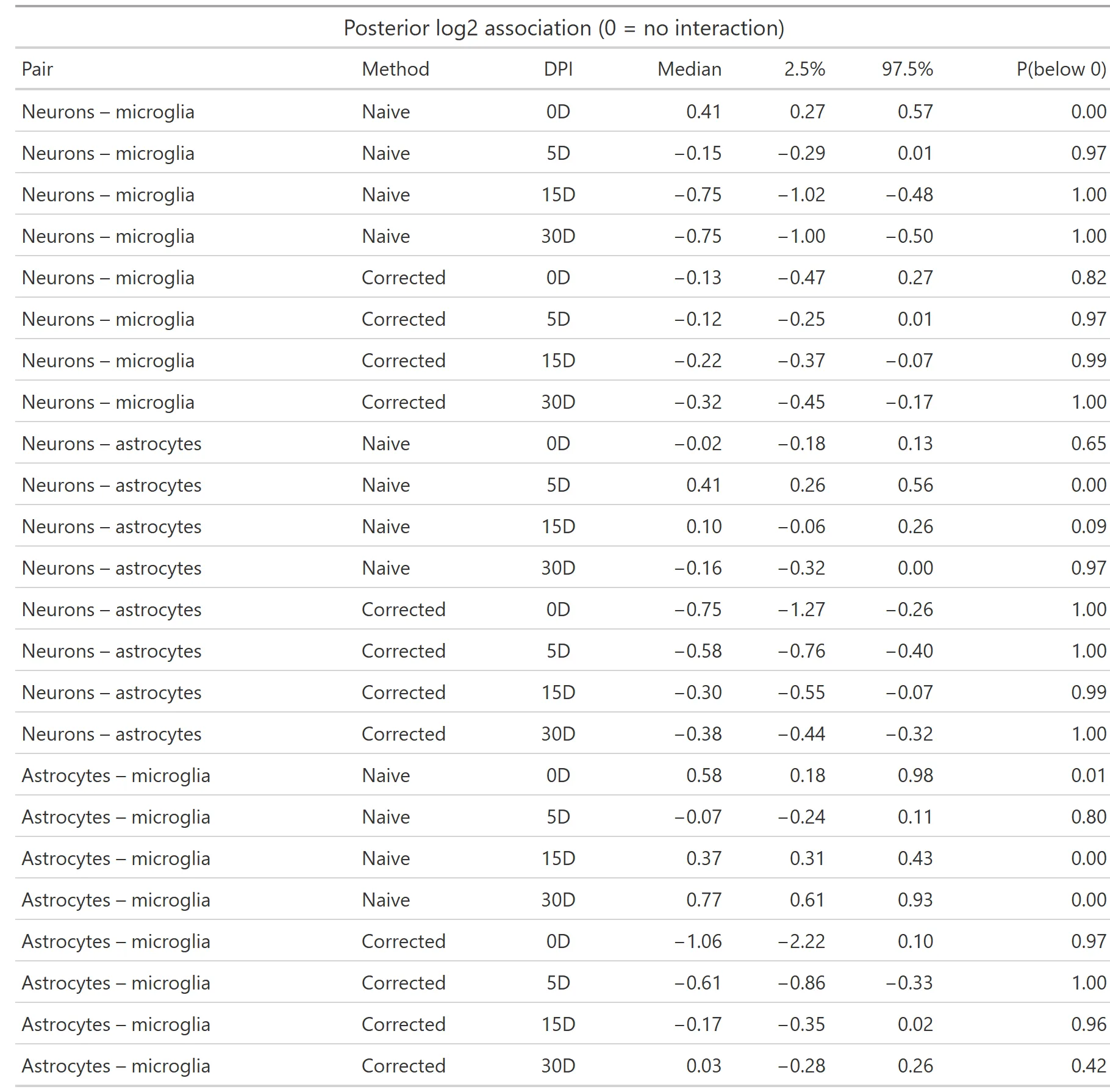
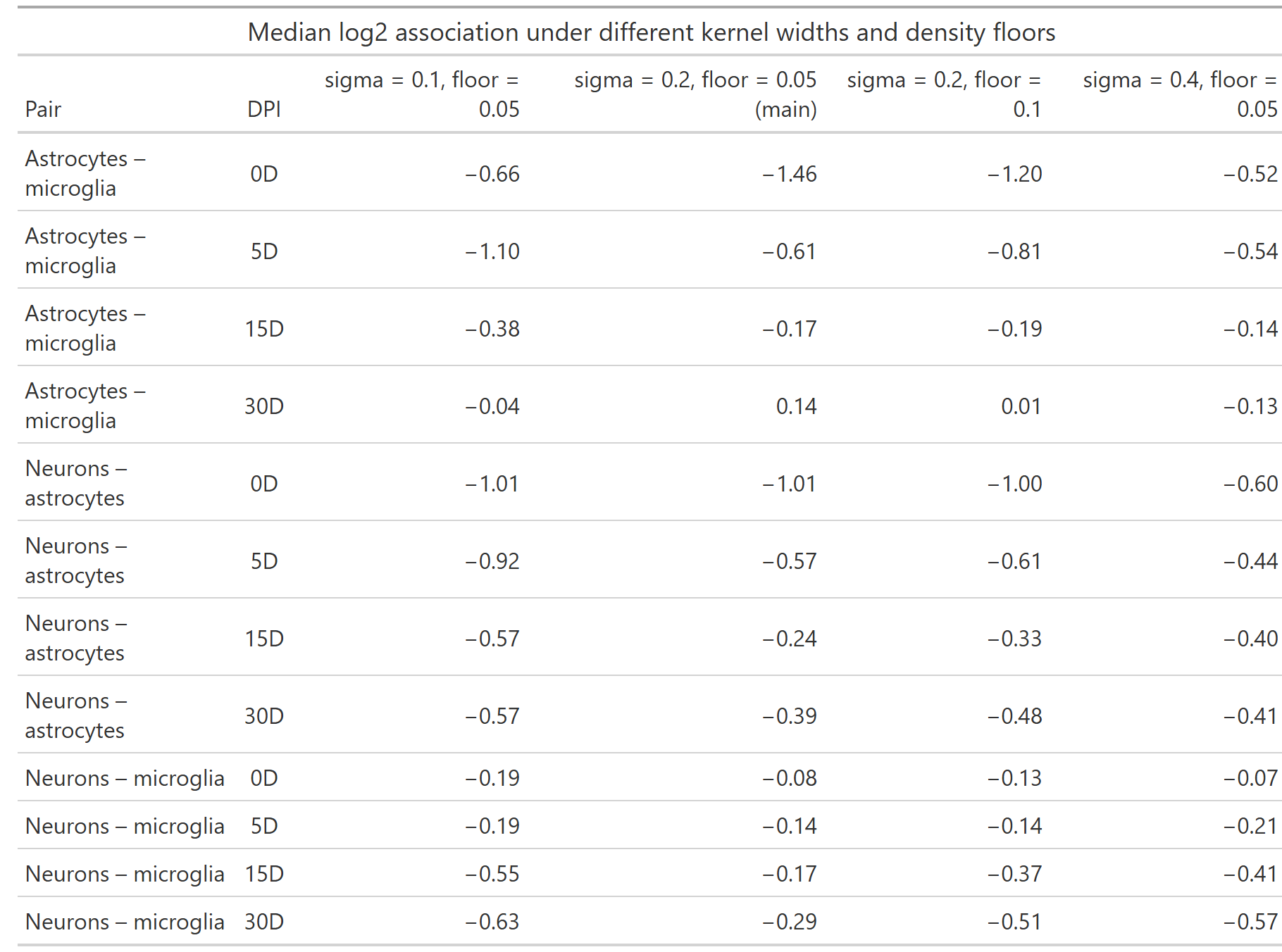
At the end of Part 2 , I told you that the pooled slope between neurons and astrocytes hid a change of sign across the time course after ischemia. A negative slope tempts you to say that astrocytes push neurons away.
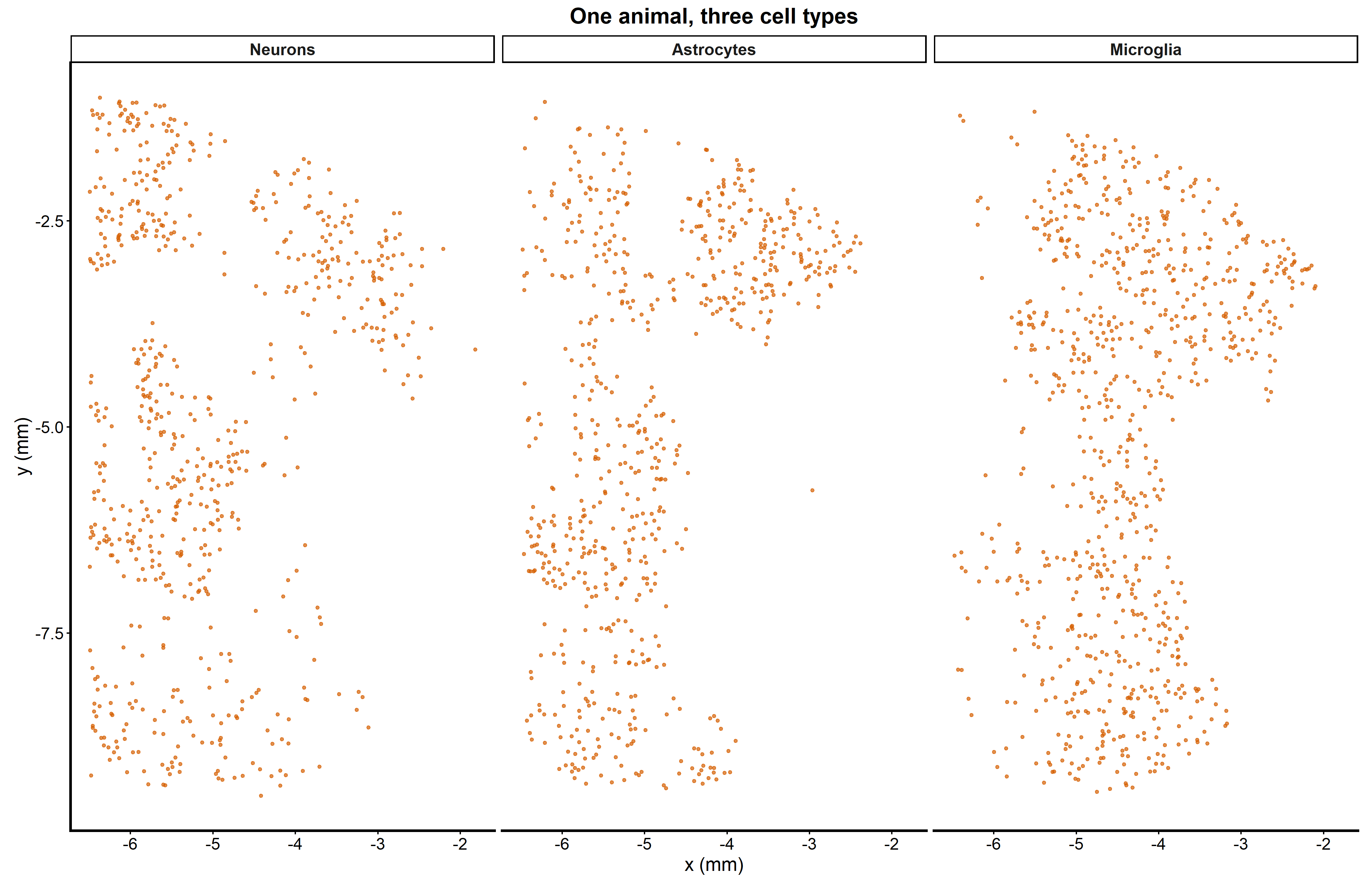
I do not think that is what happens in a glial scar. In my understanding, astrocytes can sit among neurons, depending on the time after ischemia. The cells that predominantly occupy the places where neurons have died are microglia, the macrophages that eat dying or damaged cells. Astrocytes build a barrier around that area, which keeps those cleaners and the inflammatory signals out of healthy tissue. The damaged tissue is no longer fit for neuronal survival: nothing repels anything; there is simply nobody left to be close to.
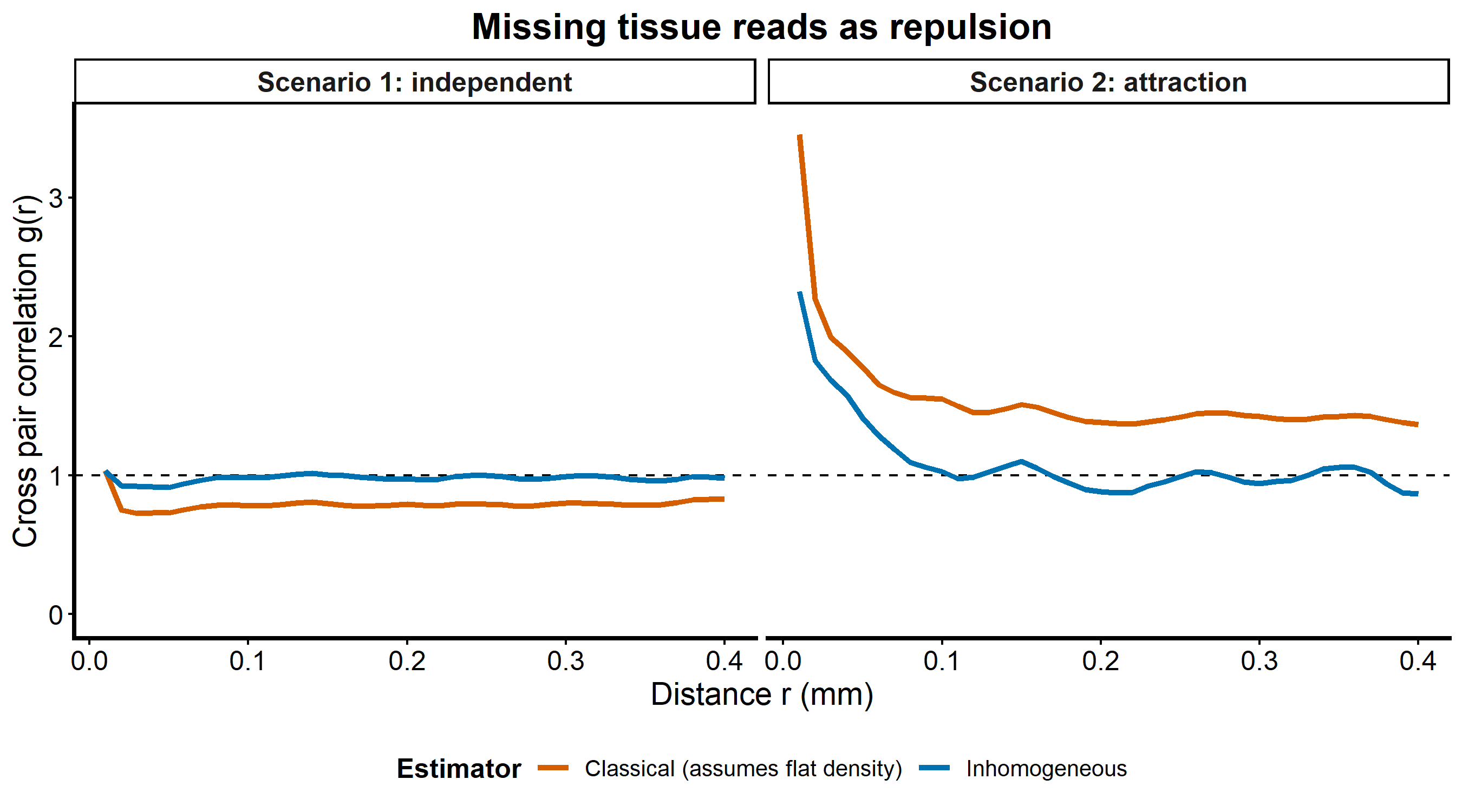
I believe a cross pair correlation curve says less about whether two cell types attract or avoid each other than about where the tissue is gone.…