Written by Leo Chan Gaskins.
We’ll start off with the problem to solve – unfortunately, many marsh birds are in decline in the Great Lakes due to habitat loss and degradation. Marsh bird populations thrive under specific wetland conditions, which we call hemi-marsh. This is a fancy word for an even and interspersed 50:50 mix of open water and vegetation. In the last century, we’ve seen a decline in hemi-marsh, mostly due to invasive species. Invasive common reed can fill in a wetland and make it too dense. And on the opposite side of the spectrum, invasive carp can eat a lot of native vegetation, turning a wetland into an open pond. It can be challenging to create hemi-marsh, because you may need to mow down tons of dense, 6-ft tall vegetation in about 2-3 feet of standing water. Generating hemi-marsh ends up being a huge challenge for wetland managers.
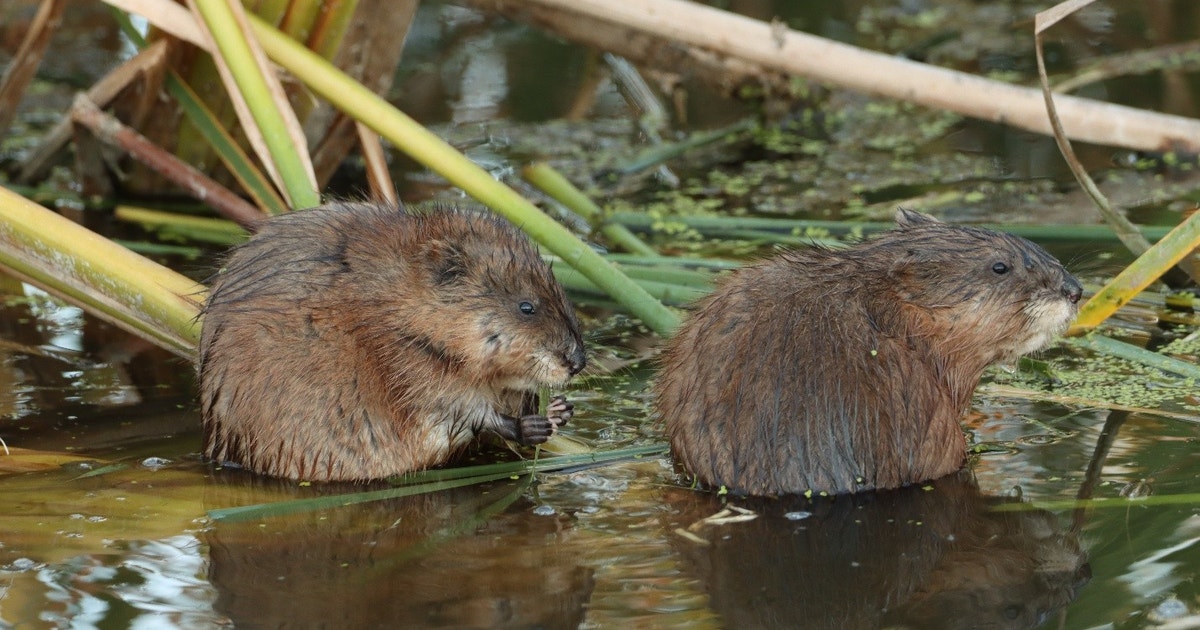
But what if there was an animal that could do this naturally and generate huge openings in wetlands to create hemi-marsh and potentially benefit birds?…