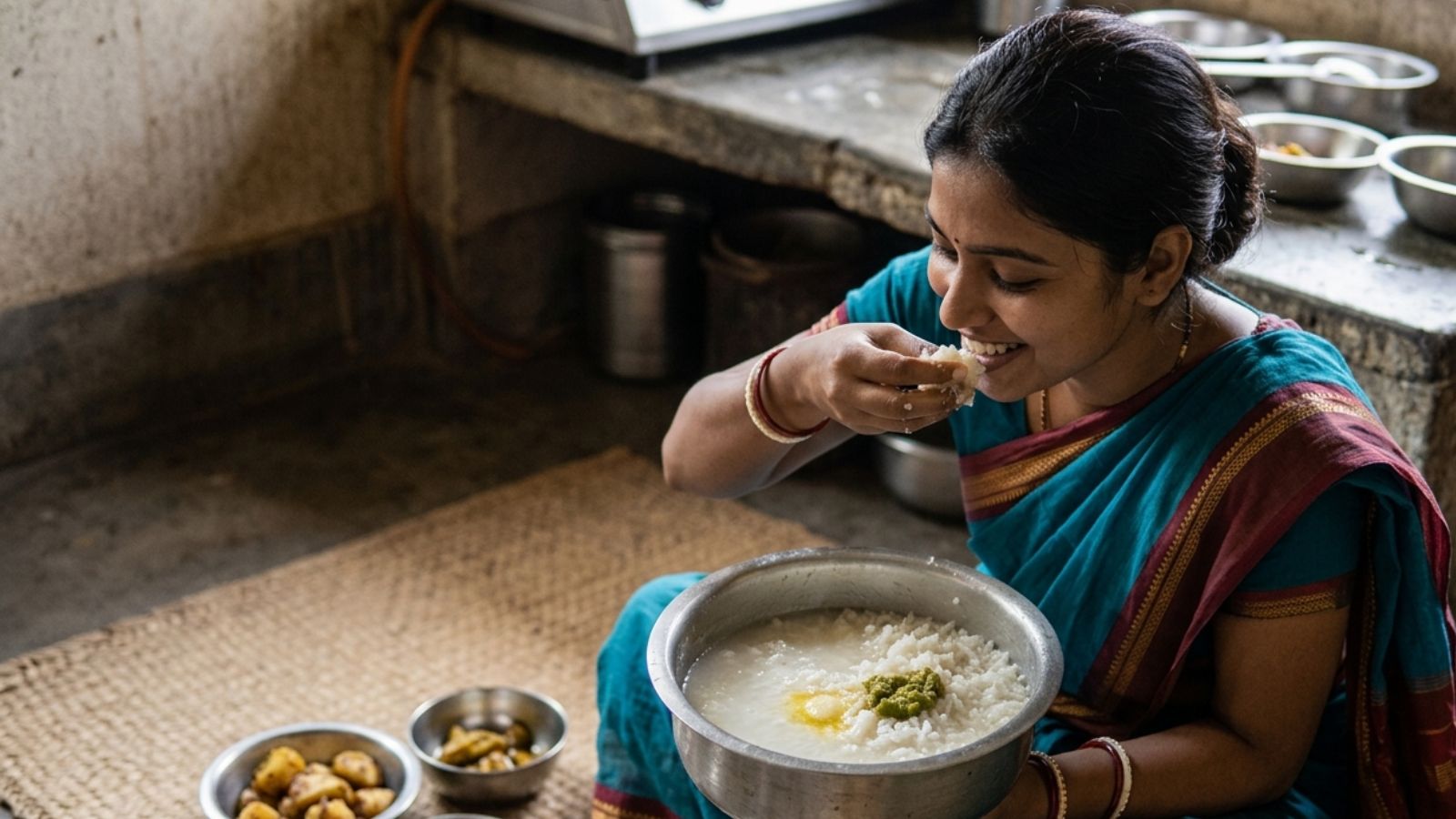
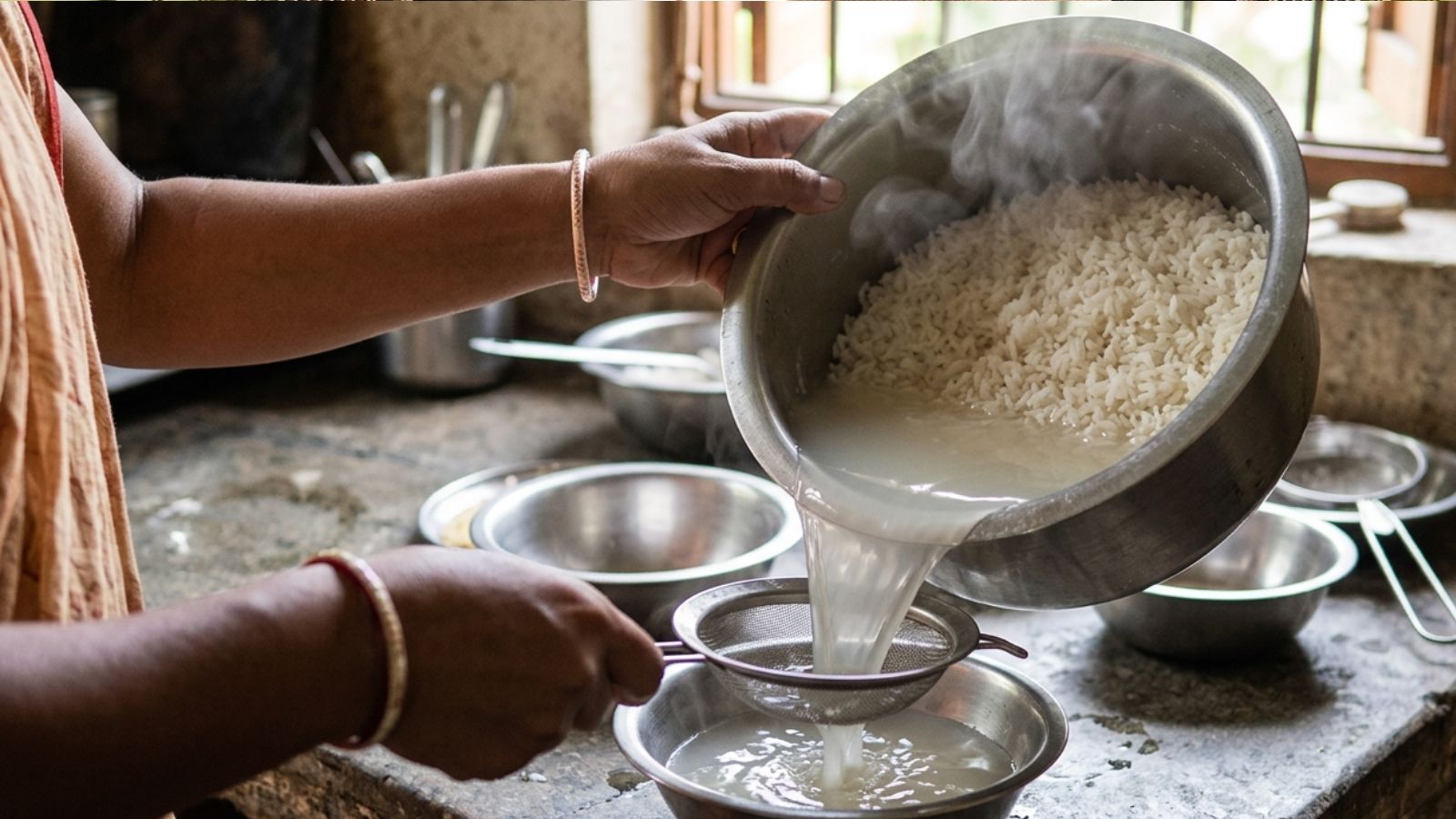
Bengali kitchens have long embraced no-waste cooking, transforming everything from vegetable peels to maand into delicious dishes. Not because anyone had read a book on sustainability or attended a seminar on food waste, but simply because that was how households operated.
Take maand, for instance. It is the cloudy, starchy water left behind after boiling rice. “Today, many of us would probably pour it down the sink without giving it a second thought,” says Indrajit Lahiri, founder at Foodka, Author, Entrepreneur & Cultural Storyteller.
“But our ancestors knew that this was not just water. Depending on the household, maand would be a drink, a simple meal, or even an ingredient that had a job to do in the kitchen,” he adds.
DISCLAIMER: This article is based on information from the public domain and/or the experts we spoke to.
What is so interesting about maand?
Lahiri explains what exactly maand is. “When rice cooks in water, its starch granules absorb moisture, swell up and soften.…