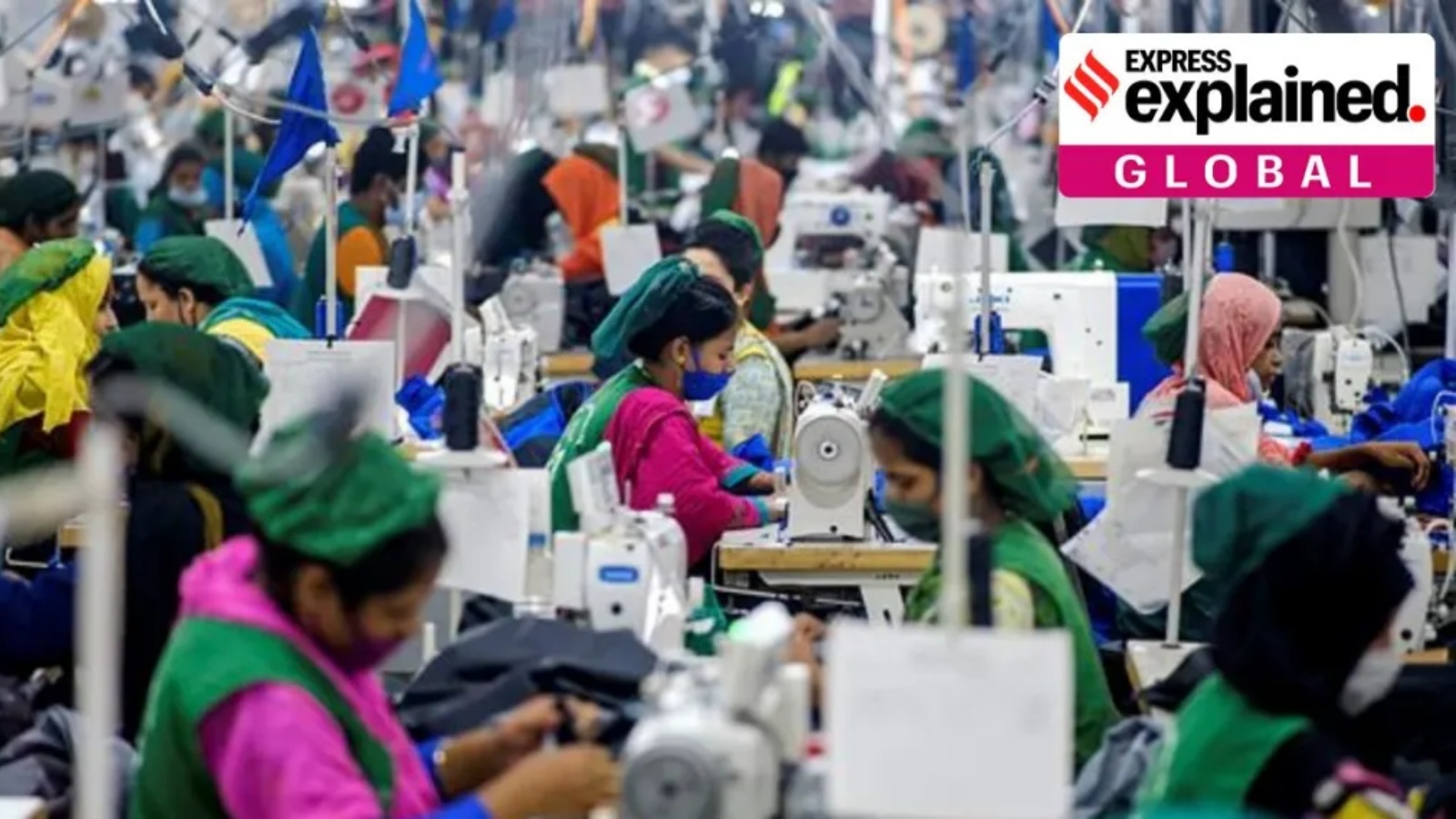
Over the past week, Bangladesh’s industrial belts of Gazipur and Ashulia have ground to a halt. Thousands of workers in the readymade garments (RMG) sector have been protesting there and in the capital, Dhaka, for higher wages.
As close to 700 factories stopped production, a sector that had generated close to $39 billion for the country in the previous financial year (2025-26) is holding its breath.
Why does a textile workers’ strike affect the nation at large? We explain.
At its genesis in 1971, Bangladesh’s economy was largely agrarian and tethered to the jute trade, which had historically depended on its relatively industrialised neighbour — today, West Bengal — for processing the raw fibre.
The pivot towards garments was spurred along by Bangladesh’s categorisation as a Least Developed Country (LDC).…