M arine biologist Alice Barbarioli waits with her camera trained on the horizon. A few minutes earlier, the hydrophone beneath the Pelagos research vessel detected codas – the sequence of clicks sperm whales use to communicate.
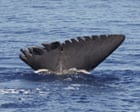
The sperm whale reveals its head and dorsal fin as those onboard the vessel in the Pelagos sanctuary, a conservation area established to protect marine mammals in the north-western Mediterranean, rush to take photos and note the rhythm of its breathing. After a few minutes, the animal arches its back, and begins to head back into the depths of the sea. They wait to catch a glimpse of its tail.
Barbarioli, the lead researcher of the citizen-science expedition, organised by the Tethys Research Institute, immediately notices an injury on its left fluke: “Given how precise the mark is, it’s probably the result of a [vessel] collision,” she says.
Collisions have long been recognised as a leading human-induced cause of death for the Mediterranean’s endangered sperm and fin whales.…