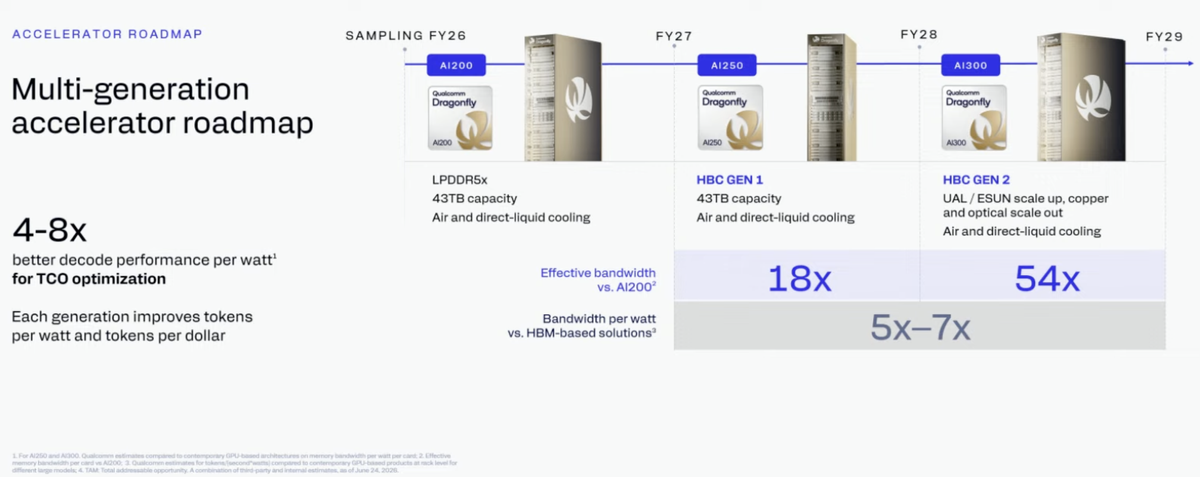
Qualcomm unveils HBC near-memory AI architecture, claims it has broken the memory wall. (Image credit: Qualcomm)
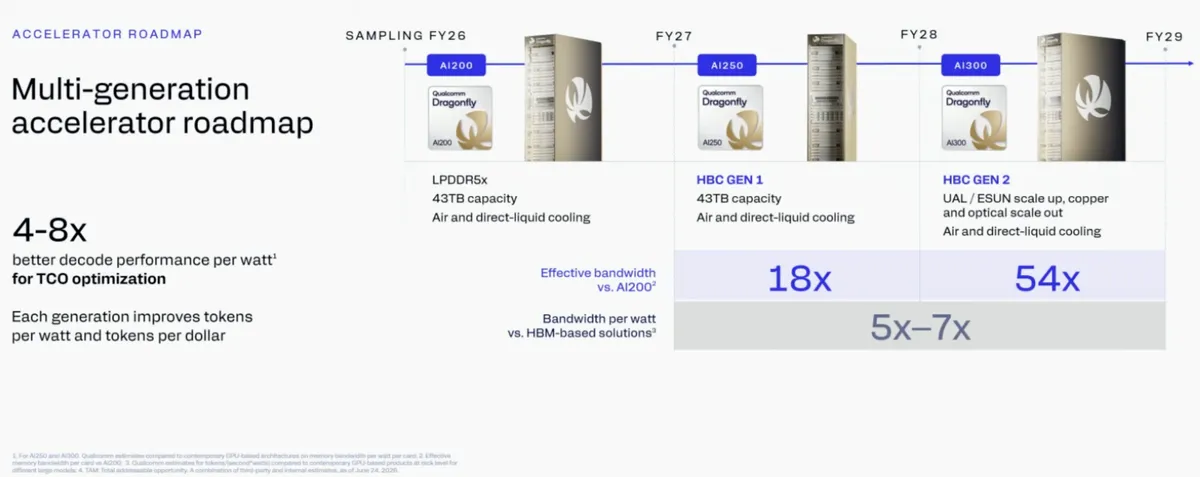
The so-called memory wall is a major performance limiter for many AI workloads, and high bandwidth memory (HBM) is not always a panacea since compute capability is growing faster than memory bandwidth. Qualcomm on Wednesday introduced its HBC near-memory compute architecture called high-bandwidth compute (HBC) that is designed to break the memory wall and enable the performance of certain AI workloads to scale linearly.
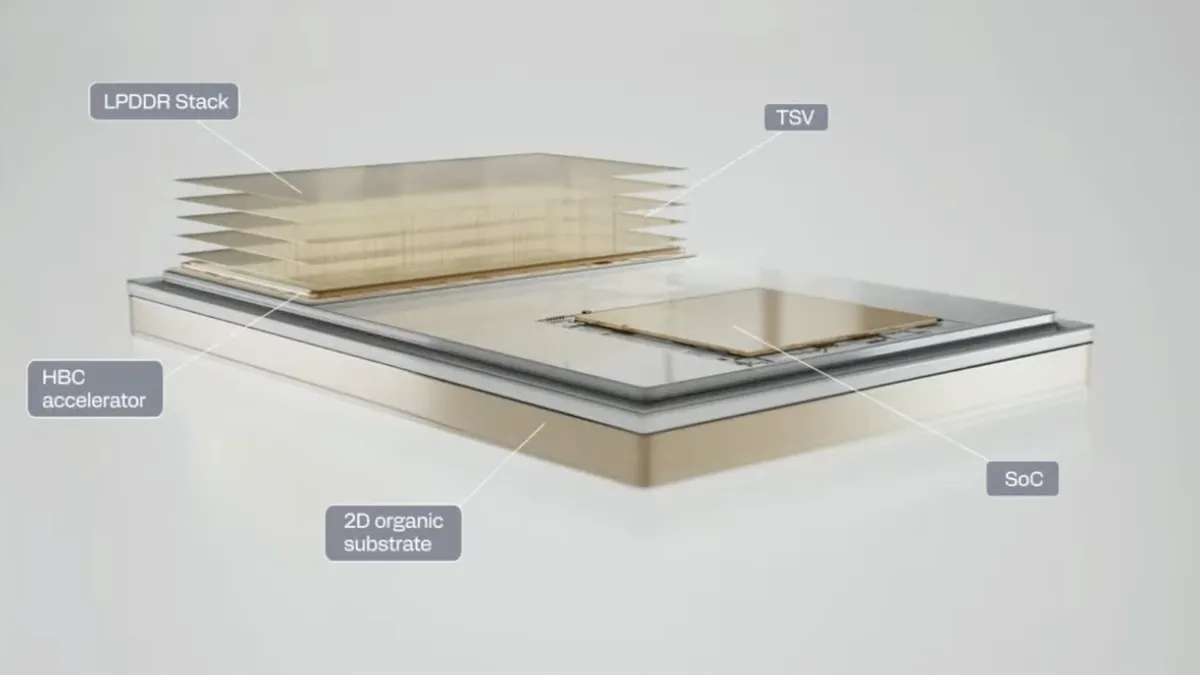
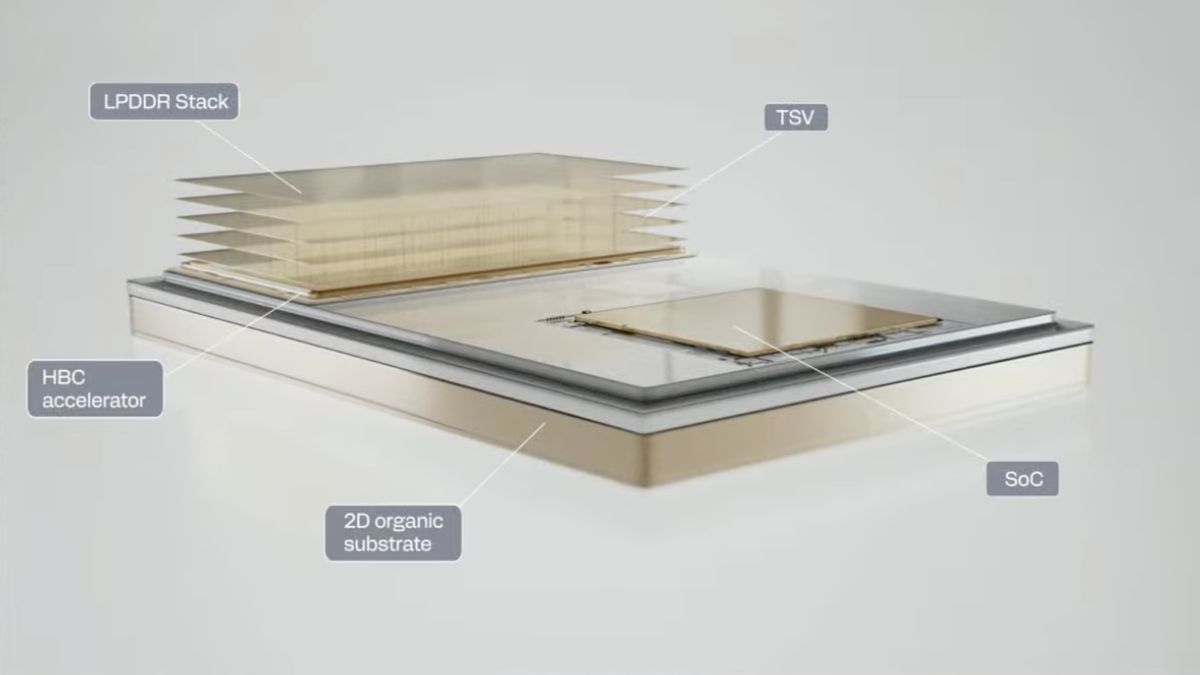
Qualcomm's approach to near-memory compute is pretty much straightforward: the company disaggregates the AI accelerator from the system-on-chip (SoC) and puts it under the LPDDR DRAM stack. The HBC accelerator connects to the LPDDR stack using through-silicon vias to provide maximum bandwidth and capacity without using expensive HBM memory and advanced packaging.…