Today in the history of astronomy, Kepler completes its primary mission, but continues observing.
| Published: November 14, 2026
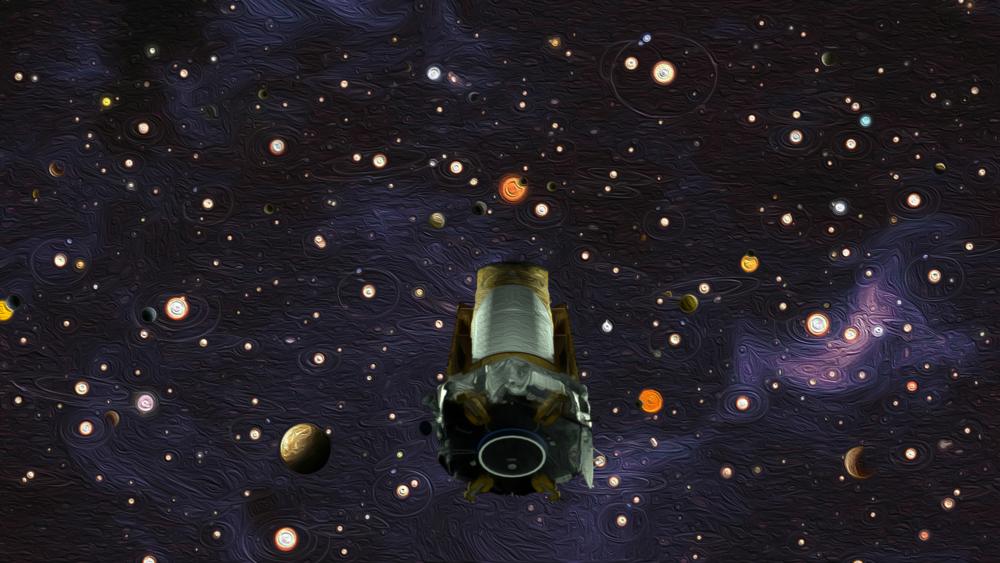
This artist's impression of the Kepler Space Telescope celebrates its contributions to discovering over 2,600 exoplanets. Credit: NASA/Wendy Stenzel/Daniel Rutter
The Kepler Space Telescope , launched March 6, 2009, was designed to search the Milky Way for exoplanets. Using the transit method, Kepler ultimately observed over 500,00 stars and contributed to the discovery of almost 2,700 exoplanets.
Though Kepler was originally intended for a 3.5-year mission, NASA announced on Nov. 14, 2012, that the space telescope had successfully completed its primary mission and would be embarking on an extended mission. When a second gyroscope (also referred to as a reaction wheel) failed in May 2013 – the first having failed in July 2012 – that mission was in question, however, as it left the spacecraft with limited control for pointing.…