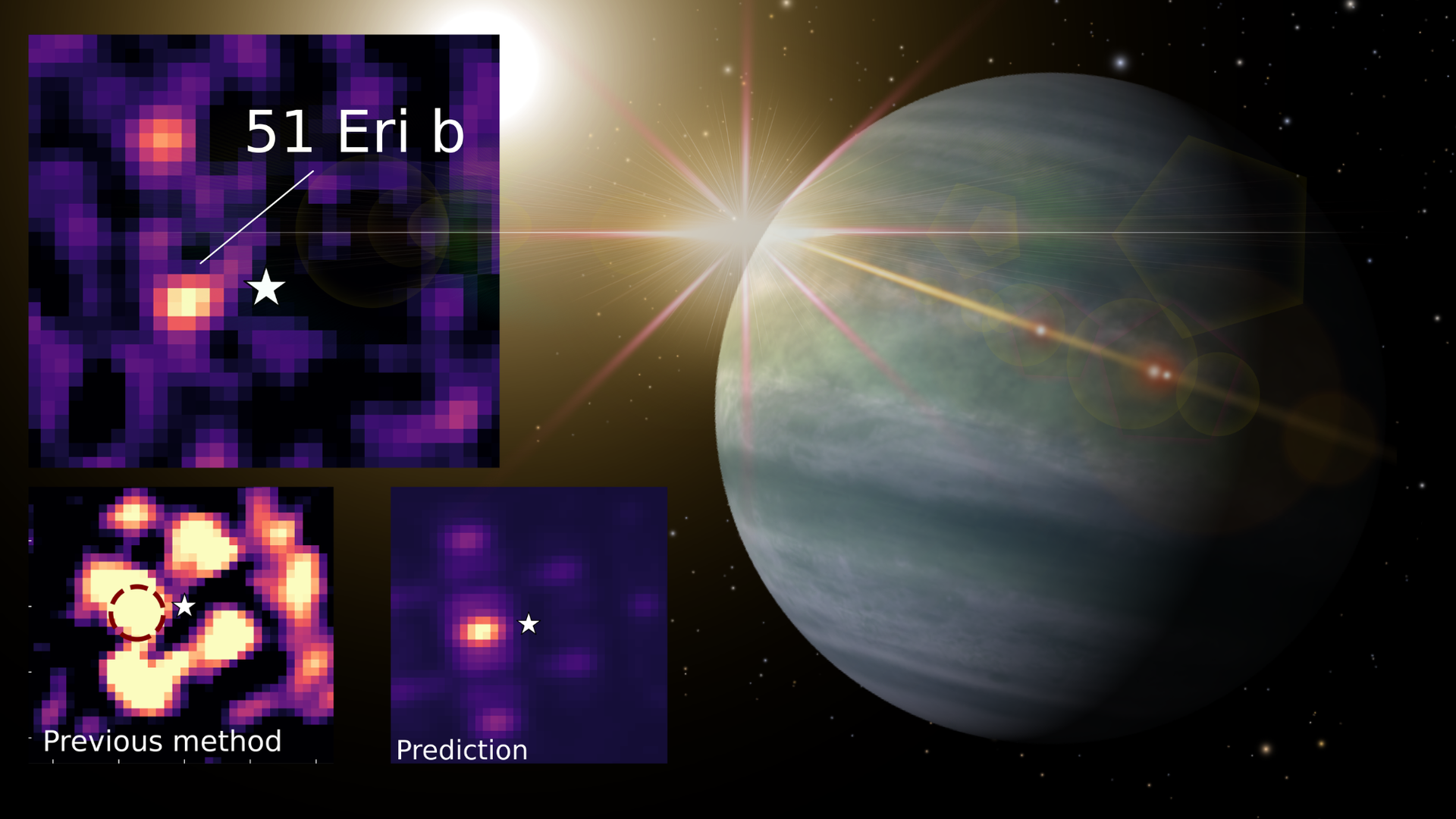
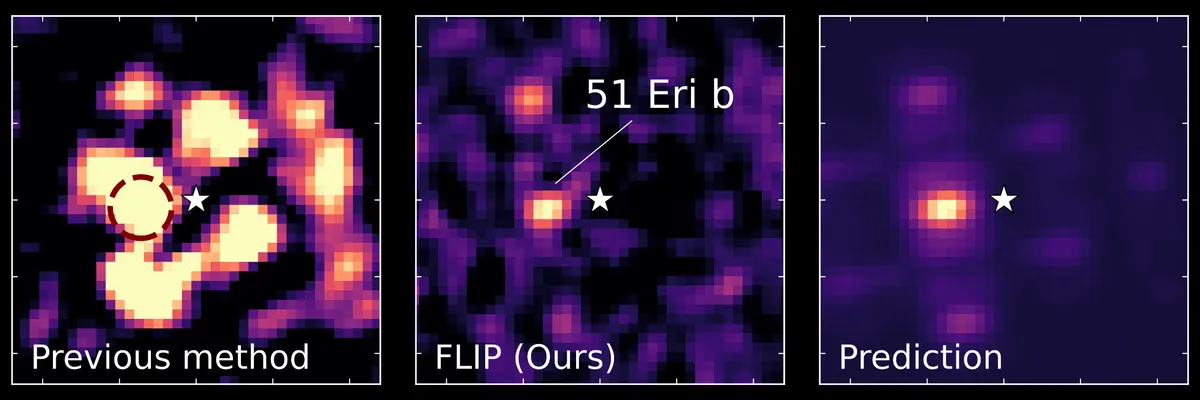
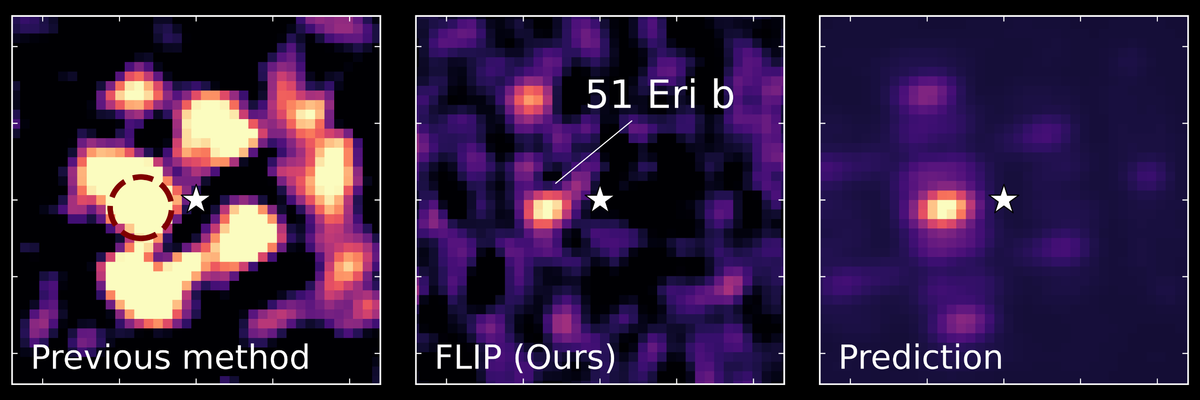
An illustration of exoplanet 51 ERI b in the glare of its parent star (main); JWST/NIRCam observation of star 51 Eridani A with new technique blocking star light (top left); the same observation of the system without this filter and the predicted appearance of ERI b based upon that image (bottom). (Image credit: Robert Lea/Rodrigo Ferrer-Chavez.)
Sometimes science can seem really counter-intuitive. For example, occasionally in astronomy, you can see more with less light. Case in point: the emergence of a giant planet in observations made by the James Webb Space Telescope (JWST), when astronomers found a way to block out light from the planet's parent star.
The extrasolar planet, or exoplanet , in question is 51 Eridani b (51 ERI b), a gas giant with the same mass as around 11 Jupiters that orbits a star located around 97 light-years away. 51 ERI b was discovered back in 2015 by ground-based telescopes, but the planet was missing from observations of the system made by the JWST.…