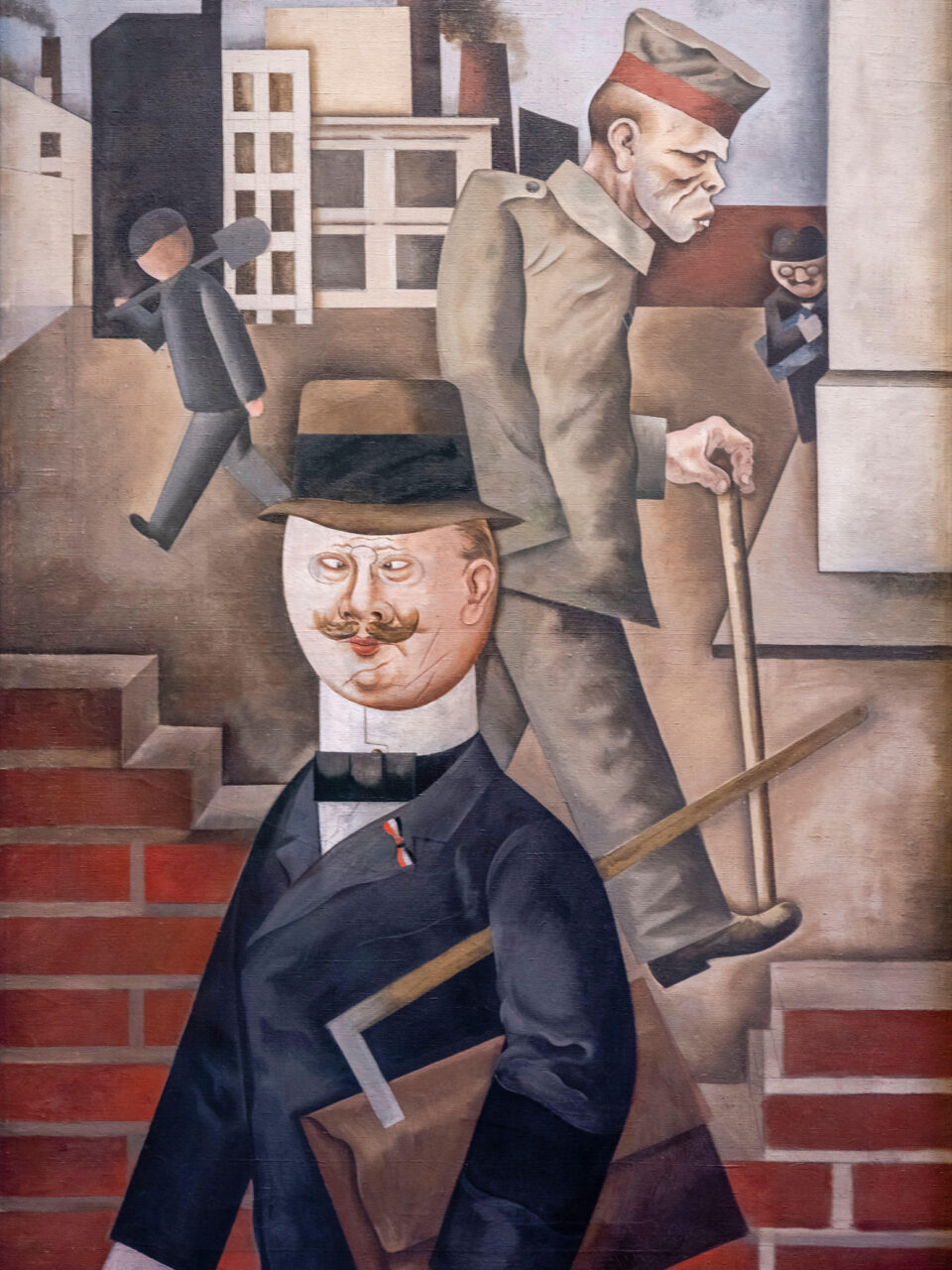
Grey Day by George Grosz (1921). Photo via Tolo Balaguer/Alamy
At the turn of the 20th century, Victorian philanthropists began making a calculation that was unheard of in England at that time: a “poverty line”. The social researcher Charles Booth decided, after surveying living conditions in London, that earning below 18 to 20 shillings (£1) a week meant you fell below the “line of poverty”, and divided Londoners living “in comfort” from those “in poverty”.
A decade or so later, the industrialist Seebohm Rowntree – having surveyed poor families in York – calculated the income he believed was required to meet the minimum costs required for the essentials of life: a family of a man, a woman and two children needed earnings of 18 shillings and 10 pence a week to live on at a bare minimum.
Gift a New Statesman subscription for only £2
More than just food, clothes and shelter
Social housing for households with children
One-bedroom private rental flat for working-age singles or couples
Low-cost monthly…