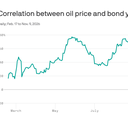
For much of this year, on any given day, you could look at the price of oil and correctly guess what happened to bond yields. In the last few weeks, that correlation has evaporated.
Why it matters: It's a sign that growth risks may be supplanting inflation worries as the dominant economic concern.
State of play: It's not obvious whether an energy supply shock should affect inflation or growth more.
On the one hand, more expensive fuel can ripple through prices for everything else. On the other, more expensive energy acts like a tax on consumers and businesses that consume it.
Since the attack on Iran in late February, markets have treated the former concern as the central dynamic in the global economy.
Zoom in: As such, on days when oil futures pointed to higher prices, bonds almost always sold off and their yields — which move in the opposite direction from their prices — rose.
Traders were pricing in a world where inflation is higher for longer, and central banks react by raising rates more — and…