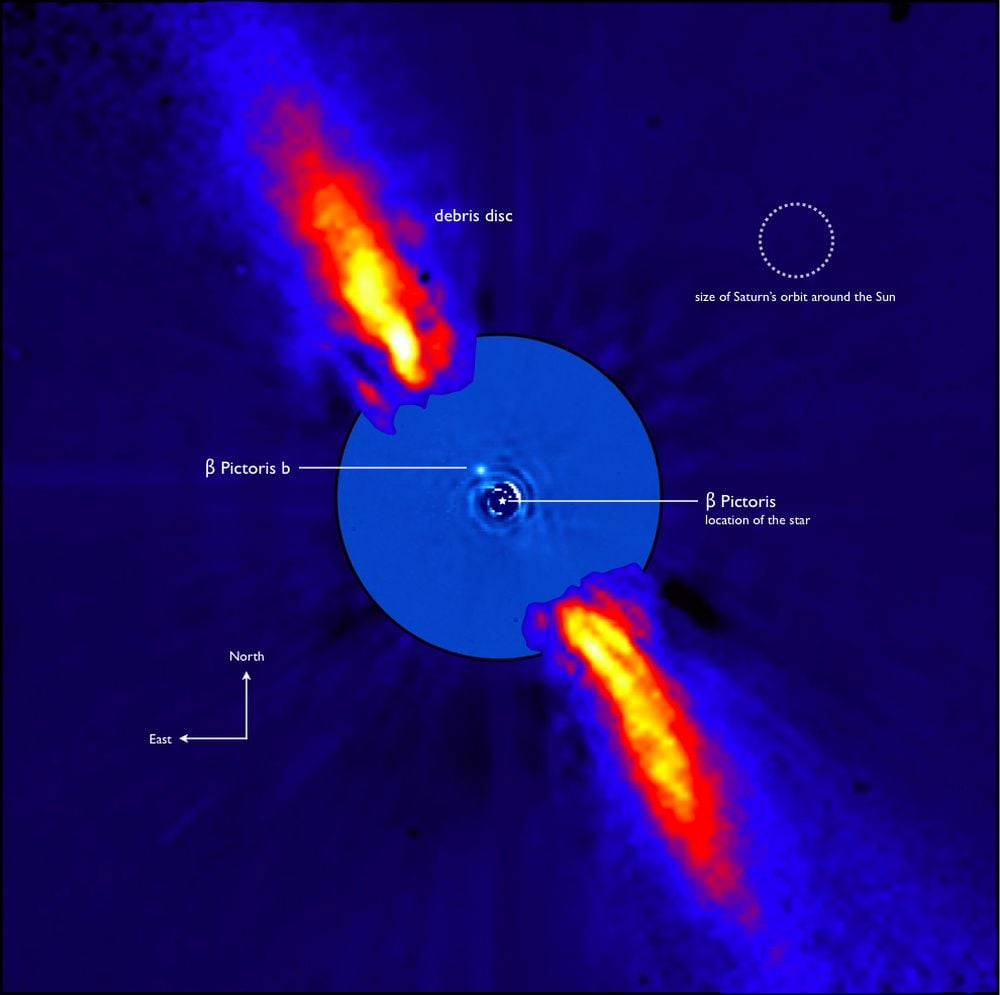
Beta Pictoris (β Pictoris), a young main sequence star about 63 light years away, is known for having the first directly-imaged debris disk. Three planets in that disk have also been directly-imaged. One of them, Beta Pictoris c, is also the closest exoplanet to its star that has ever been directly imaged.
This is a composite image of of Beta Pictoris as seen in near infrared light. Beta Pictoris B is shown, the closest exoplanet to its star that's ever been directly imaged. Due to its proximity and other factors, it's an object of much observation and research. Image Credit: By ESO, CC BY 4.0, https://commons.wikimedia.org/w/index.php?curid=5268432
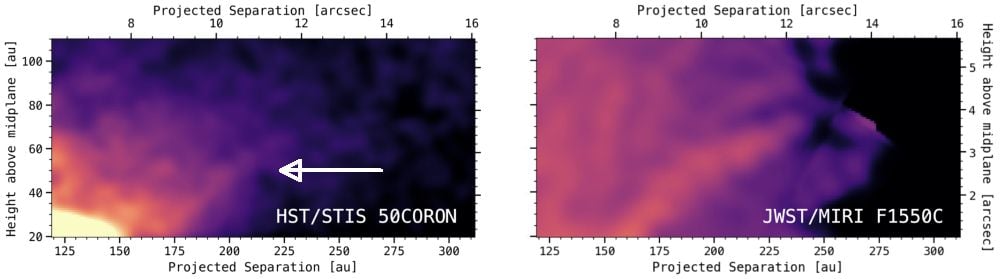
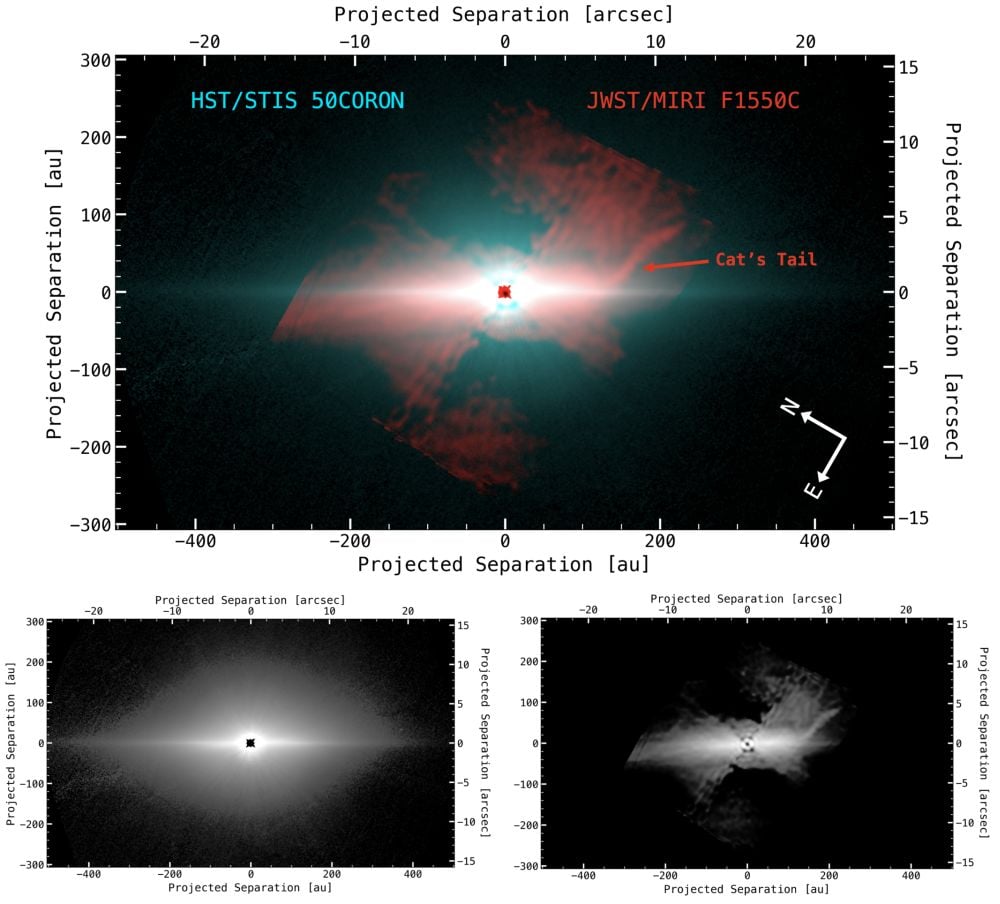
β Pictoris is the subject of lots of research because of its youth, its proximity, its resolved debris-disk, and because its geometry makes it open to detailed observations. In particular, telescopes can get high-resolution side-views of its disk's structure, including its warped nature and its asymmetries.…