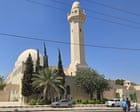
T he Abu Obeida mosque in Deir Alla, Balqa, to the west of Amman, stands in one of the hottest and most arid stretches of the Jordan valley. Yet an oasis of trees and flowerbeds surrounds it, improbably green against a landscape of bare ochre hills, watered by drip irrigation lines that run along the ground between the roots.
The water does not come from the municipal network, but from the taps where worshippers wash their hands, faces and feet before prayer.
Five times a day, Muslims across Jordan perform wudu – the ritual washing of hands, face and feet required before prayer. In a kingdom that receives just 61 cubic metres of renewable fresh water per person a year – less than one-eighth of the UN’s absolute water scarcity threshold of 500 cubic metres – every drop carries weight.
“People here understand water scarcity because they live it every day,” says Ahmed al-Rawsan, founder of the Jordanian Aqua Conservation Association (JACA), which manages the system at the mosque.…