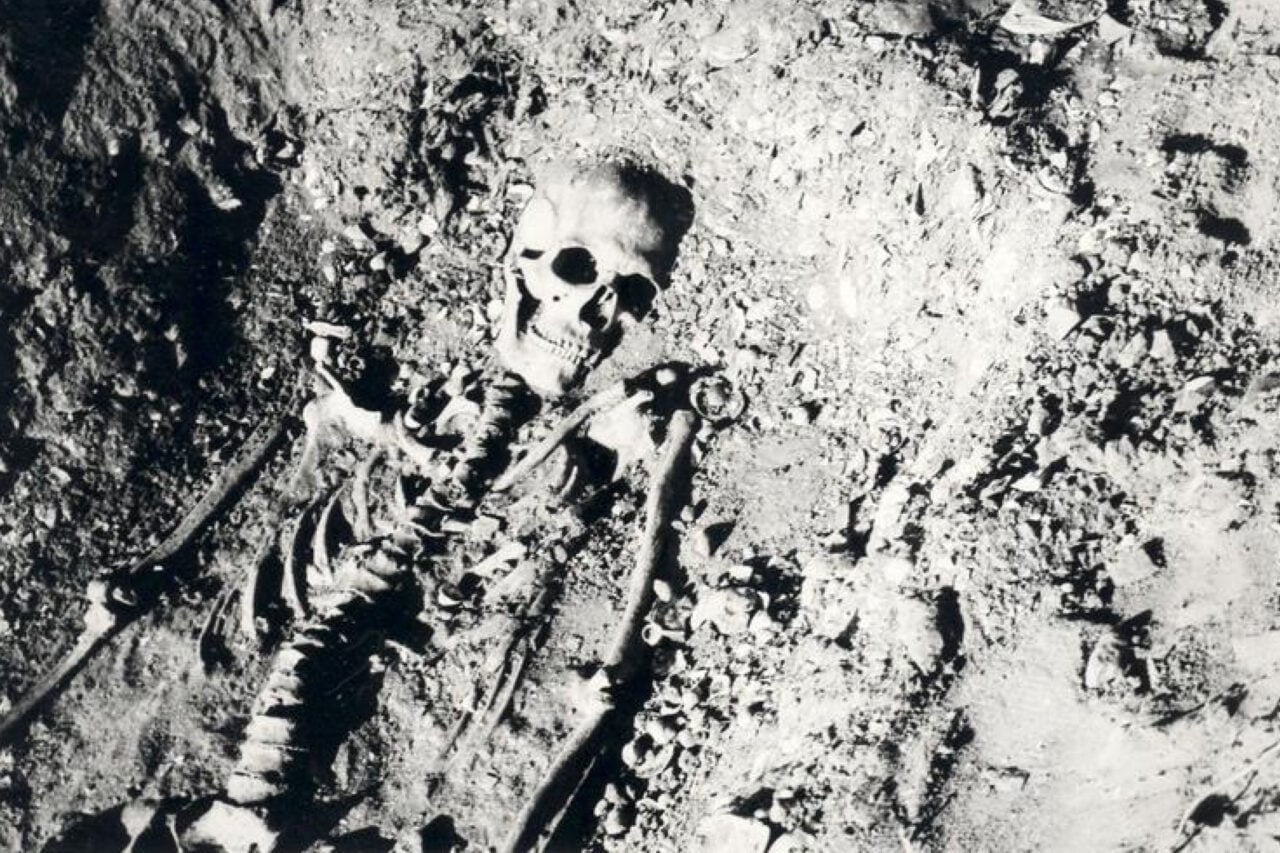
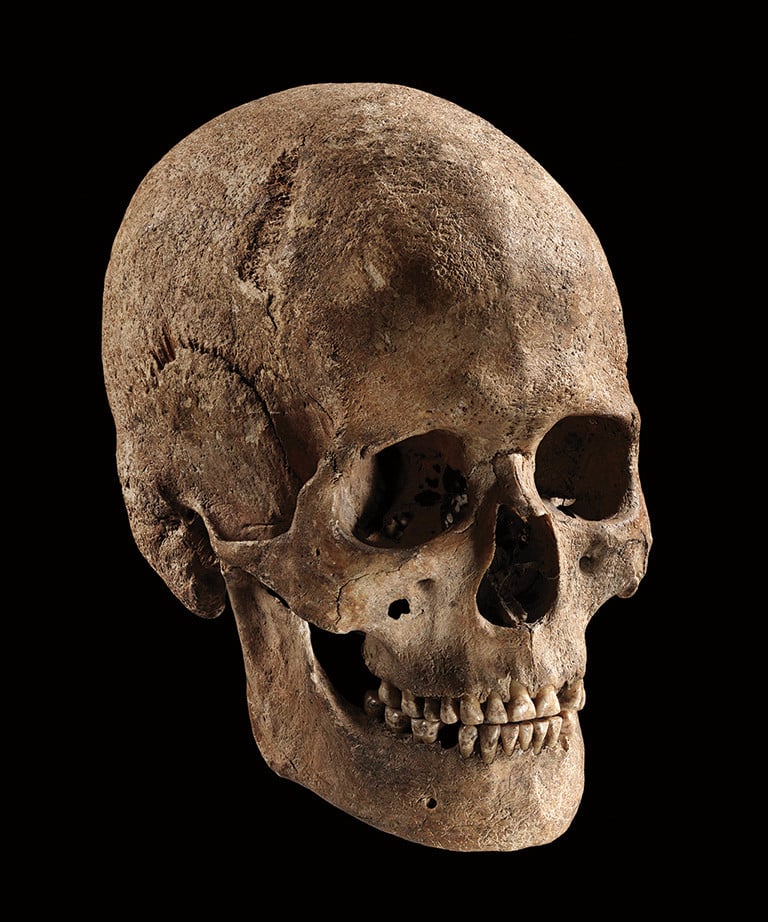
For decades, scientists were puzzled by the Rødhals Man, a skeleton from prehistoric Denmark. His bones told two different stories—isotope analysis showed a typical diet of a Mesolithic hunter-gatherer, whereas carbon dating said he lived alongside Neolithic farmers. As it turns out, his life was actually a little bit of both.
In fact, the Rødhals Man may be the first known “eyewitness” to the Neolithic Revolution in the archaeological record, according to a study published today in Antiquity. The man lived roughly 6,000 years ago and was buried in a shell midden on the island of Sejerø in Denmark. The new findings build upon previous analysis of his remains while presenting new data on his bones, teeth, and genetic information.…