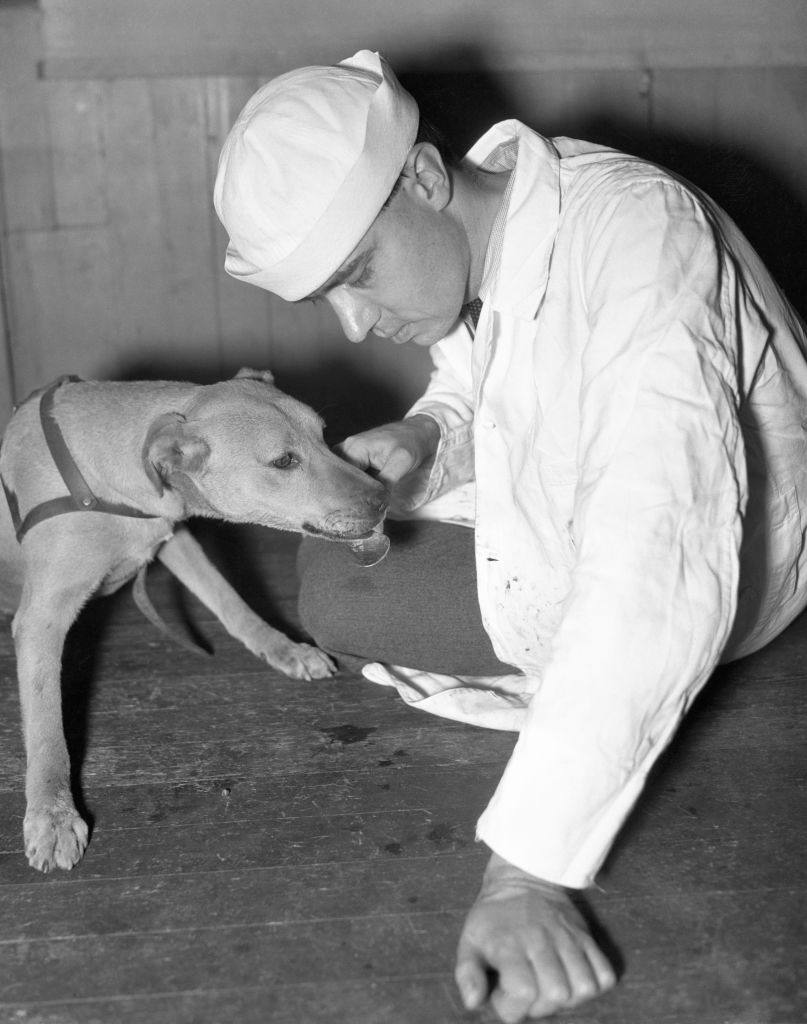
Under the harsh glare of overhead lights at a laboratory at the University of California at Berkeley, Lazarus II lay motionless .
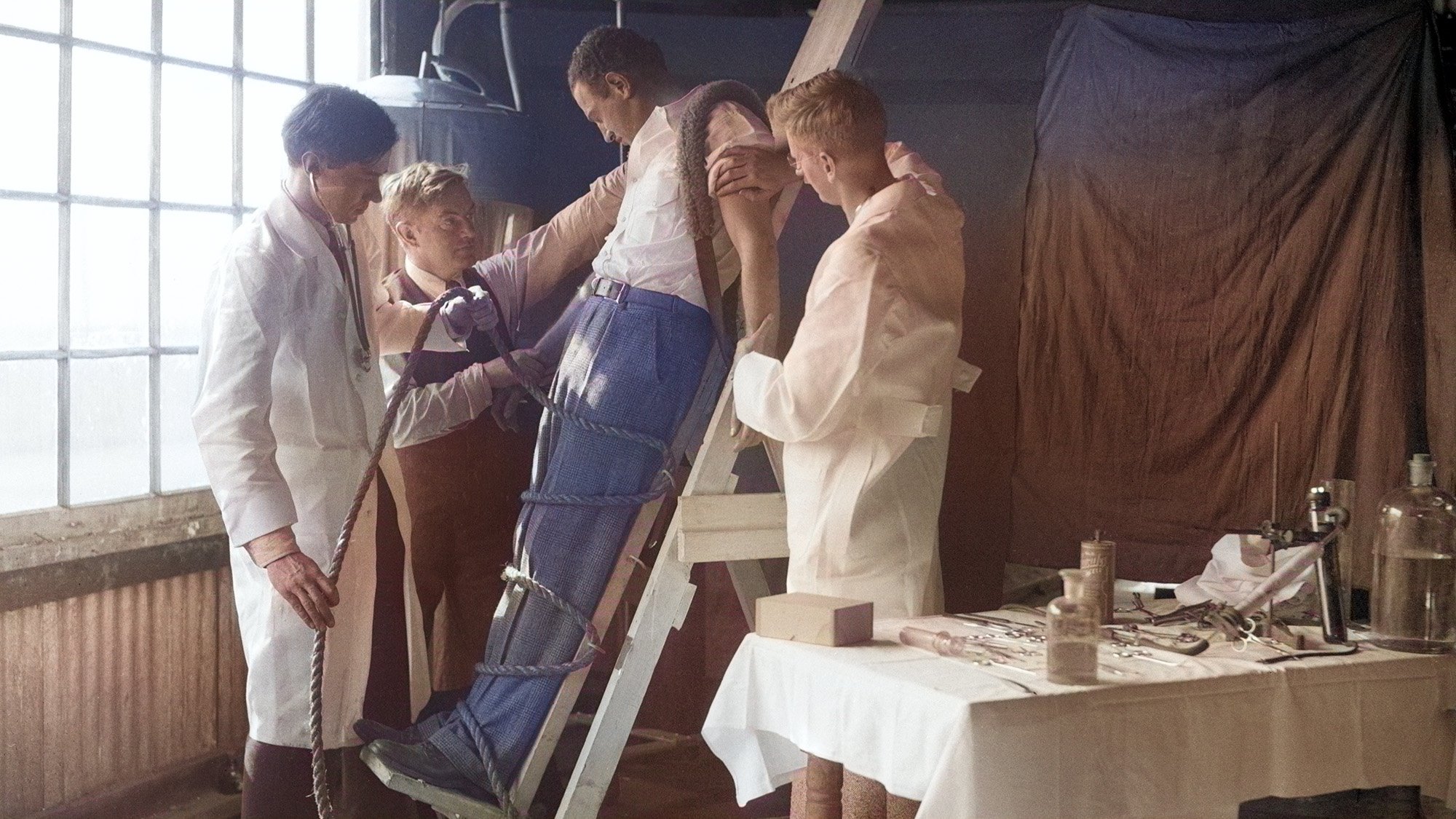
Dr. Robert E. Cornish, who’d asphyxiated the rangy white fox terrier with ether and nitrogen, watched the clock. Six minutes after the final heartbeat, the scientist gathered up the dog and strapped him to a teeterboard, a see-saw-like invention whose back-and-forth, up-and-down motion Cornish believed was key to restoring the blood’s circulation.
He pushed a saline solution primed with oxygen, heart-stimulating adrenalin, and the liver extract heparin into a vein in Lazarus’ thigh, then lowered his head over the patient. As his assistant rocked the teeterboard and rubbed the little body vigorously, Cornish exhaled deep breaths into the dog’s mouth and lungs.
Long seconds turned to minutes and then, suddenly, Lazarus gasped and jerked his leg. Slowly, his heart began to beat. Lazarus II had returned from the dead.
Dr.…