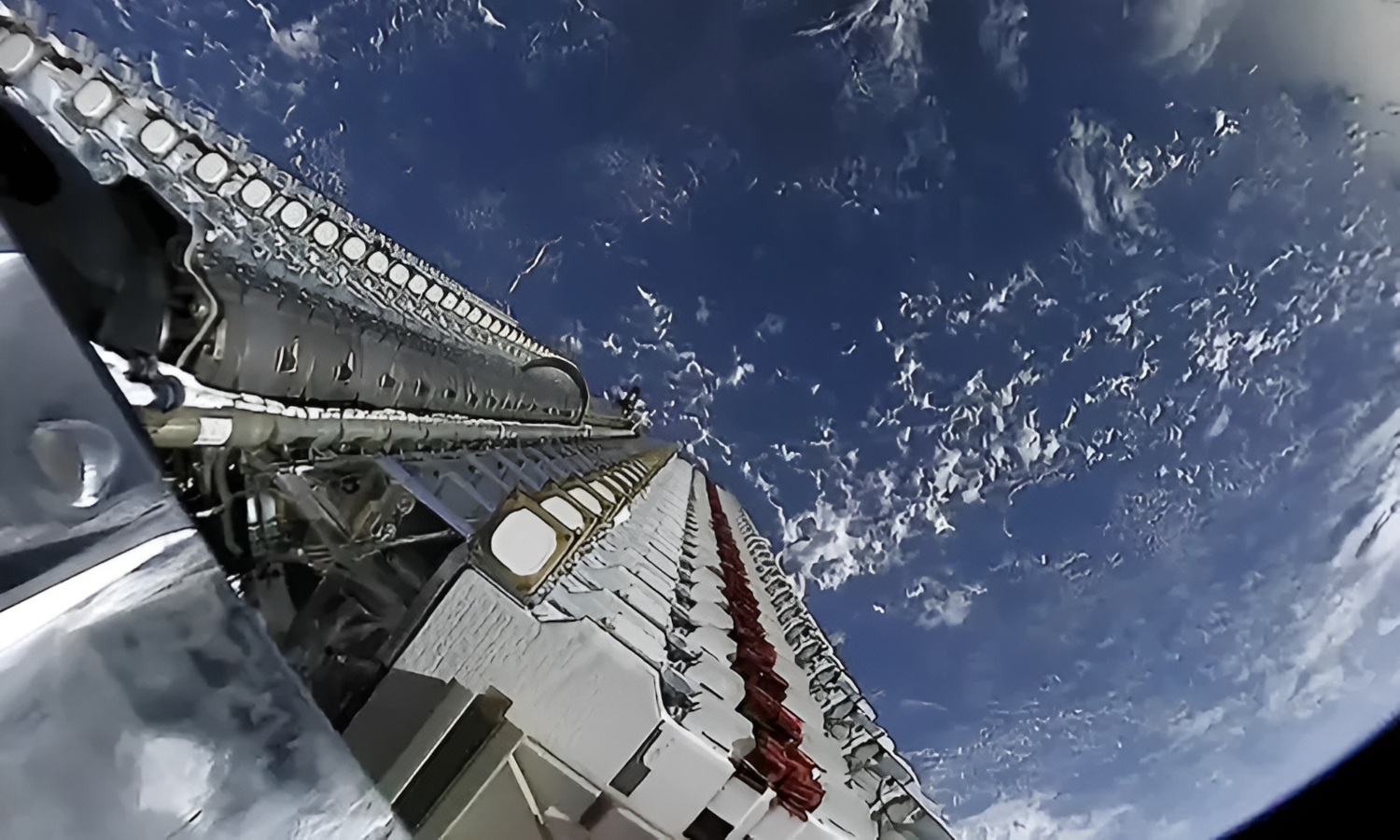
Curtin University study finds SpaceX hardware leakage up to 10,000 times stronger than the cosmic signals SKA-Low must detect Astronomers spent decades designing the Square Kilometre Array Low (SKA-Low) to hear the faintest whisper in the observable universe — neutral hydrogen signals from the cosmic dawn , when the first stars flickered on roughly 13 billion years ago. What they’re picking up instead is electronic leakage from SpaceX satellites . Not the broadband beams Starlink intentionally transmits. The accidental static bleeding from onboard hardware, coupling through satellite structures and radiating across frequencies nobody authorized. A Curtin University team using the Engineering Development Array 2 — a prototype SKA-Low station in Australia — analyzed approximately 76 million radio images over 29 days. The results, published in Astronomy & Astrophysics , are uncomfortable reading.…