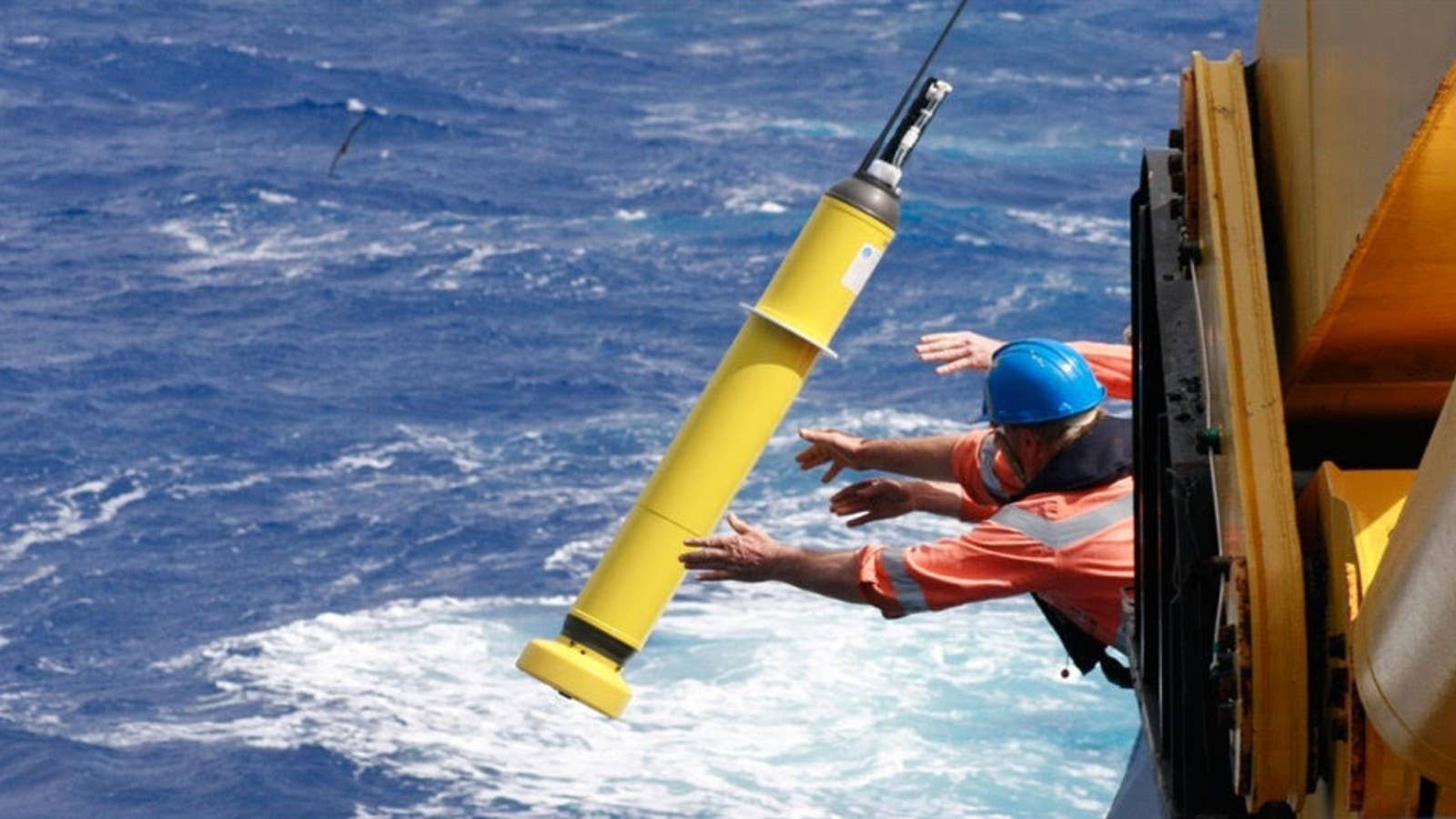
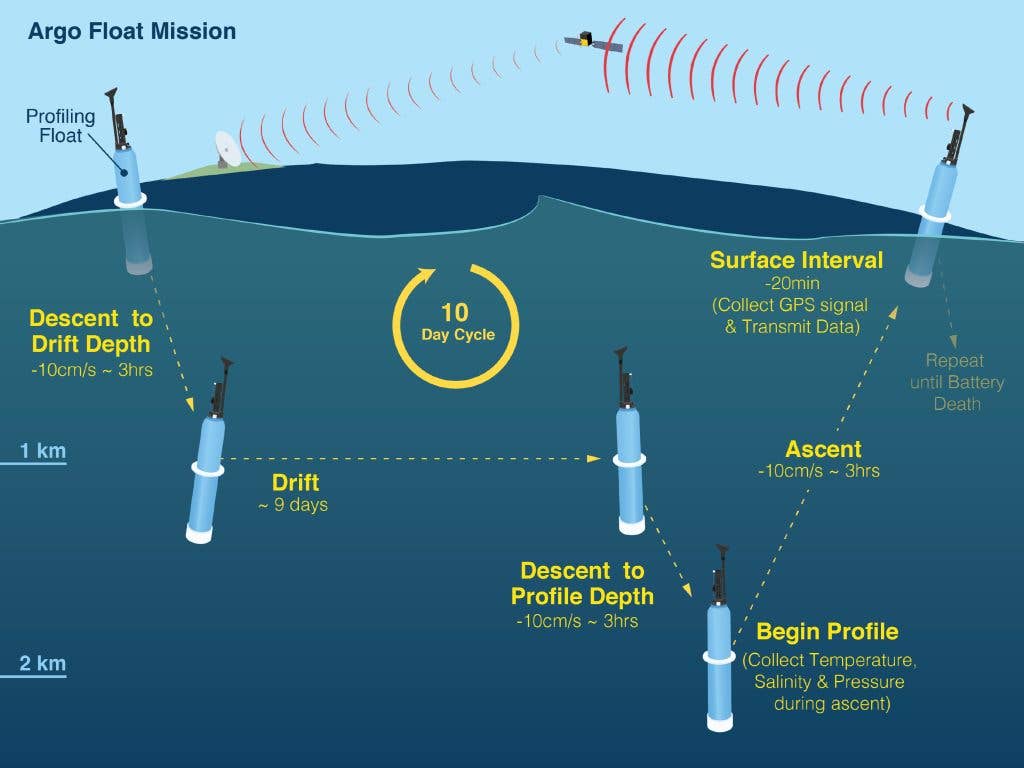
Autonomous robots called Biogeochemical-ARGO floats measure and monitor the world’s oceans’ acidification levels, temperature fluxes, and ecosystem statuses by collecting mile-deep acidity, oxygen, temperature, and chlorophyll data and transmitting it to Scripps Institute researchers via satellite, though perhaps not for long, thanks to federal funding cuts.
“It has the biology, the geology, chemistry kind of wrapped up into one thing. And that’s what these floats are, kind of aim to do,” UC San Diego Scripps Institution of Oceanography engineer and scientist Tyler Wirth told San Diego’s KPBS .
The National Oceanic and Atmospheric Administration had unofficially agreed to support the ongoing project, currently in its 16th year , but federal funding for the program is set to cease in October as part of larger 2025 budget cuts to NOAA.
“It’s sad,” Wirth lamented. “I spent a career, my Ph.D., working on this project.”
Graphic showing an Argo float’s 10 day mission cycle.…