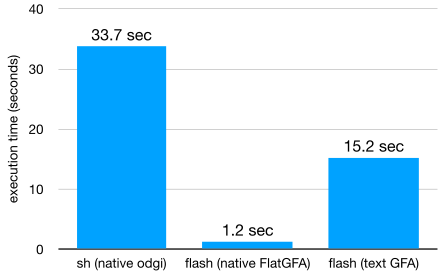
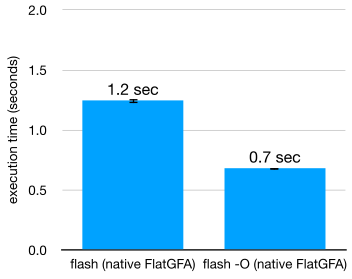
I have been working on an efficient toolkit for pangenomics, called FlatGFA . Relative to other pangenomics tools like odgi , FlatGFA has only one trick: a zero-copy data format. The in-memory data format is identical to the on-disk format, so FlatGFA can skip all serialization and deserialization costs; opening a file consists of an mmap(2) . For unfairly cherry-picked workloads , FlatGFA can be thousands of times faster than odgi. Now comes the hard part: I want my genomicist colleagues to actually use FlatGFA. I want to write an inventory of high-performance operations and let the real scientists compose them into complete workflows. To let them do that kind of composition, there were two simple options: we could either (1) make a command-line interface that exposes all the operators and let the scientists write shell scripts to compose them, or (2) design a Rust API and have the scientists write Rust code. Neither option is very compelling: The CLI approach limits the kind of composition you can do.…