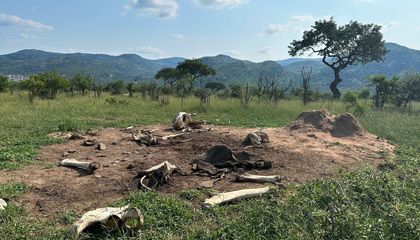
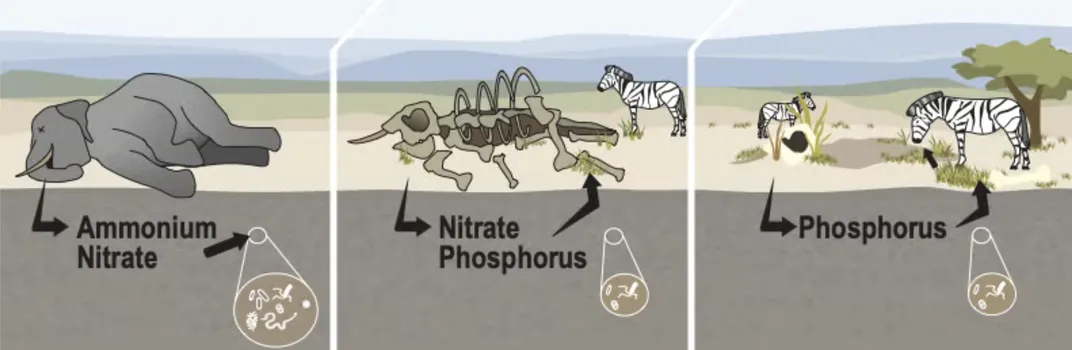
At first, plants below an elephant carcass die. Soil microbes and plants grow back soon after, but only a few select species. Herbivores later come in to munch on the nutrient-rich greens
October 21, 2026 2:47 p.m.
Elephant carcasses affect the local environment for at least eight years, according to a new study. Courtney Reed
African savanna elephants are considered ecosystem engineers . For up to roughly 70 years , each massive animal rips through trees and brush, digs wells in the ground and spreads seeds in its poop.
But even after their lives have ended, the hulking pachyderms continue making contributions to the environment, according to a study published October 12 in the journal Proceedings of the National Academy of Sciences . Scientists found a surprising chronology of events—involving microbes, plants and animals—near elephant remains that persists for at least eight years.…