Key Takeaways
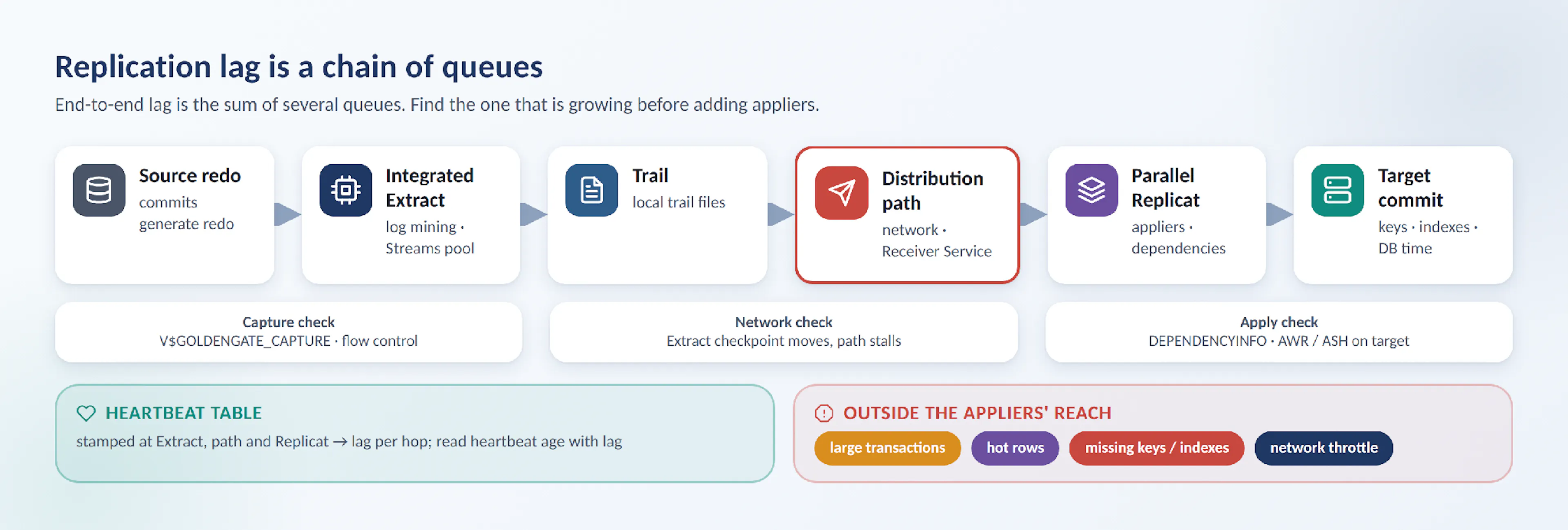
GoldenGate lag is not one number but the sum of waits in a chain of queues, and the fix depends entirely on which queue is growing.
Heartbeat tables measure true end-to-end lag at the target, while process-level LAG output only says how stale the record a process is touching is.
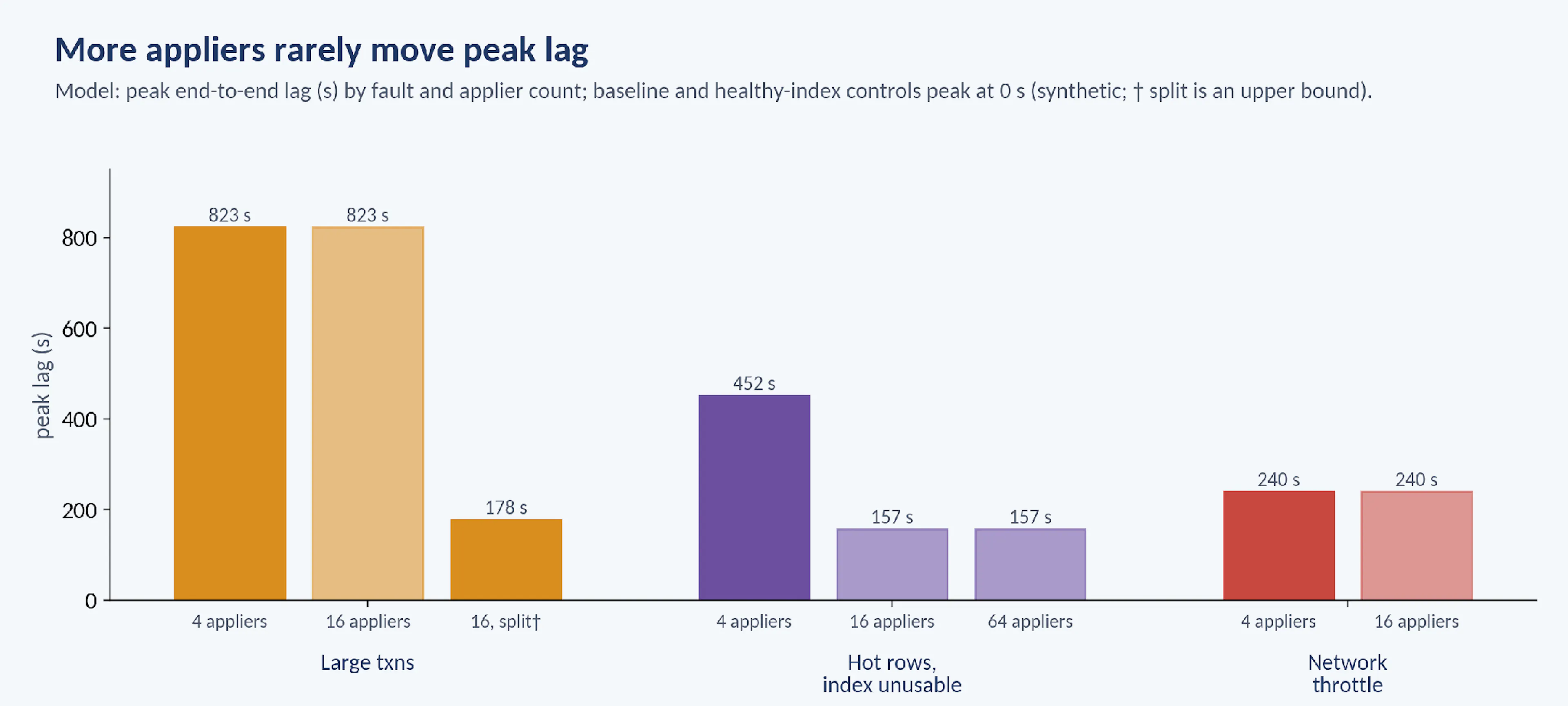
Apply parallelism helps only when the apply stage is the bottleneck and the workload is not serialized by dependencies, barriers or hot rows.
A missing or unusable index on the target turns replicated updates into scans, and on hot tables extra appliers stop helping once each hot-row chain is saturated.
Once an upstream bottleneck clears, the backlog moves downstream, so drain time is set by the next-slowest stage rather than by the original fault.
Executive Summary
When replication falls behind, the reflex is to raise Replicat parallelism, which works only when apply is the binding constraint.…