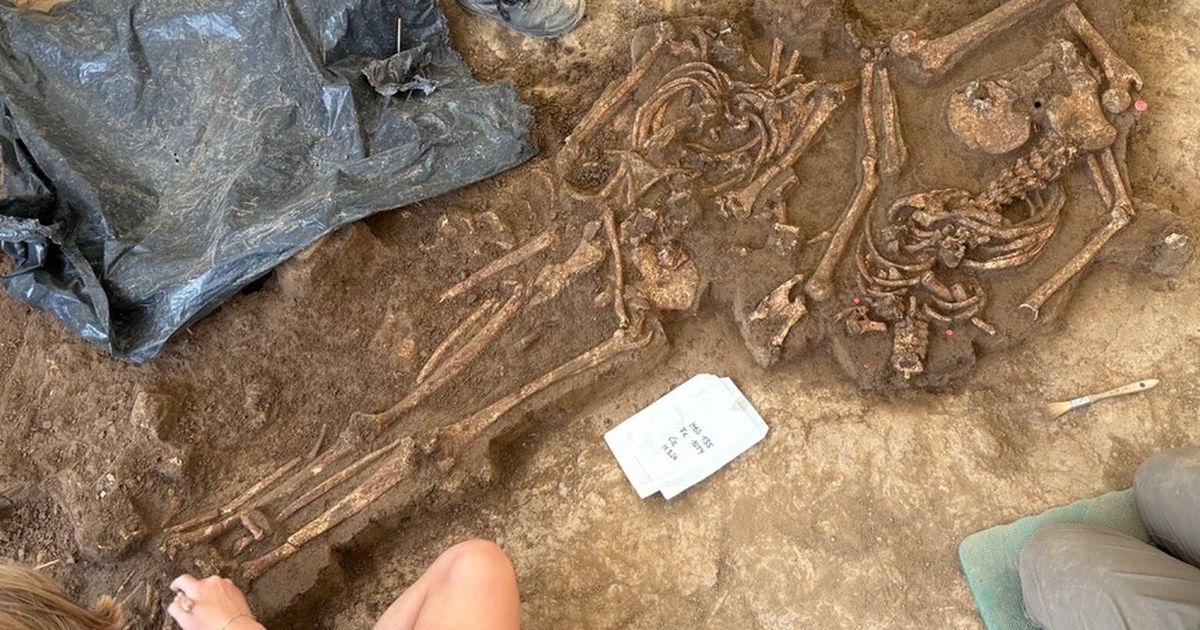
Amid the monotonous expanse of a Slovakian wheat field, archaeologists unearthed something unsettling: four human skeletons, each missing its head.
The remains had been deposited some 7,000 years ago within a V-shaped ditch marking the perimeter of a farming settlement. Burying the dead near the living was a routine feature of neolithic life — but the systematic absence of skulls and lower jaws was decidedly not.
Since that initial discovery in 2017, excavations on the outskirts of Vrable, a quiet hamlet about 60 miles east of Bratislava, have yielded a progressively more gruesome census. In June, researchers at Kiel University in Germany documented the remains of 77 headless individuals — men, women and teenagers — packed together near one of the settlement’s entrances.
The bodies had been interred in a chaotic jumble within a space no larger than a single-car garage. They lacked the standard grave goods typical of the period, such as ceramic bowls, beads and arrowheads.…