The worms’ life cycle depends on flies that feed from the animals’ eyes, slurping up tears and secretions. When they feed from an infested eye, the flies can pick off the worms’ first-stage larvae, which use the insect as both an incubator and an air taxi. Inside the fly, the larvae molt twice, becoming third-stage larvae, which then migrate to the fly’s mouthparts and await the next stop at a suitable watery eyeball. The larvae disembark their flying nannies and take up a permanent peeper residence, where they develop into adults after one more molt. Adult worms then live and mate directly on a victim’s eyes.
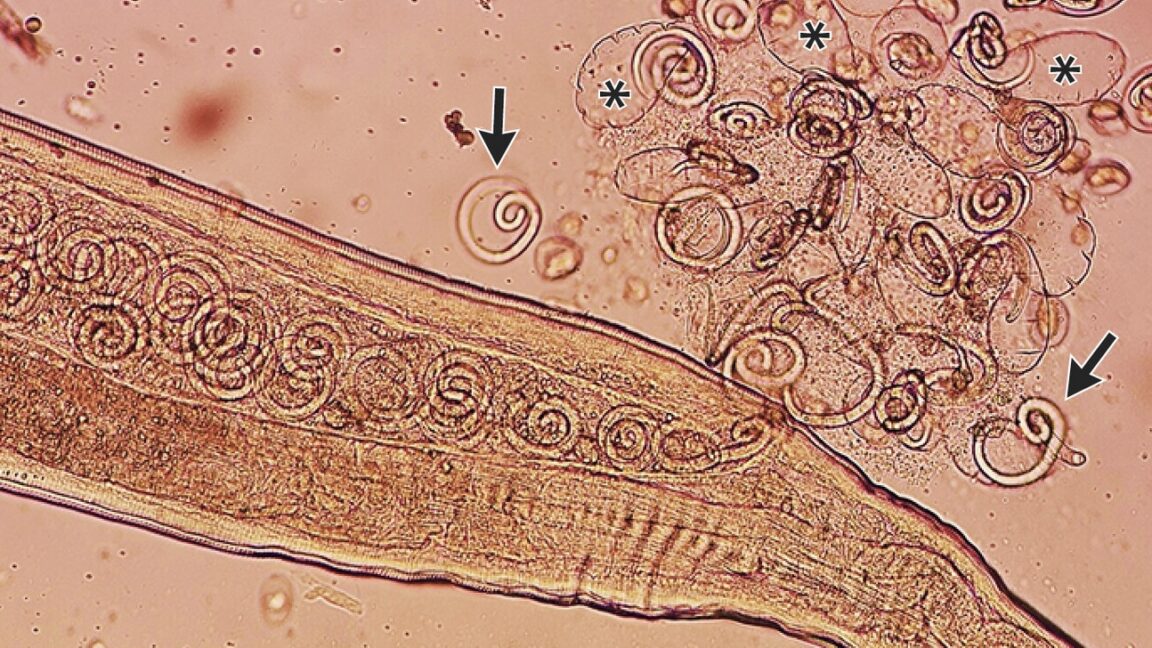
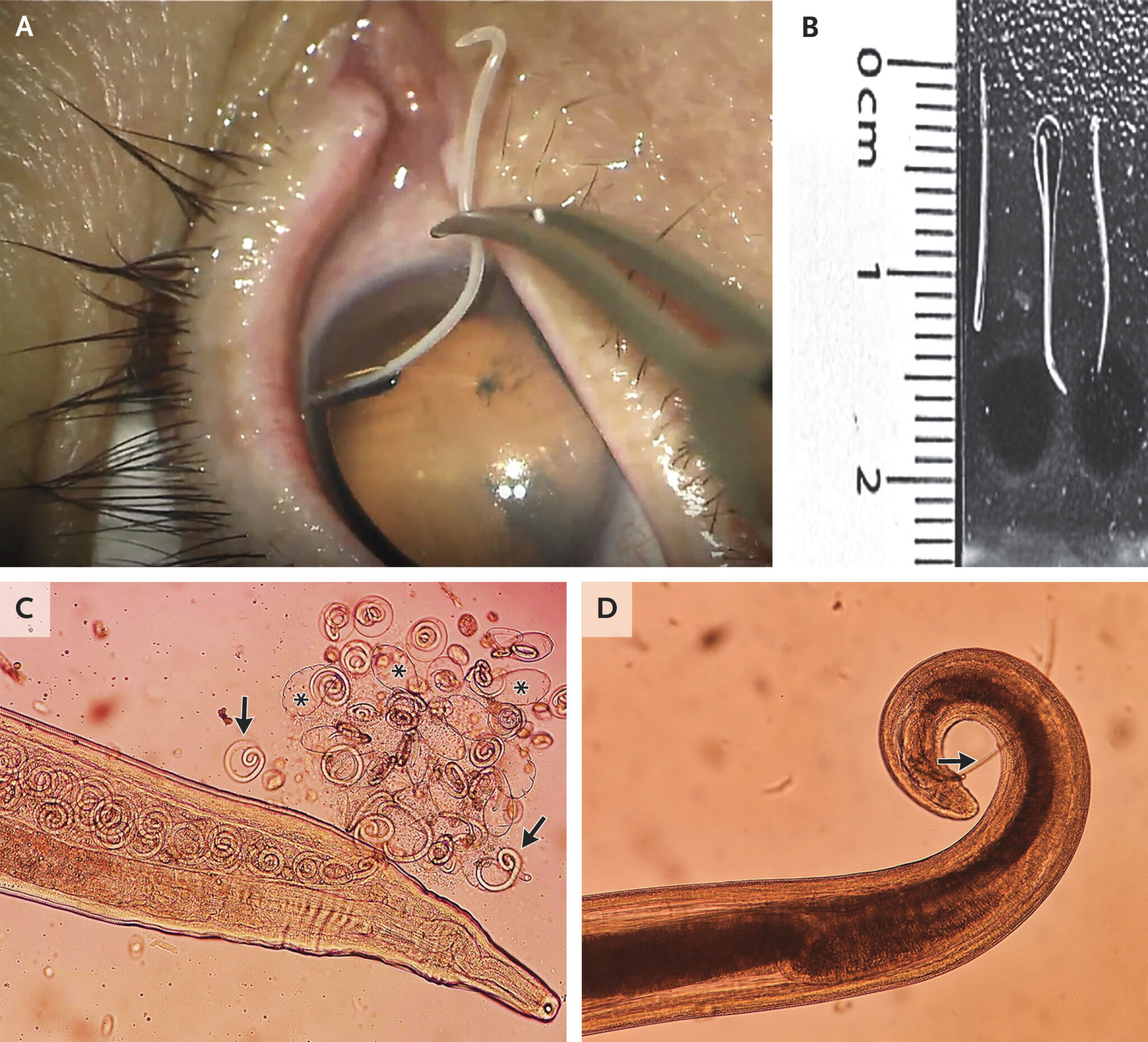
Worm measuring 11 to 20 mm in length were removed with fine forceps (Panels A and B). Some of the female worms (Panel C) were pregnant and released embryonated eggs (asterisks) and densely coiled first-stage larvae (arrows) from their uteri.…