A new study suggests people hunted and processed game near a large, lush, freshwater lake in what is now southern Saudi Arabia, challenging the assumption that humans just passed through the region
November 17, 2026 8:10 a.m.
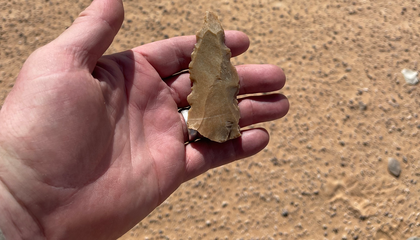
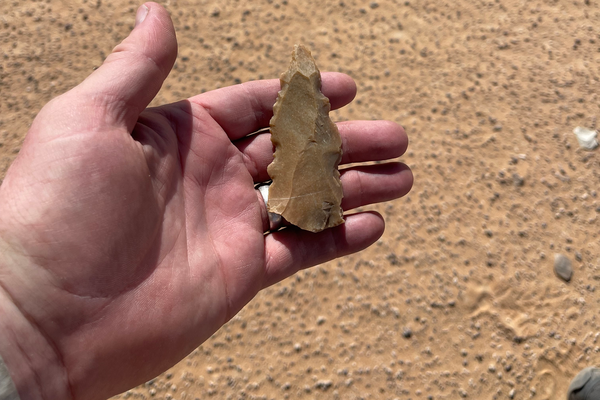
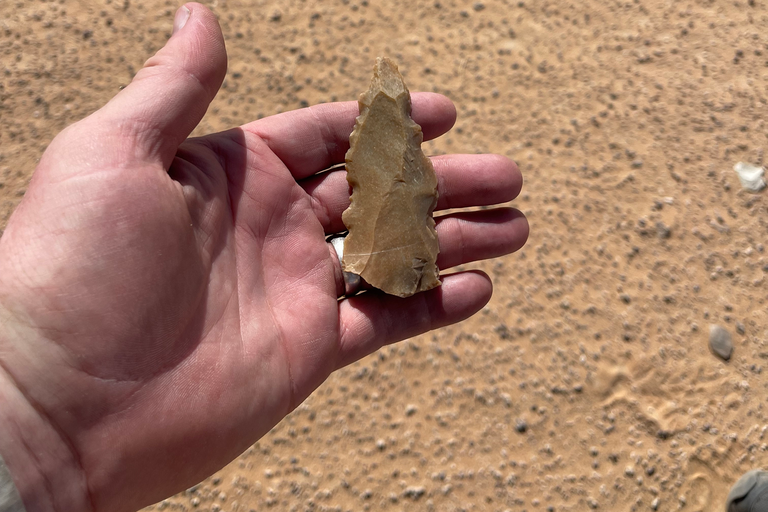
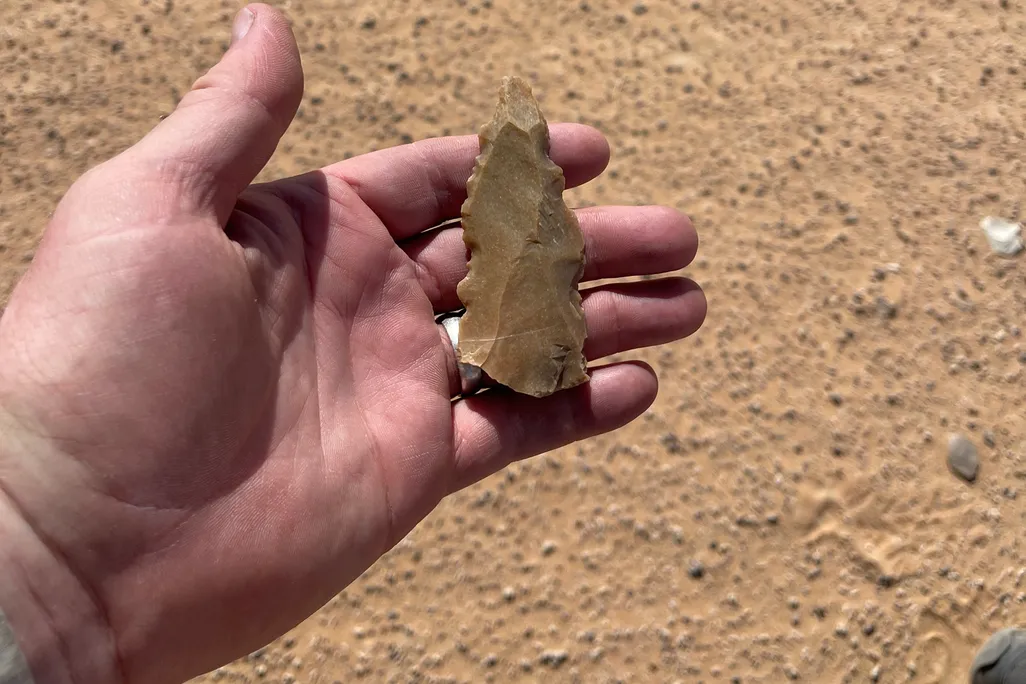
A stone point unearthed at the Uruq Aljelibah site Chris Clarkson
Today, southern Saudi Arabia is a hot, dry desert, with sand dunes as far as the eye can see. But 125,000 years ago, it was home to a lush, freshwater lake that supported animals like hippopotamuses, buffalo, ostriches, camels, gazelles and oryx.
A new study, published November 12 in the journal Science , suggests that ancient humans took advantage of this rich biodiversity—and may even have created poisoned weapons to take down their prey.
Researchers conducted excavations at a Middle Paleolithic site known as Uruq Aljelibah, which means “sand dunes of a watering hole.” It’s located in the Empty Quarter, or Rub' al-Khali , a vast desert region spanning southern Saudi Arabia, as well as parts of Yemen, Oman and the…