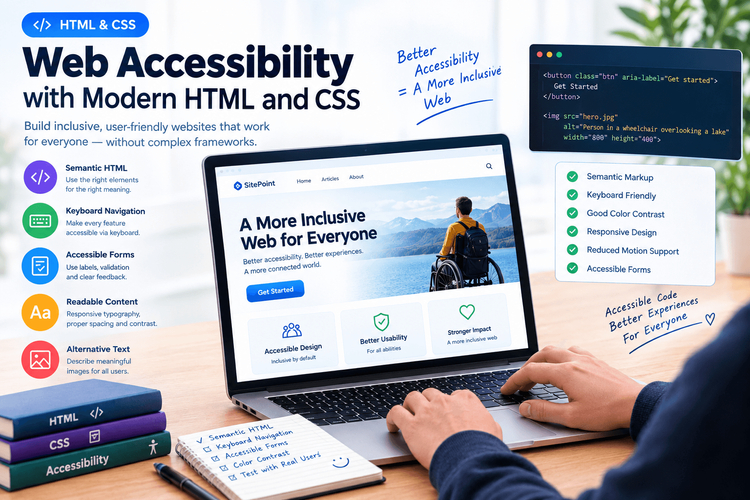
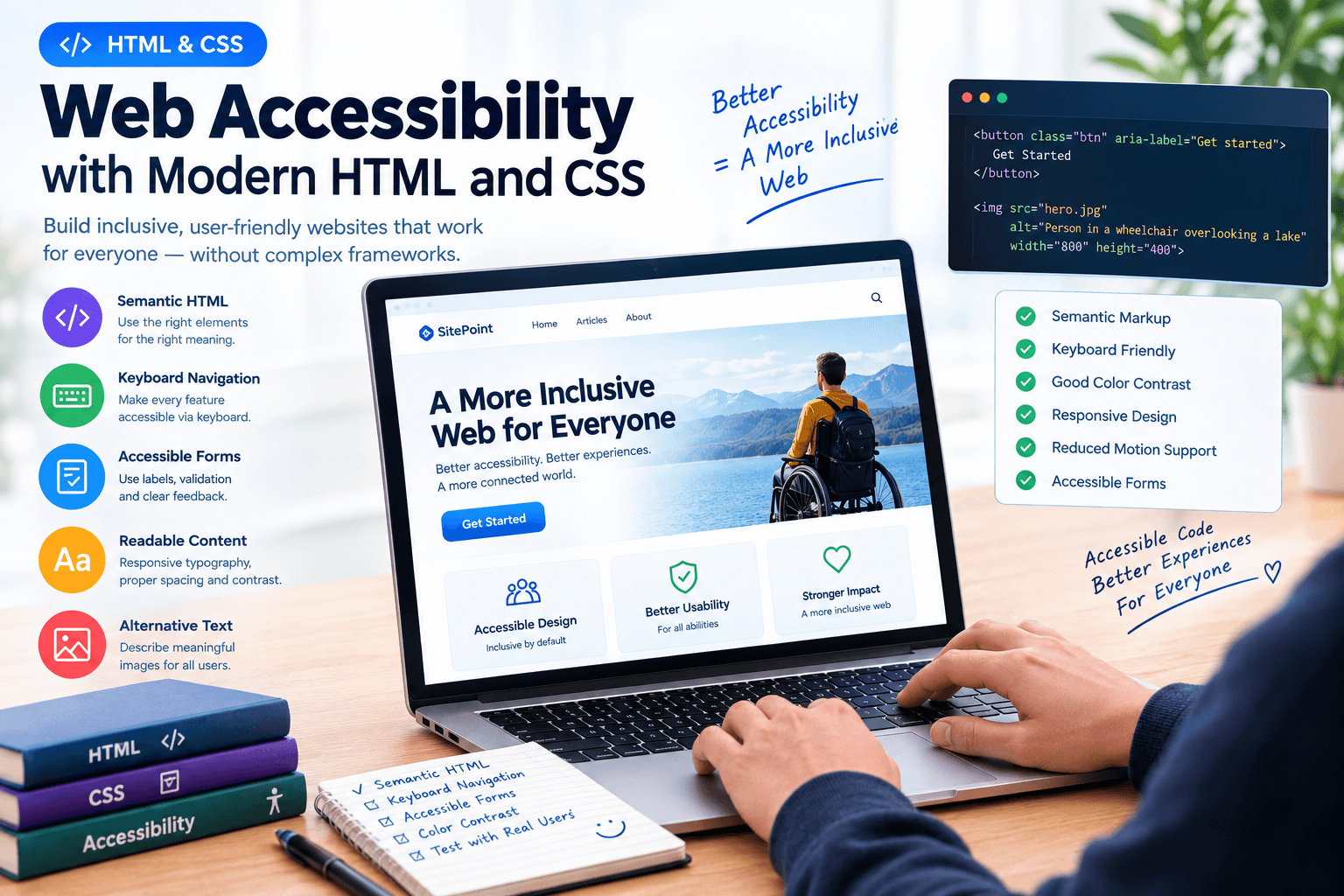
Accessibility is an essential part of modern web development. A website may look polished and function correctly with a mouse, yet remain difficult to use for people who rely on keyboards, screen readers, magnification, or other assistive technologies.
Building accessible interfaces does not necessarily require complicated frameworks or extensive JavaScript. Many improvements begin with choosing the right HTML elements, providing clear labels, maintaining visible focus indicators, and using CSS that accommodates different user needs.
For developers, the goal is to create interfaces that remain understandable and usable across different devices, input methods, and accessibility requirements.
This article explores practical HTML and CSS techniques that can help make web interfaces more inclusive without adding unnecessary complexity.
1. Start With Semantic HTML
Semantic HTML gives elements a meaningful purpose.…