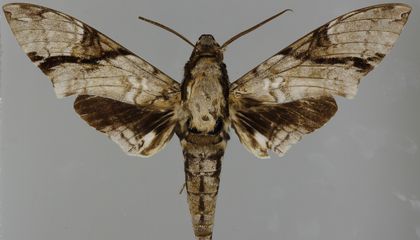
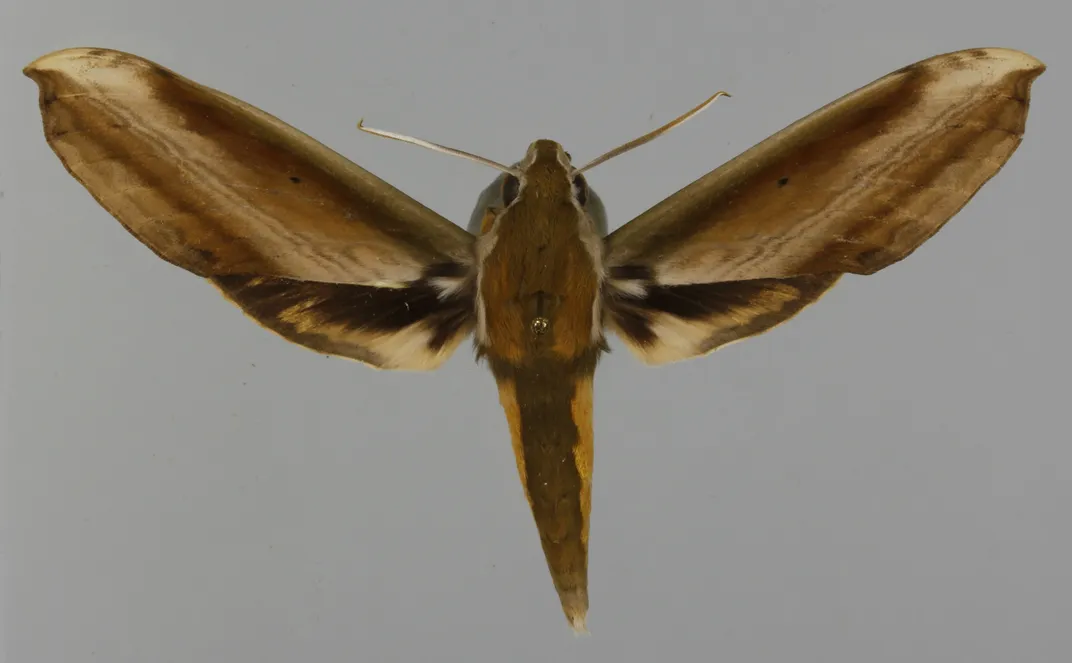
New research suggests male hawkmoths have three distinct anti-bat, ultrasound-producing systems. These may have evolved independently up to seven times between 5 million and 30 million years ago
November 6, 2026 11:00 a.m.
The black-belted hawkmoth ( Megacorma obliqua ) is one of the species that produces ultrasound. Paul Masonick
Bats primarily use echolocation to hunt prey, using their sophisticated biological sonar systems to find and capture tasty insects in the dark. But some moths have evolved a clever workaround to these attacks: They use their genitalia to produce high-frequency sound waves that essentially scramble their pursuers’ sonar, causing them to miss their intended target and fly away hungry.
This is such an effective strategy for staving off bat attacks that it’s arisen in moths independently up to seven times between 5 million and 30 million years ago, researchers report in a study published November 4 in the Proceedings of the Royal Society B .
Different lineages of hawkmoths —a…