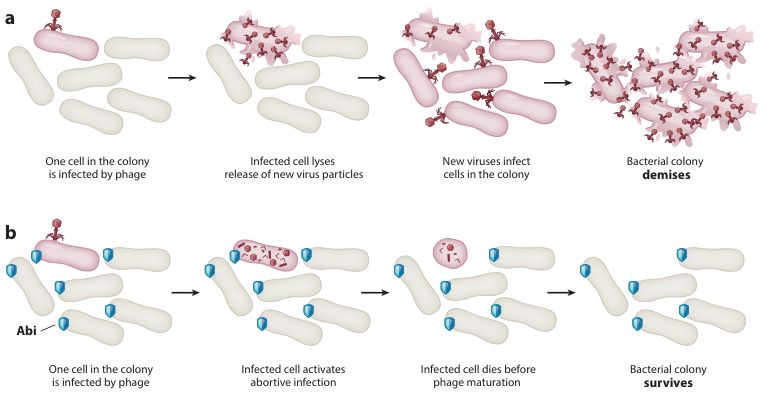
Over the past decades CRISPR, short for “clustered regularly interspaced short palindromic repeats”, has become somewhat of a household name, holding the promise of directly addressing genetic mutations by effectively removing, silencing, or even fixing them. Yet the original purpose of CRISPR is slightly less cute and cuddly: the evolutionary origin of these DNA sequences is that of a core component of the prokaryotic immune system.
In most medical applications today we only try to use CRISPR to detect sequences and then apply enzymes such as the well-known Cas9 to cut DNA at specific locations in the process of gene-editing. In a recent study (paywalled, bioRxiv pre-print ) by Jingkun Zheng et al.…