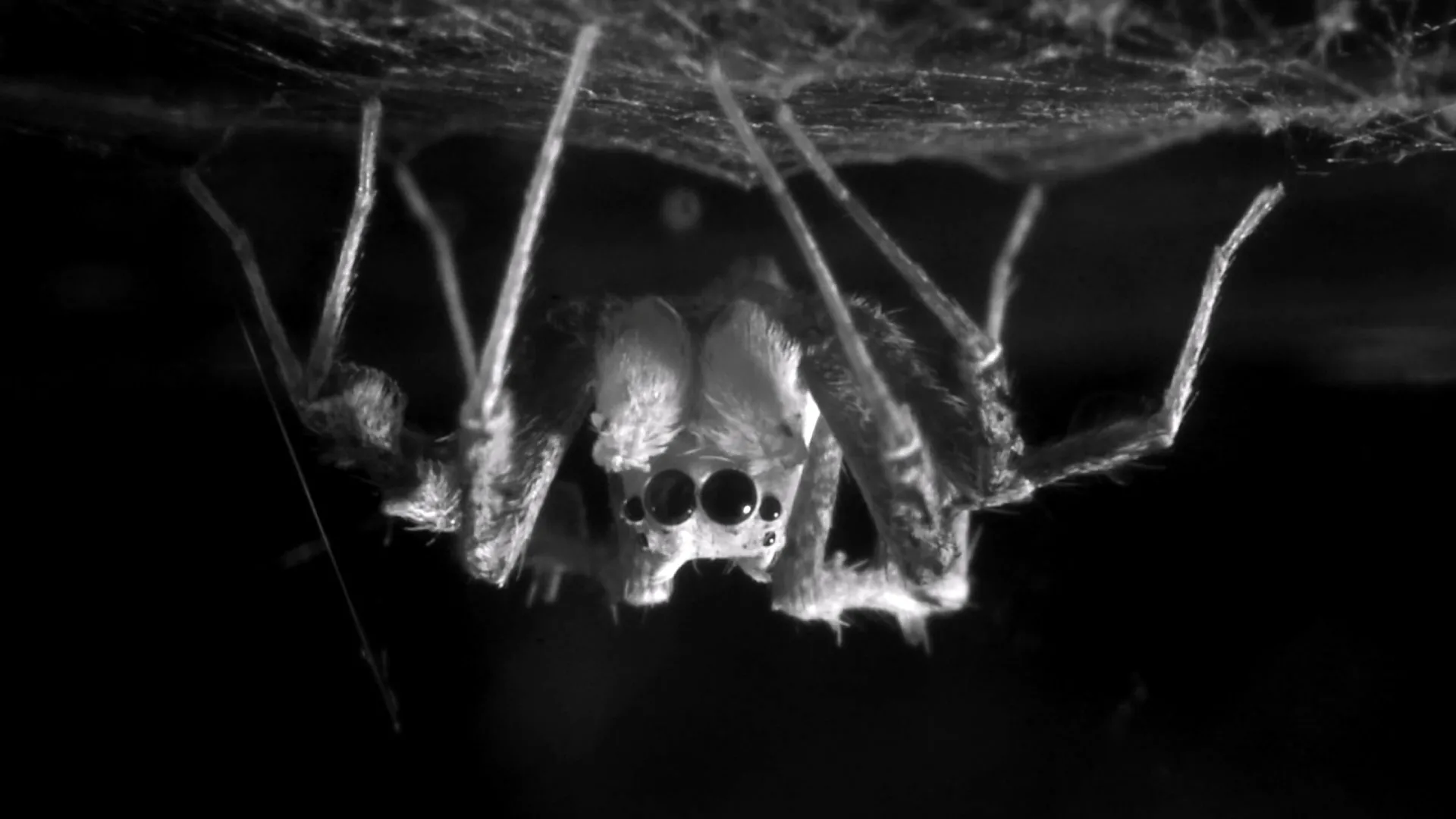
Scientists at the University of Bonn have discovered that spiders experience distinct stages of sleep, including a REM-like state that shares surprising similarities with human sleep. During this stage, the spiders move their eyes and twitch their muscles, behaviors also associated with REM (rapid eye movement) sleep in humans and other vertebrates.
The findings provide the first comprehensive experimental confirmation that spiders experience genuine, regulated sleep rather than simply remaining inactive. They also raise intriguing questions about how sleep evolved and whether animals with very different nervous systems might share some of its fundamental features.
Researchers at the University of Bonn's Institute of Organismic Biology made the discovery while studying the Australian jumping spider Portia fimbriata, a small but remarkably sophisticated predator.
A Tiny Spider With Remarkable Hunting Skills
The Australian jumping spider Portia fimbriata is only about the size of a one-euro coin when fully…