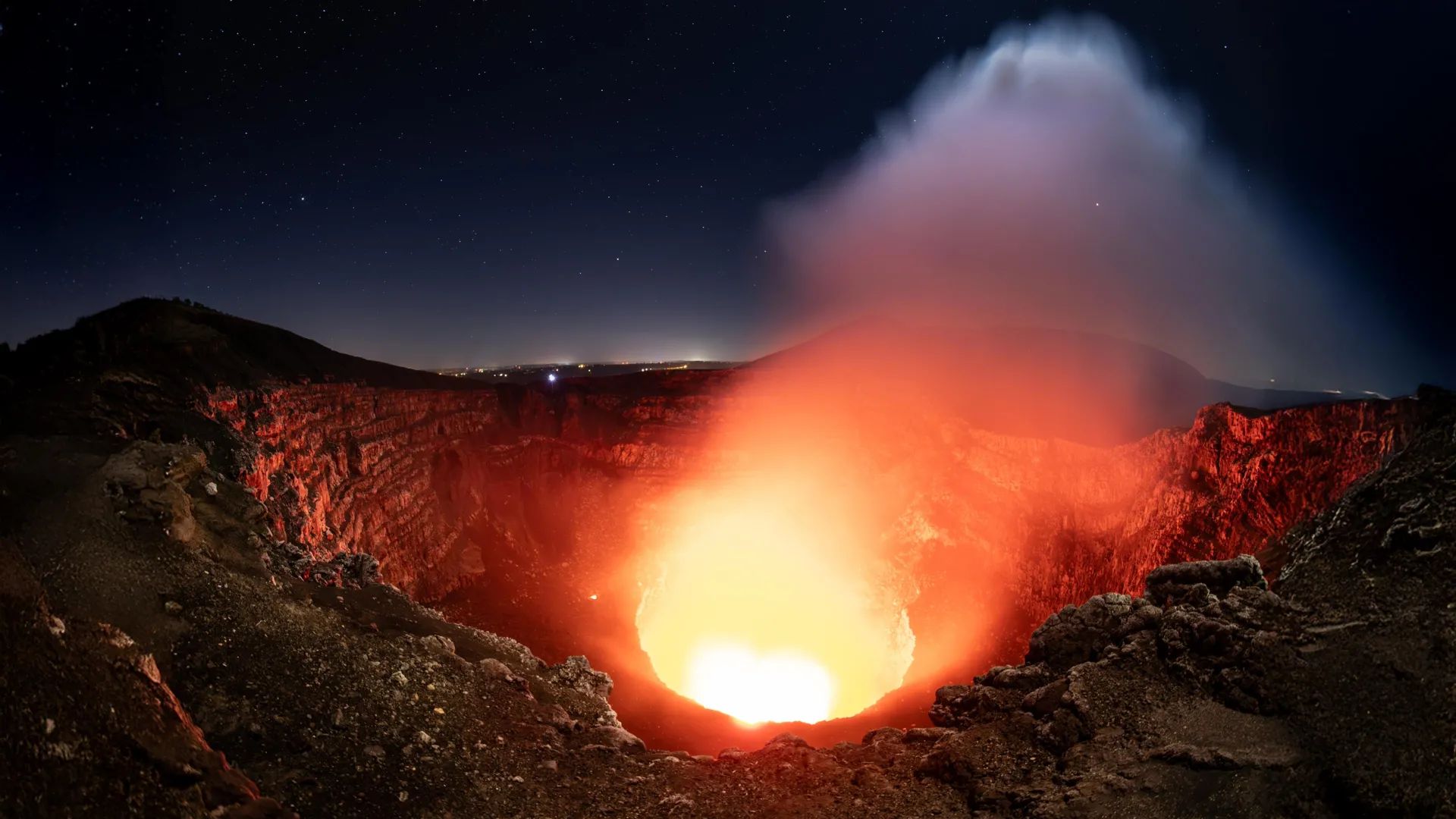
A volcano famous for its glowing lava lake is hiding a surprisingly complex system of magma deep underground. Scientists at Penn State have uncovered evidence of two previously unrecognized magma sources beneath Nicaragua's active Masaya volcano, raising new questions about how molten rock moves beneath the surface.
The discovery is particularly important because approximately 2 million people live within 13 miles of the volcano, which is also a popular tourist destination. Understanding its underground activity could help scientists recognize warning signs of future eruptions and better protect nearby communities.
Using six years of satellite observations, researchers tracked subtle changes in the ground around Masaya. They discovered that one part of the volcano initially sank before beginning to rise, possibly indicating that fresh magma was entering a deep reservoir.…