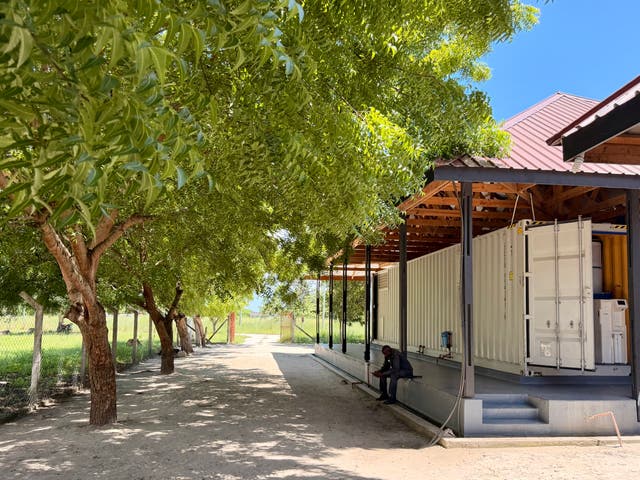
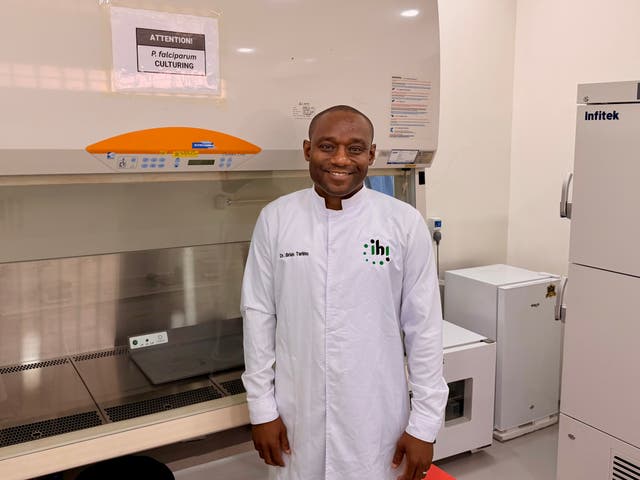
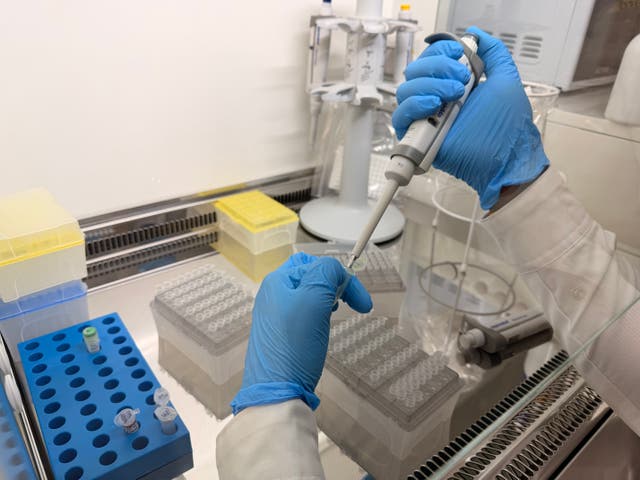
I nside a shipping container shaded by mango trees in the sleepy coastal town of Bagamoyo, Tanzania , research scientist Dr Brian Tarimo uses an ultra-fine needle to inject mosquito eggs lined up along a microscopic slide.
Grey and non-descript from the outside, the container holds a state-of-the-art research lab built in Spain and imported in its entirety to the Ifakara Health Institute, which is a leading research centre in Tanzania. The needle, meanwhile, contains genetic material precisely modified by CRISPR gene-editing – a scientific breakthrough that won the 2020 Nobel Prize for chemistry – which blocks the development of Plasmodium parasites that cause malaria .
It’s a process that could be game-changing in the millennia-long fight against malaria, which continues to kill more than 600,000 people per year.
“In terms of the science, we have shown in the lab that we can block the spread of malaria in this way,” says Dr Tarimo, who reveals that there are around 10,000 mosquitos in the shipping…