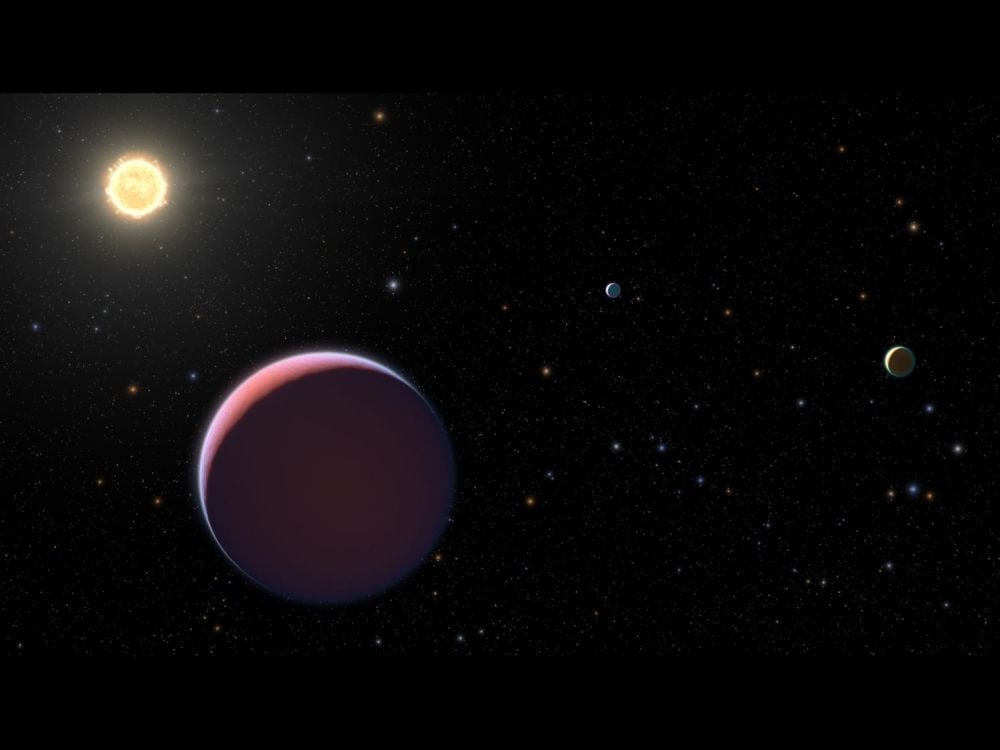
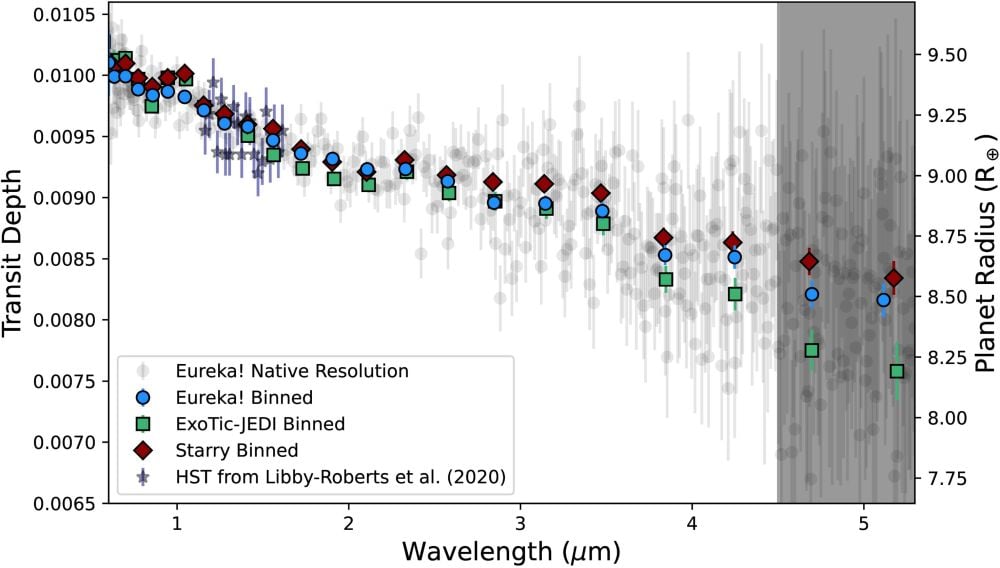
There are some strange types of exoplanets out there with no counterparts in our Solar System. One of those types is super-puff planets. These oddballs have radii larger than Neptune, but only have a few Earth masses. This means they have large volumes and low density. How this peculiar type of exoplanet forms is unclear, and current models of gas giant formation can't account for them. Kepler-51 is 500 million year old Sun like star about 2620 light-years away that hosts 3 super-puff planets. One of them, Kepler-51d, is the coolest and the least dense of the three. It's the subject of new research in The Astronomical Journal. In it, the researchers test the three hypotheses that try to explain Kepler-51d, and super-puffs in general. The research is " The James Webb Space Telescope NIRSpec-PRISM Transmission Spectrum of the Super-puff, Kepler-51d ," and the lead author is Jessica Libby-Roberts.…