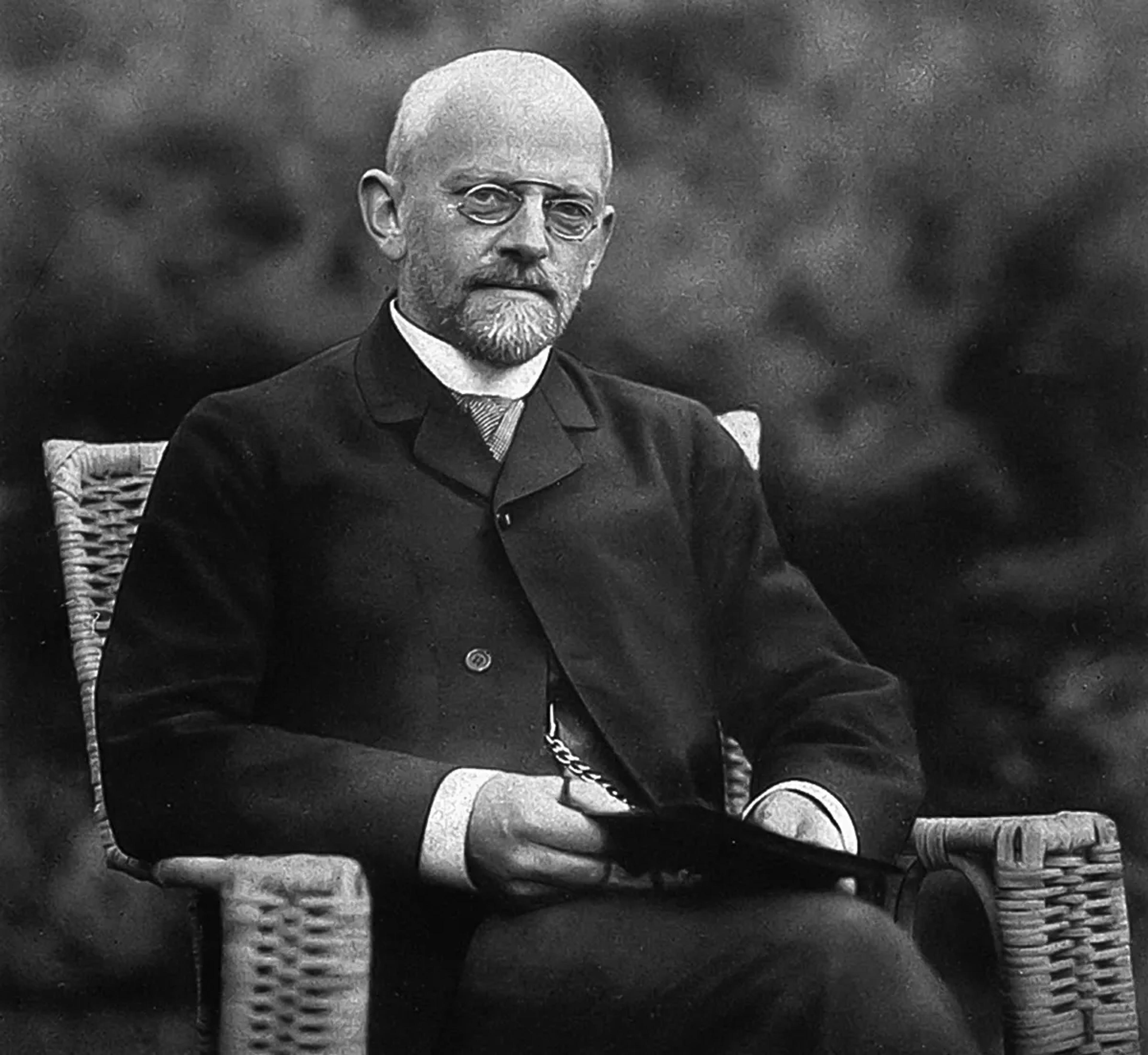
On the evening of 8 September 1930, the German mathematician David Hilbert stepped up to a microphone in Königsberg and addressed his countrymen by radio. He was 68, recently retired, and at the height of his fame. The talk was a defence of pure reason, delivered in the city of Immanuel Kant, and it ended with two phrases that would later be carved on his tombstone: Wir müssen wissen. Wir werden wissen . We must know. We shall know.
David Hilbert. Courtesy the University of Göttingen
Are certain questions closed to the human mind? Are there truths about the world that we can never know? Hilbert thought that, at least within mathematics, this could not be the case. For him, mathematics was a game played with symbols: one could fix the right axioms as rules of the game and every mathematical problem could be solved.…