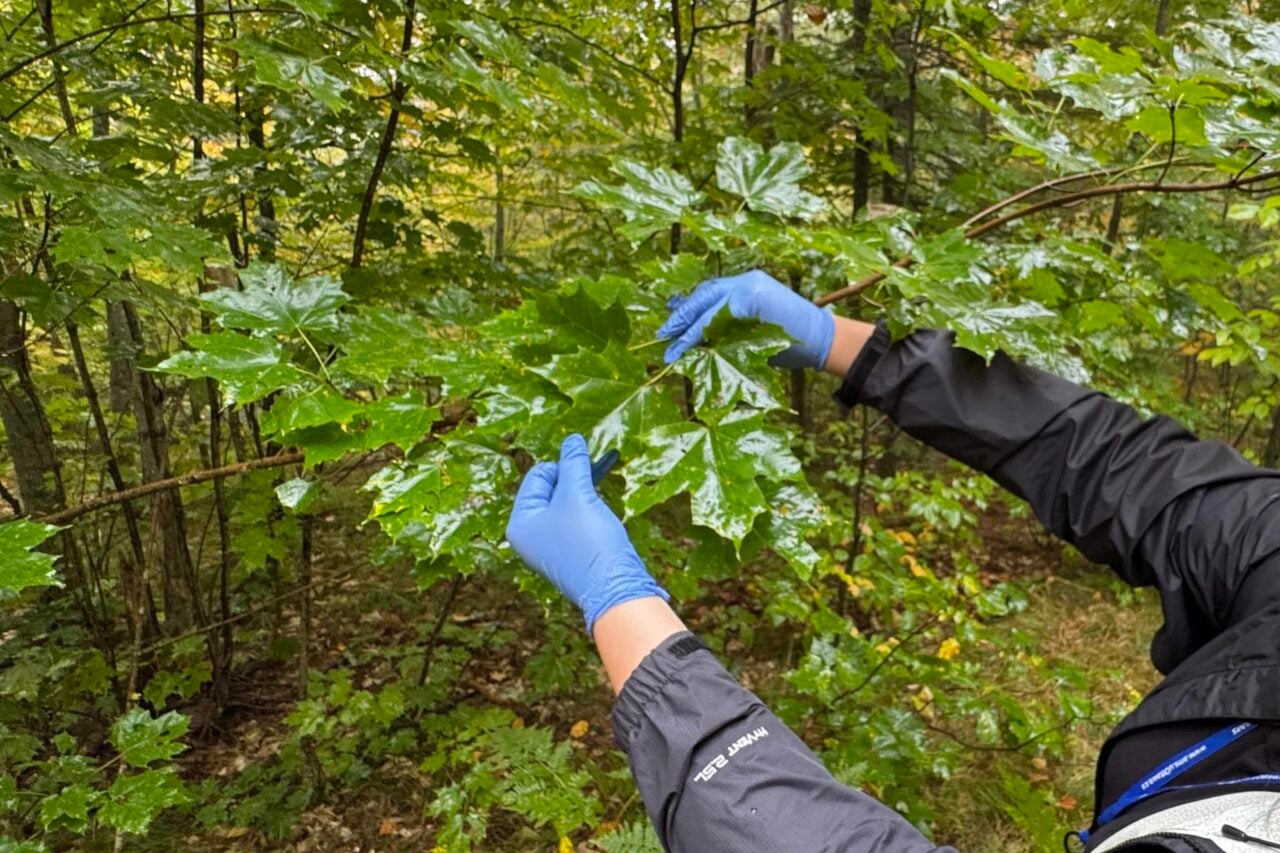
Scientists call it the “bomb pulse.” At the height of the Cold War, above-ground nuclear weapons tests by the Soviet Union, the U.S., and their respective allies roiled quiet stretches of the Pacific and other test sites around the world. The tests dramatically altered the isotopic composition of Earth’s atmosphere, doubling its carbon-14 levels. Neutrons radiating from these blasts collided with nitrogen gas, transforming some of them into carbon-14 and forming traceable patterns across the planet’s carbon cycle for decades, nearly doubling global levels of this radiocarbon at the bomb pulse’s peak.
In Quebec’s Gatineau Park, across the river from Ottawa, this bomb-pulse carbon-14 recorded in sugar maple leaves reached its highest saturation at 842 parts per thousand above the reference level in 1964, as recorded by the Geological Survey of Canada.…