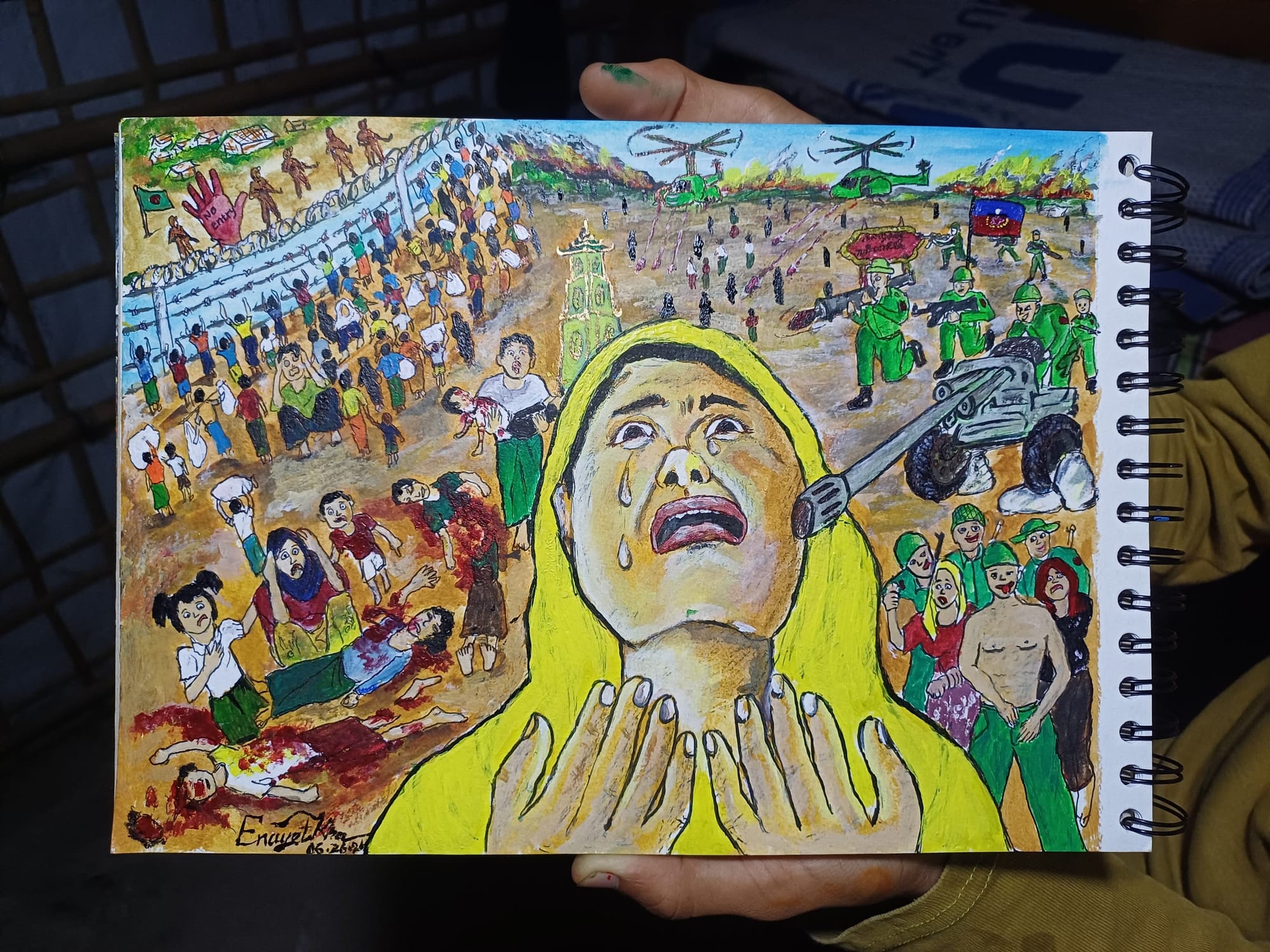
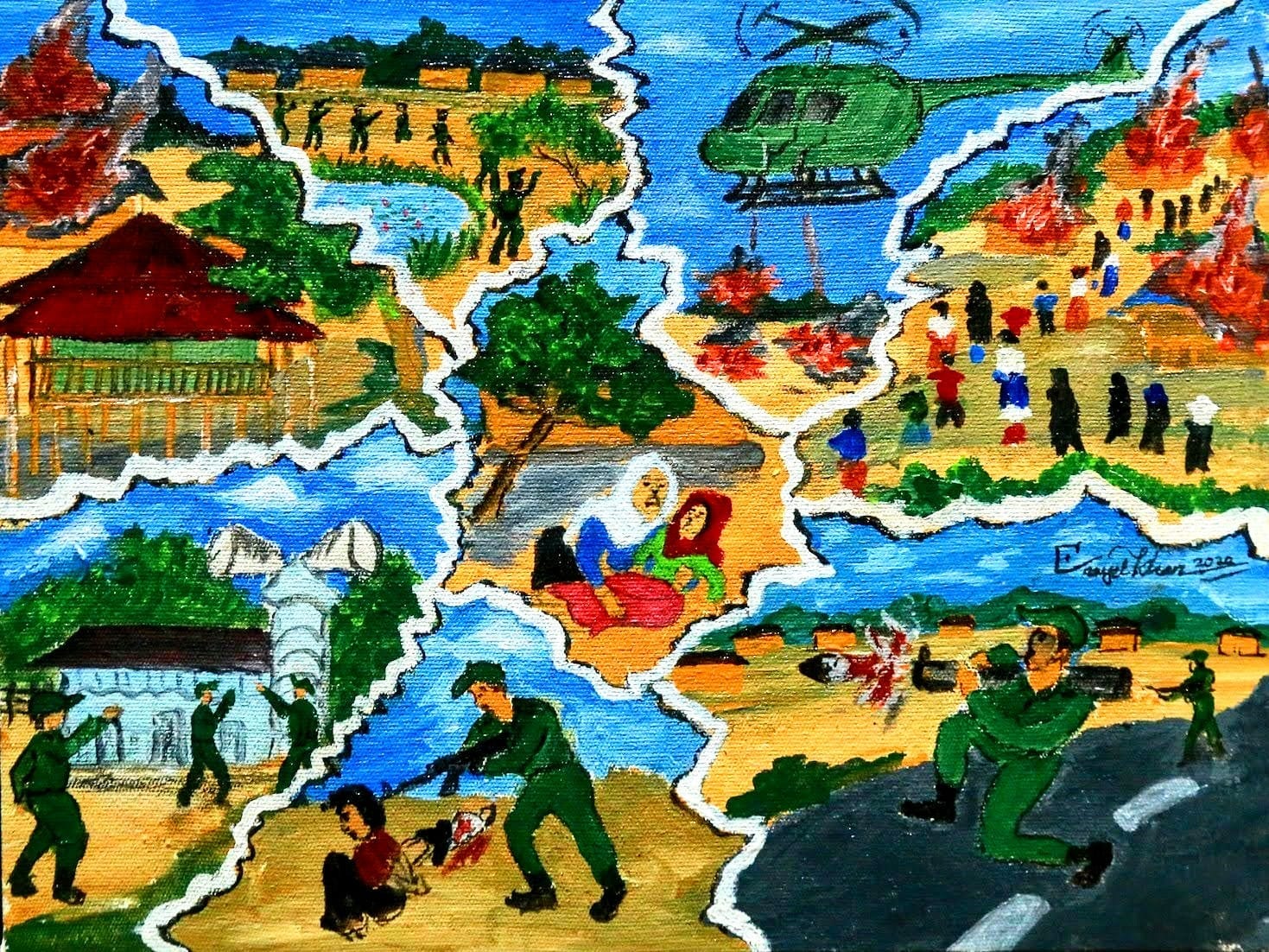
Feature In the legal system, art created by refugees and incarcerated people can serve both as a form of therapy and as evidence of mass atrocities.
October 23, 2026 — 10 min read
A woman weeps in the foreground of a painting by Rohingya artist Enayet Khan, set against scenes of violence committed by Myanmar’s military during the Rohingya genocide. (image courtesy Enayet Khan)
Enayet Khan fled Myanmar in 2017. For three days, he moved through forests and fields with his family, slipping from one village to the next as fires closed in behind them. Each time they stopped, the safety was temporary — by morning, that village too would be burning. His own home had already been reduced to ash, but there was no time to mourn what was lost. Armed soldiers moved quickly, and Khan saw people being shot in front of him. The goal was simple : to survive long enough to find a way out of Myanmar. Ten members of his family fled together; three were injured along the way.…