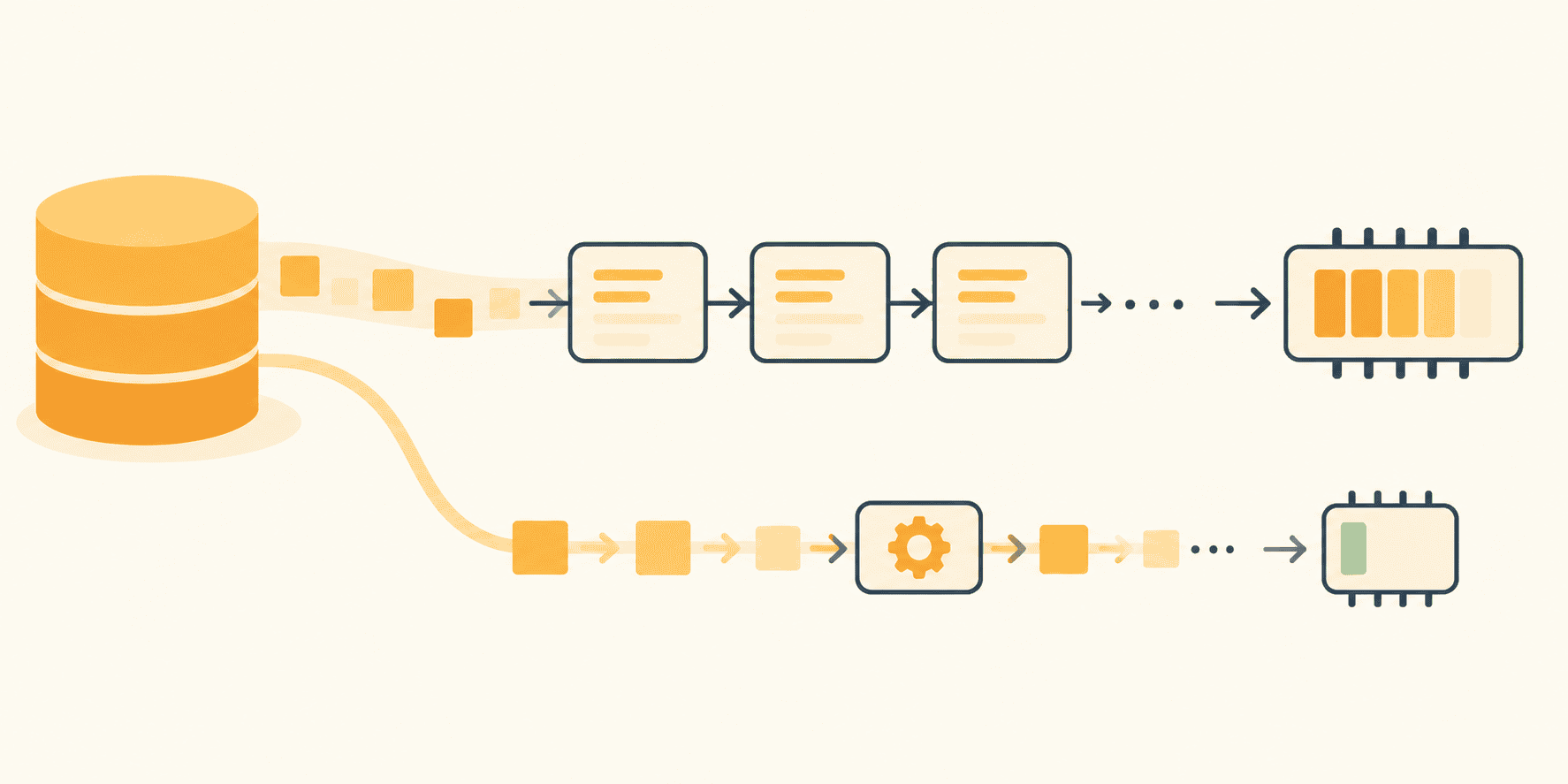
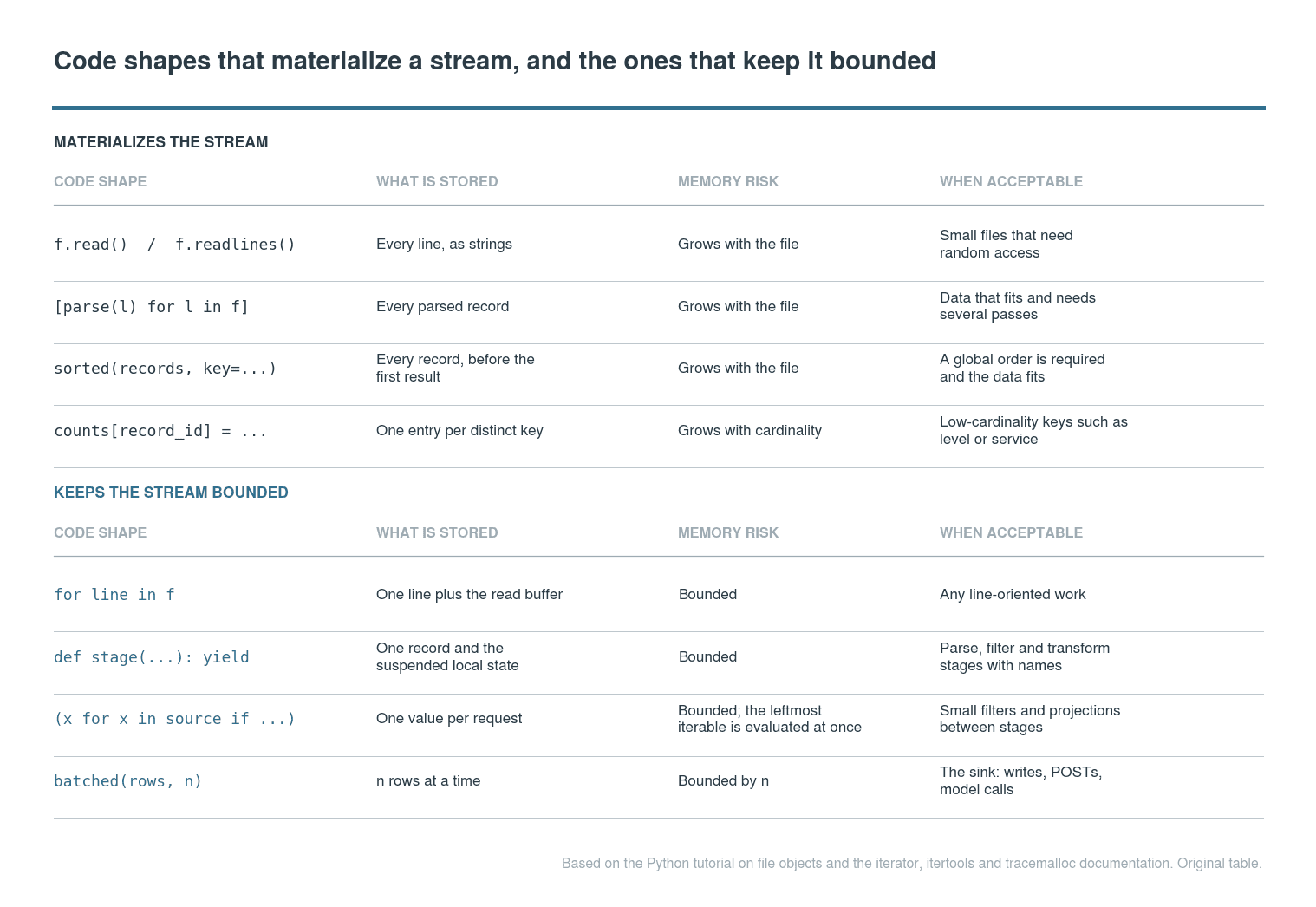
In this article, you will learn how Python’s iterators and generators can be used to build memory-efficient data processing pipelines that handle large files without loading them into memory all at once.
Topics we will cover include:
How the iterator protocol works and why it is the foundation of lazy, streaming data processing in Python.
How to build a multi-stage pipeline using generator functions and generator expressions that process one record at a time.
How to measure peak memory usage with tracemalloc to verify that a pipeline is genuinely lazy and identify where eager materialisation creeps back in.
Iterators and Generators for Memory-Efficient Processing
The script that summarizes the payments log ran fine for a year. It opened the file, built a list of parsed records, filtered the errors and printed a table. Then log rotation changed, a week of traffic landed in one 9 GB file, and the nightly job died with a MemoryError before it had summarized anything.…