A new ultraviolet space telescope will fill a gap in the spectrum, bearing witness to cosmic cataclysms and probing the evolution of the early universe.
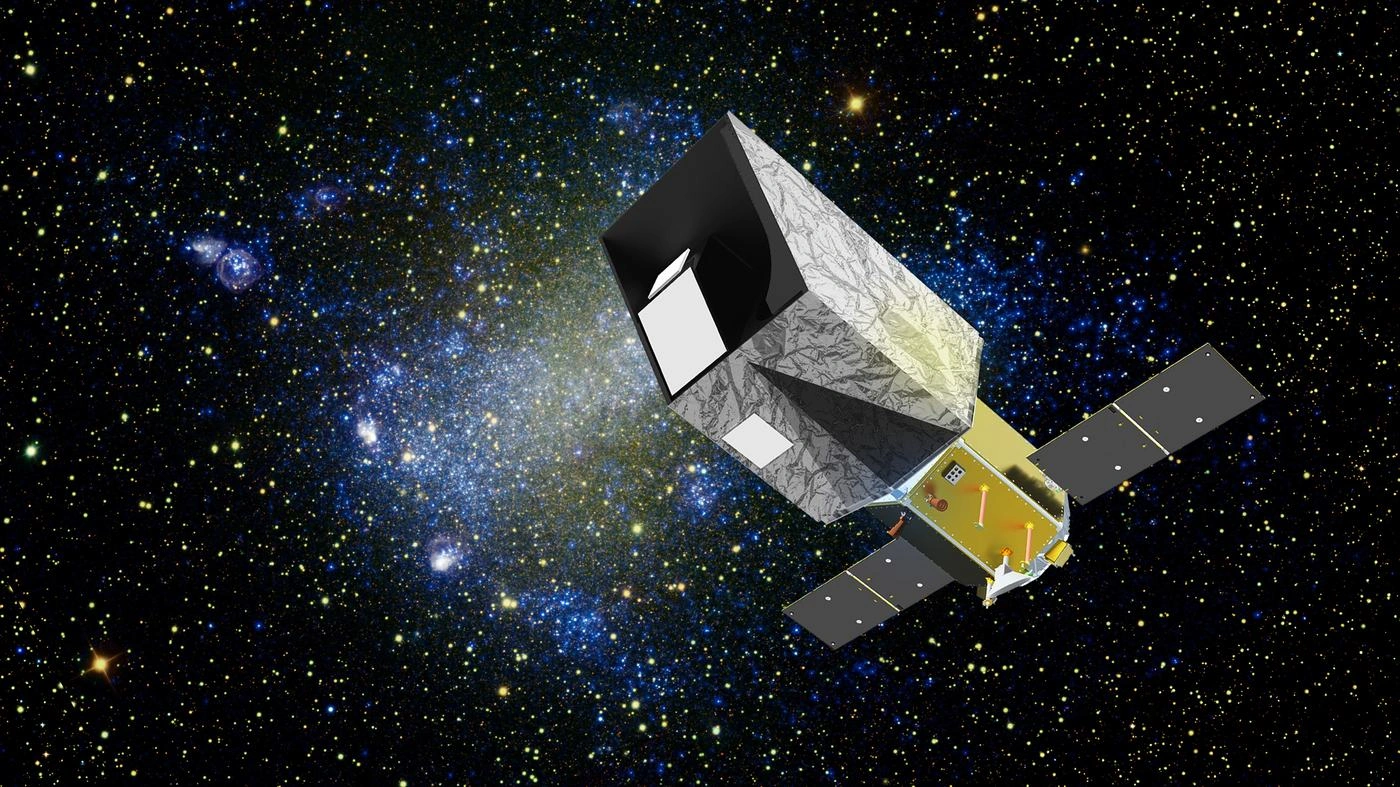
An artist's concept of the Ultraviolet Explorer (UVEX) in space.
NASA / JPL-Caltech
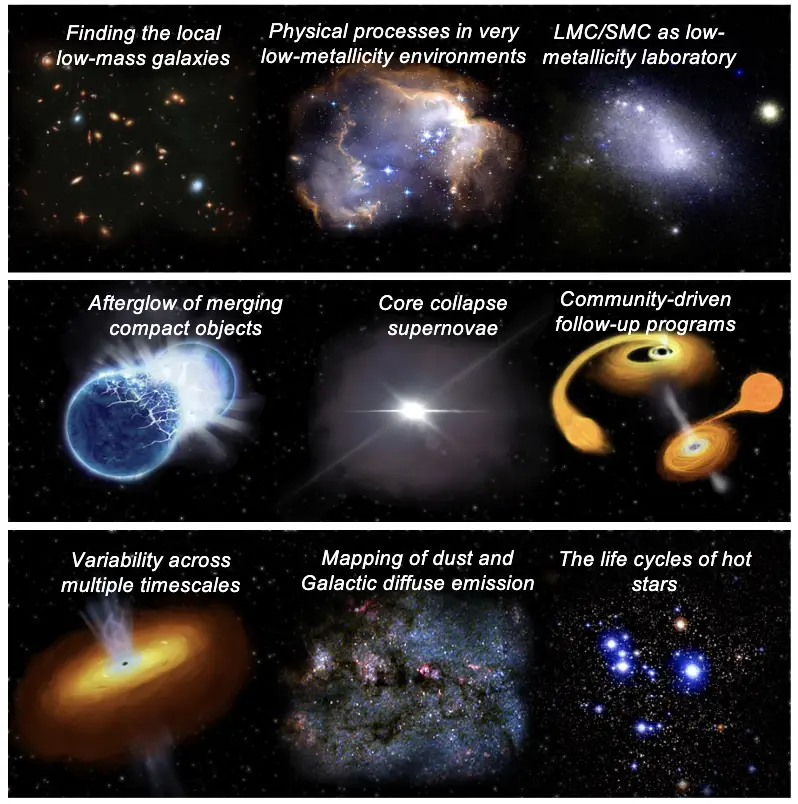
NASA announced on October 27th that the Ultraviolet Explorer ( UVEX ) has passed a key assessment that puts on the road to being built and launched by January 2031 . The mission will collect near- and far-ultraviolet wavelengths to explore newborn stars, supernovae, and colliding neutron stars.
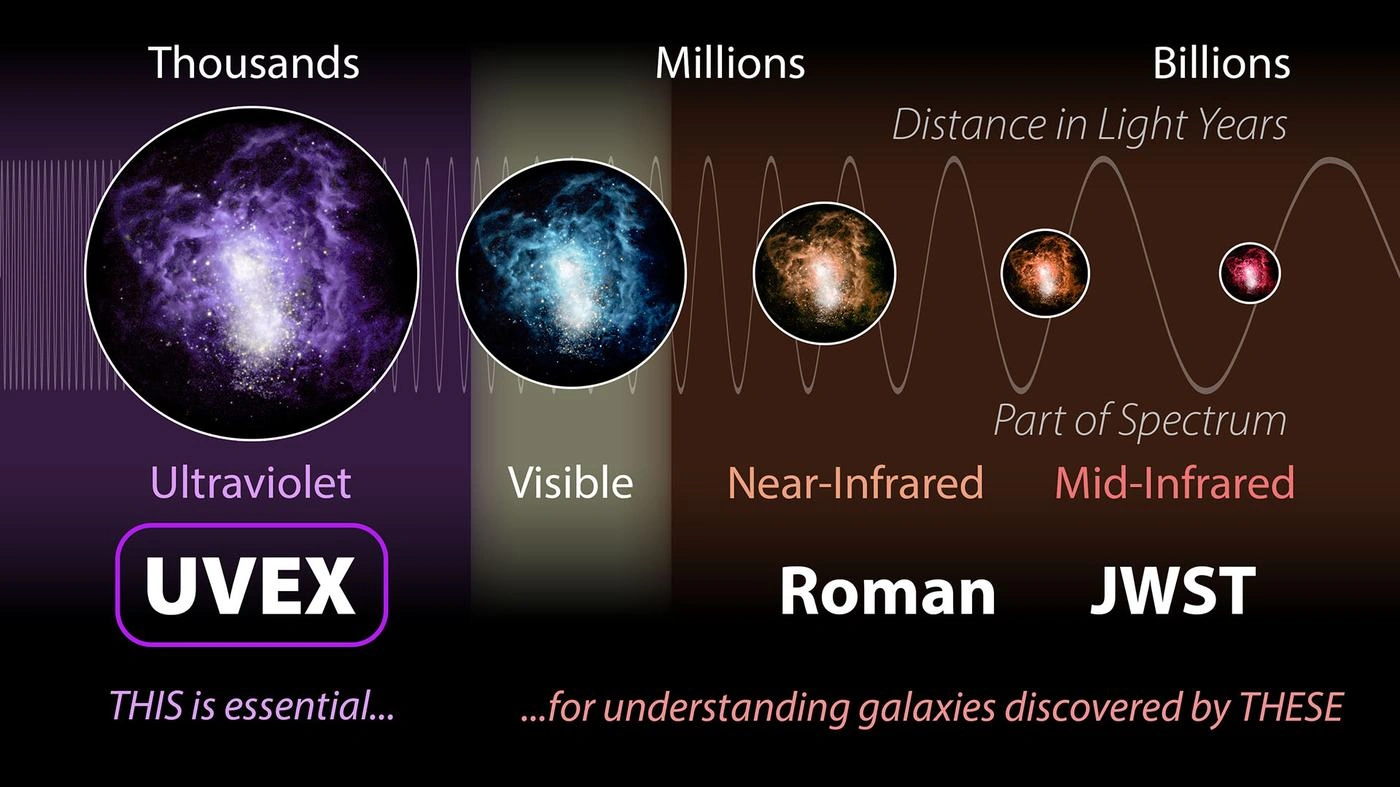
Ultraviolet wavelengths cannot be observed on Earth because our planet's ozone absorbs most UV wavelengths. Seeing the universe's violent, ultraviolet-producing processes thus requires going into space. However, not many of NASA's telescopes have focused on this window of the light spectrum. The last dedicated UV mission, the Galaxy Evolution Explorer, was decommissioned in 2013.…