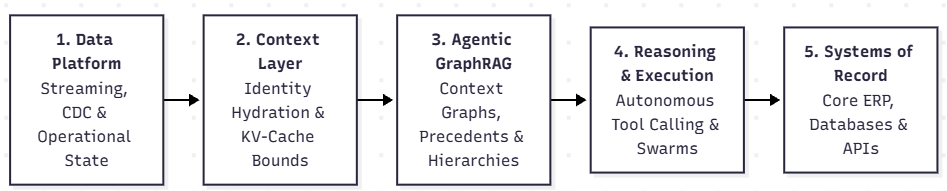
Today, enterprise implementations of Retrieval-Augmented Generation (RAG) largely fall into two foundational architectures, or deploy a hybrid of both:
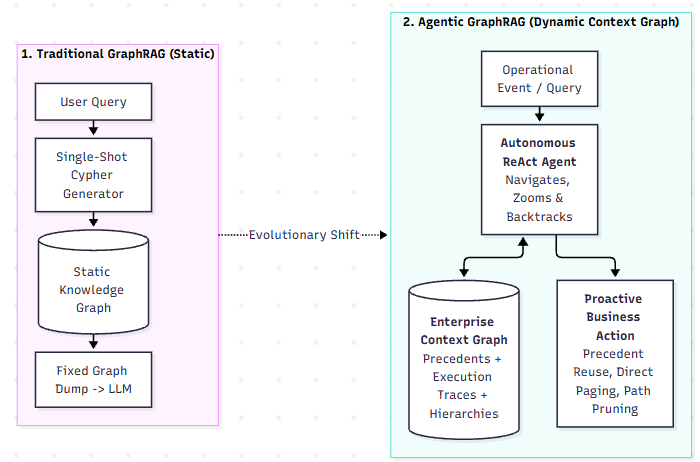
First-Generation RAG (Vector Search): Chunking unstructured documents into high-dimensional vector embeddings and performing cosine similarity searches. Useful for simple document lookup, however, struggles with multi-hop reasoning due to lack of enterprise knowledge and frequently hallucinates when facts span different sections of a document.
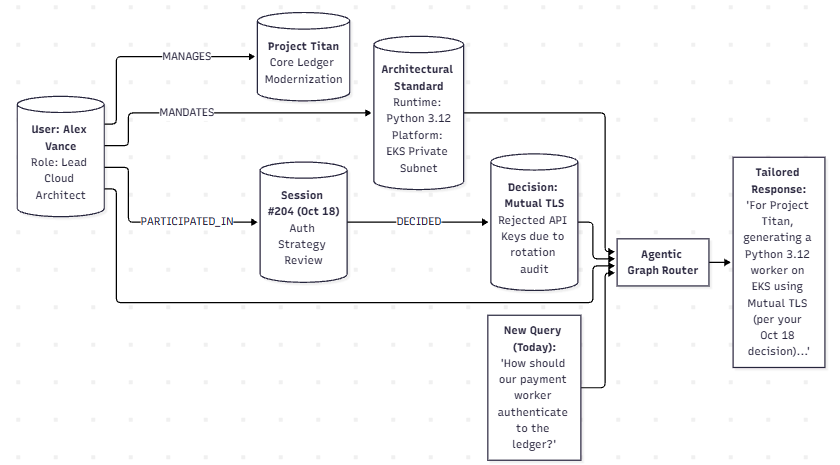
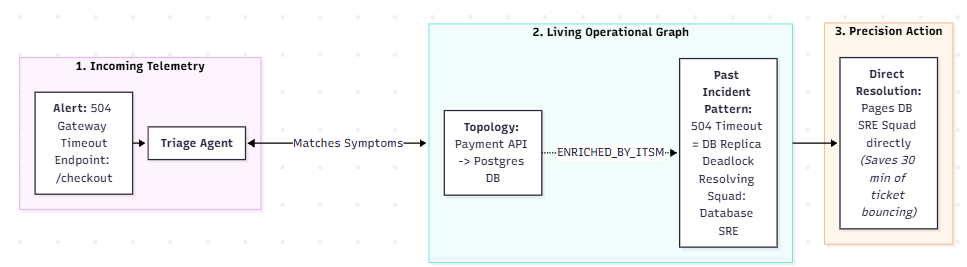
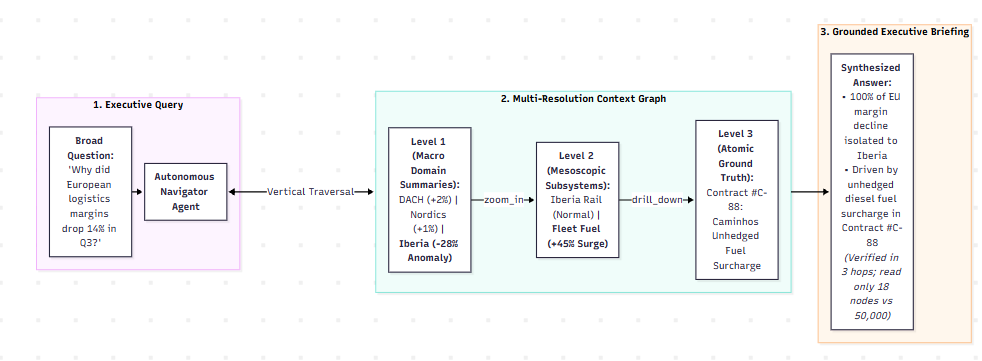
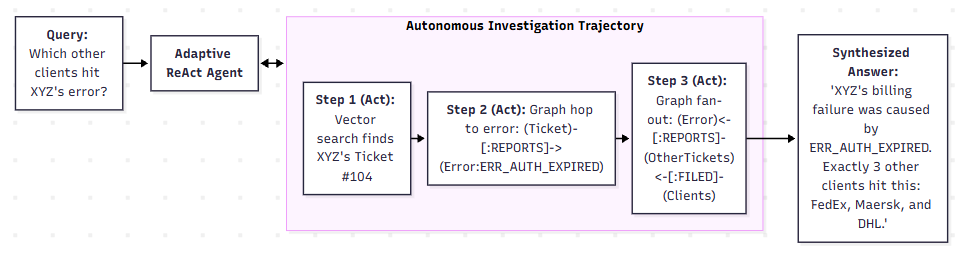
Second-Generation RAG (Standard GraphRAG): Mapping enterprise entities into Knowledge Graphs and executing static Cypher queries or global community summaries. This grounds language models in structured ground truth, but is static, rigid, and passive . Here, an engineer crafts a prompt, a single-shot Cypher query executes against the KG, pulling subgraphs or related chunks and the retrieved context is provided to the model's context window.
Static GraphRAG sometimes falls short in production operations.…