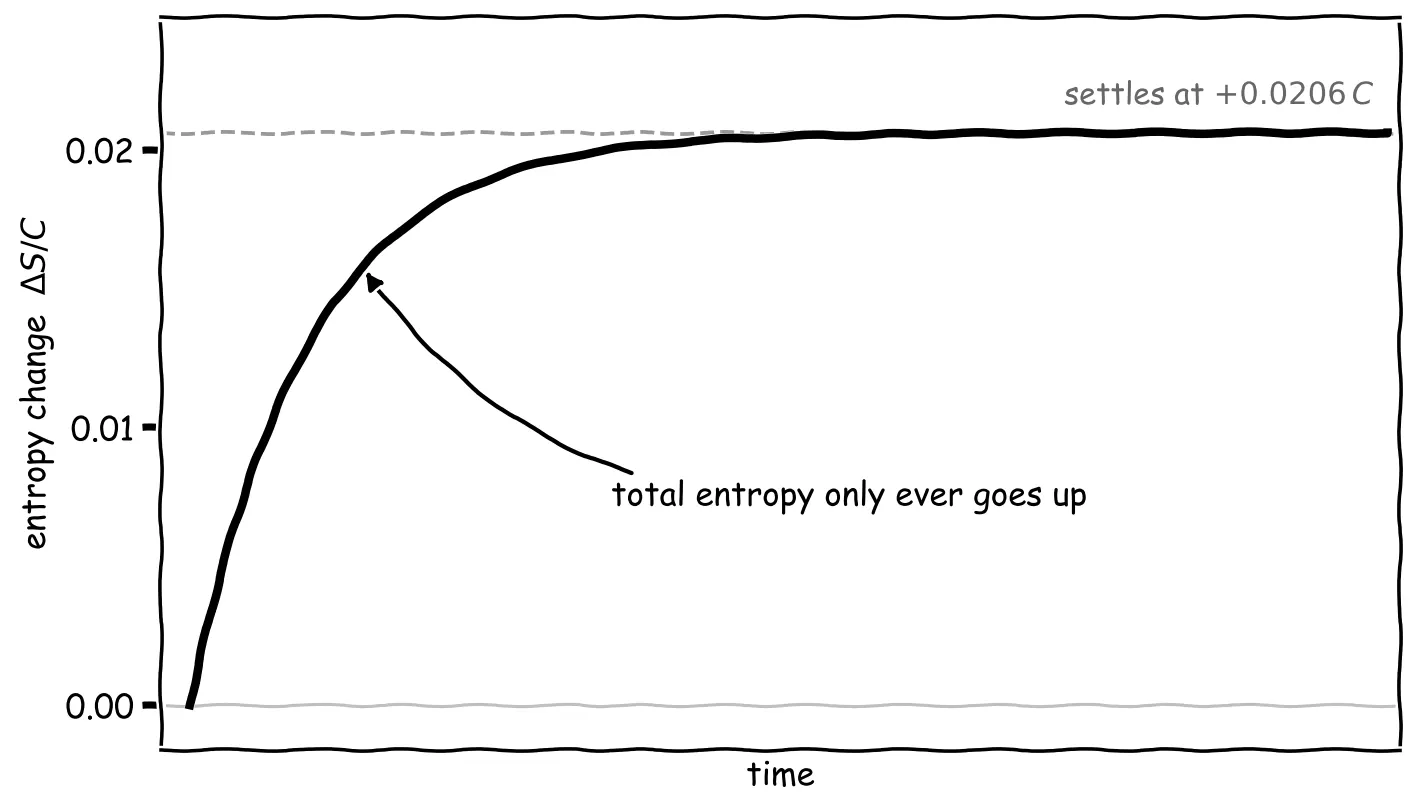
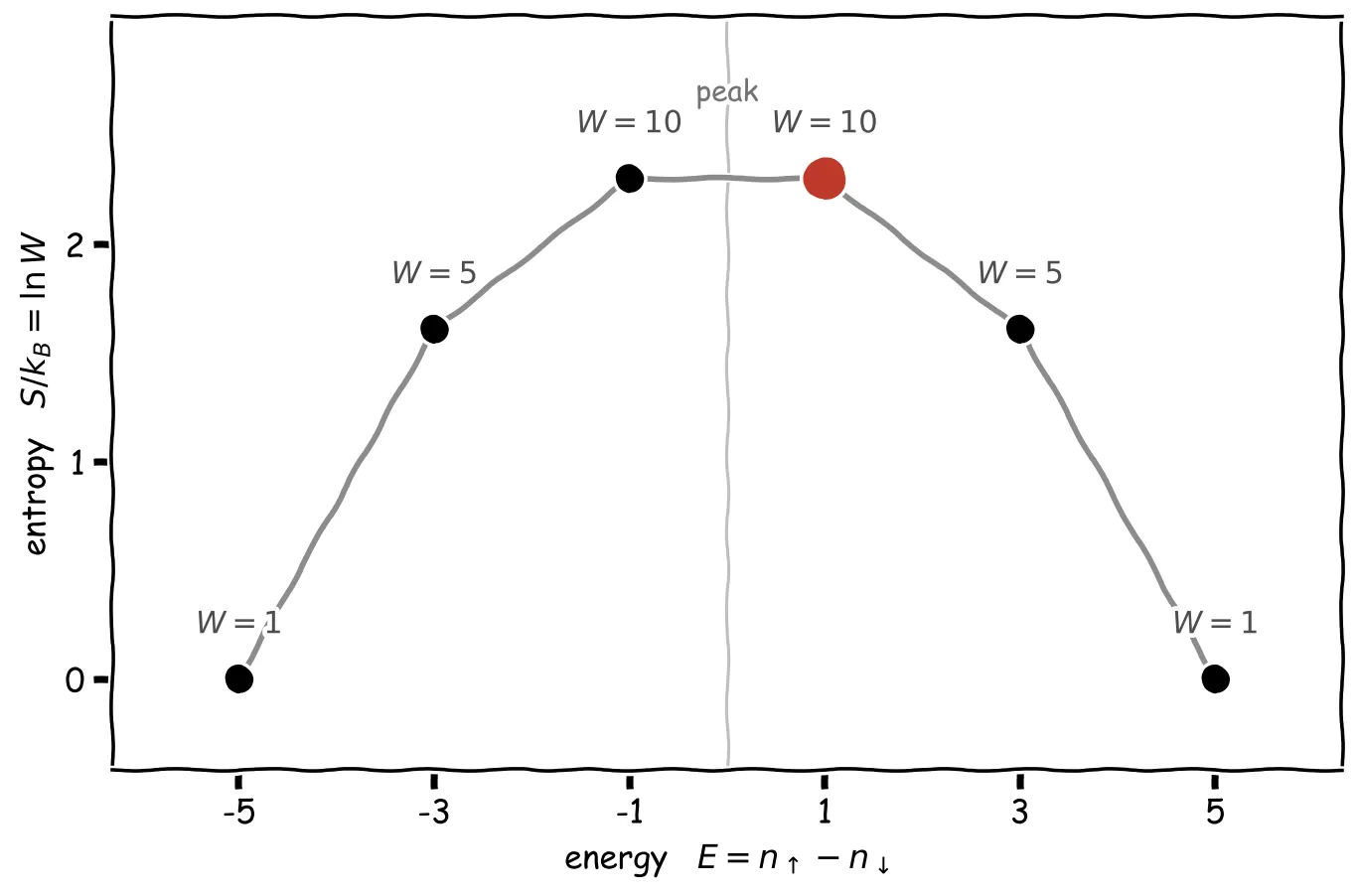
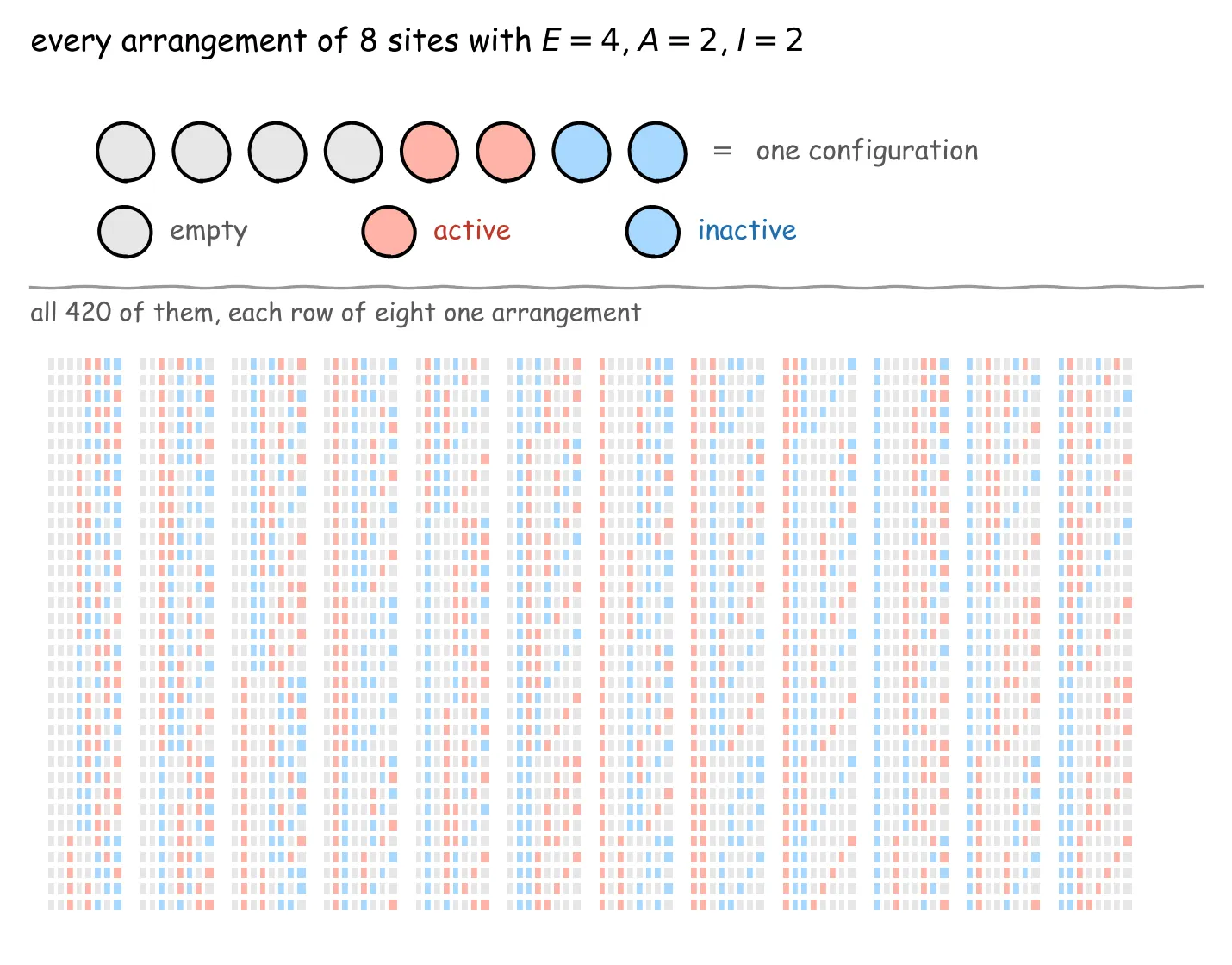
Clausius (1865)¹ defines a quantity called entropy. By decomposing physical processes as a chain of engines, he shows that entropy always increases for irreversible processes. For reversible processes like Carnot's ideal engine, the change in entropy is zero. But when an irreversible process occurs, entropy can never decrease unless energy is applied to a system. This is what is known as the second law of thermodynamics. And whilst entropy itself may not be measurable with a thermometer or ruler, it is still a useful concept since we can calculate derived quantities from it that are directly measurable. I've written previously quite vaguely about 'life as entropy'. This was an idea motivated by Schrödinger (1944)² through the concept of negentropy . Through negentropy, life seems to maintain order by feeding on the energy around it, and reducing its local disorder. But up until now, I've been confused about what this actually means in detail. And so one way I'm trying to understand this is through models.…