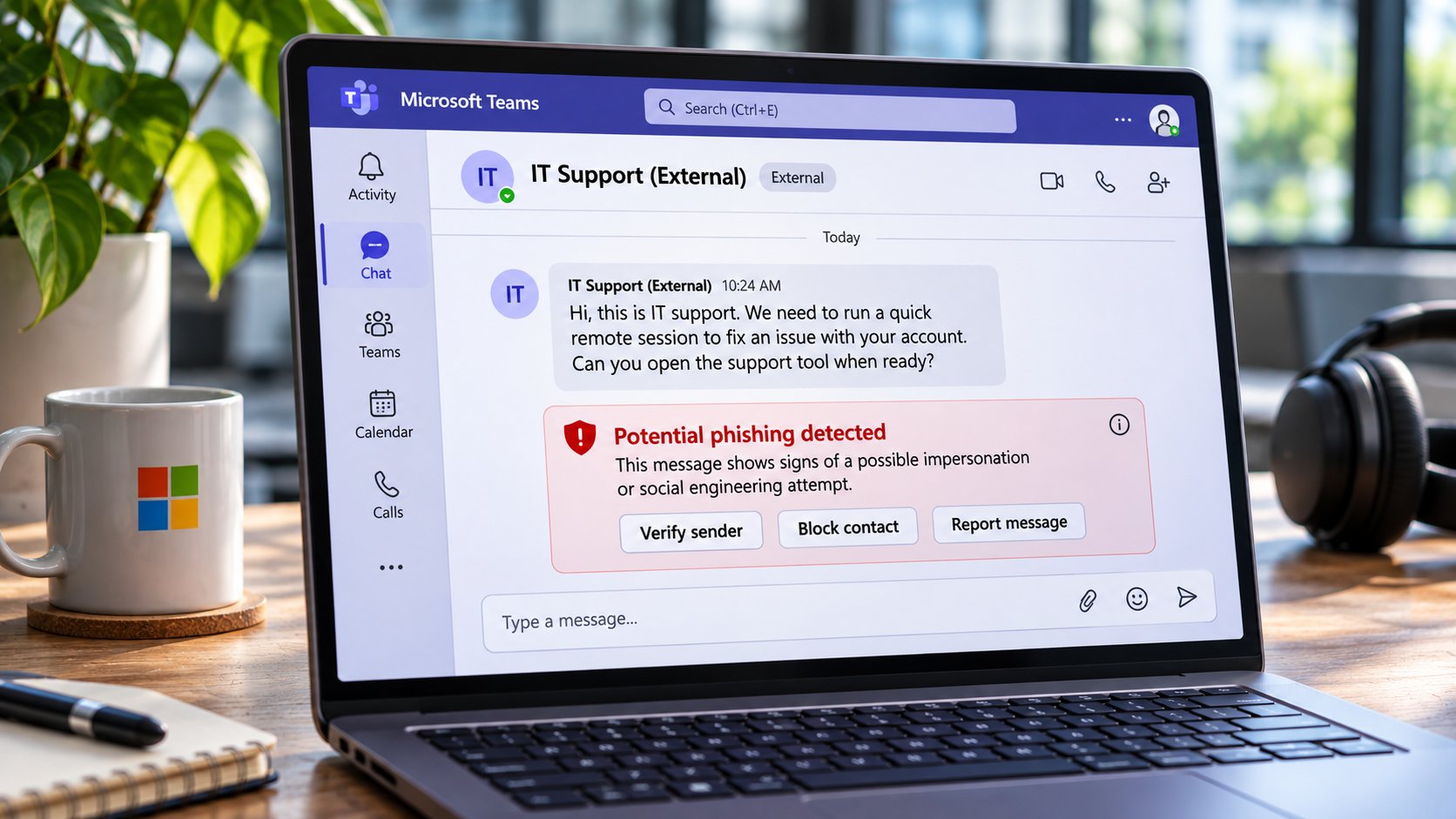
A message from someone claiming to be IT support lands in Microsoft Teams. There is no suspicious link or attachment, just a request to launch a remote-access tool.
Microsoft’s new AI phishing detection is designed to spot the deception in the conversation itself.
The protection analyzes chats with unfamiliar external contacts, looking for phishing, impersonation, and social engineering attempts that traditional link scanning can miss. Targeted Release began in early November, with worldwide general availability expected by mid-December 2026. No administrator setup is required.
Microsoft is also preparing deepfake warnings for Teams meetings, but those will work differently. Organizations must select and configure certified third-party providers to analyze potentially manipulated audio and video.
Microsoft’s Oct.…