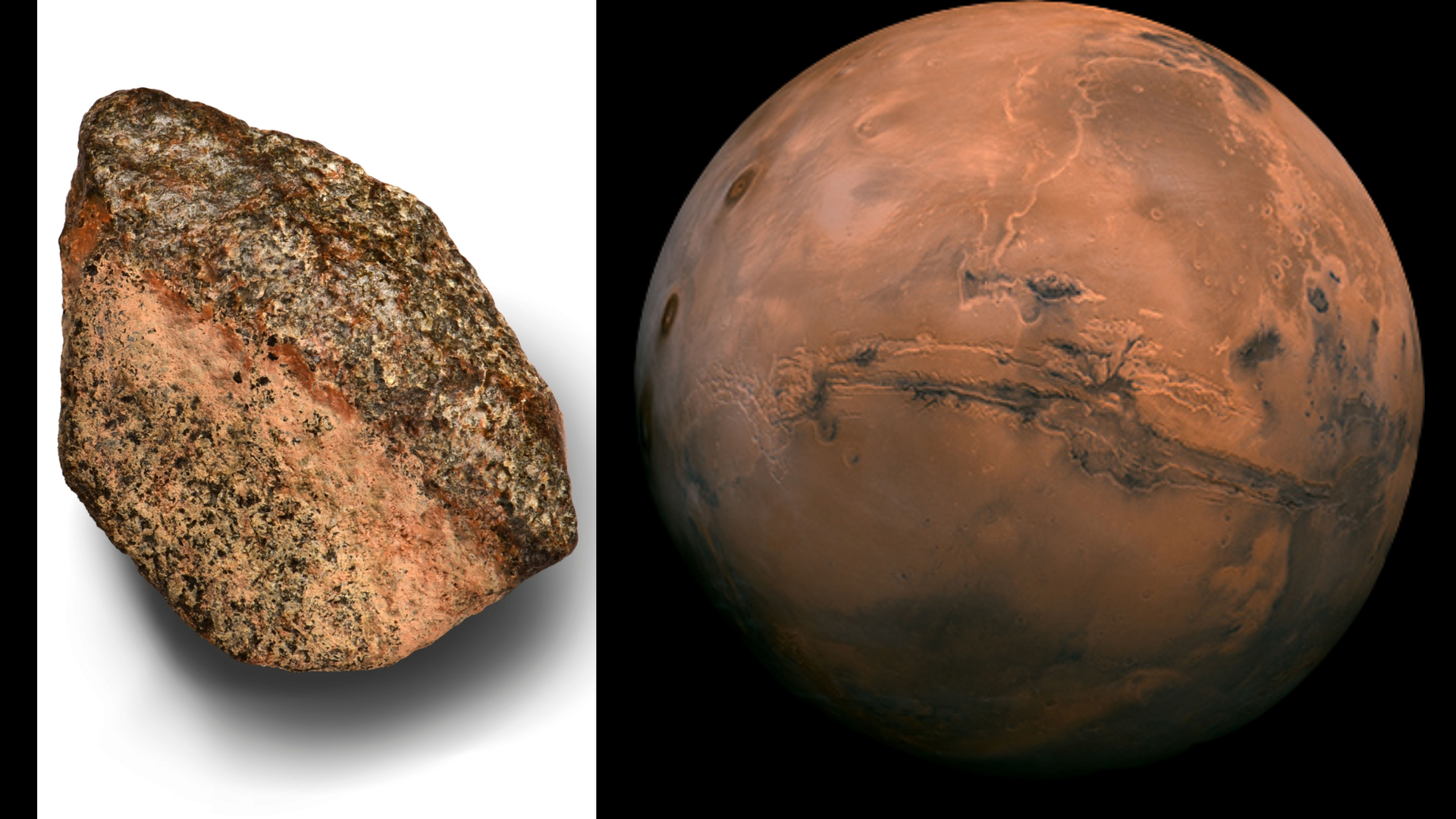
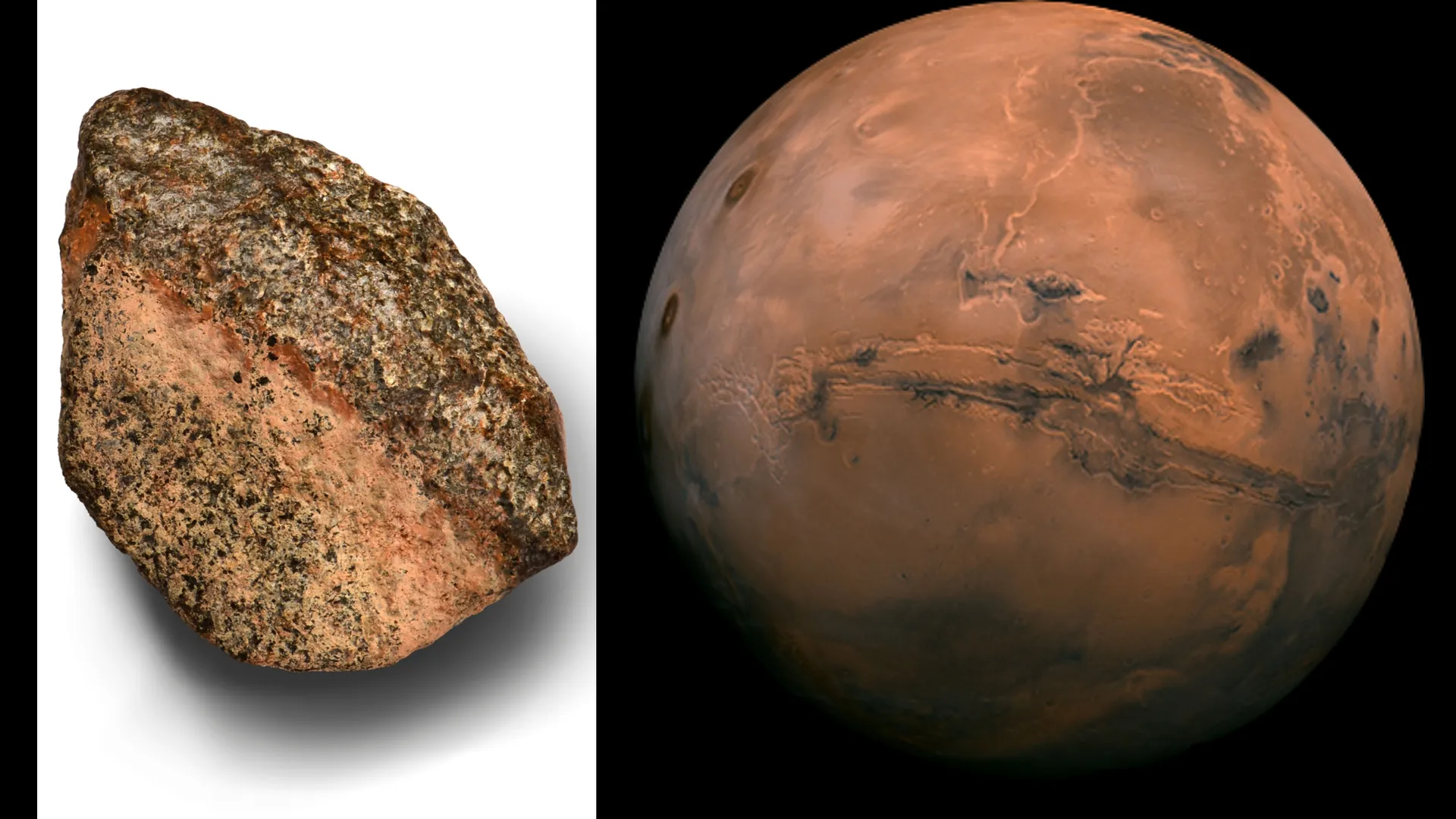
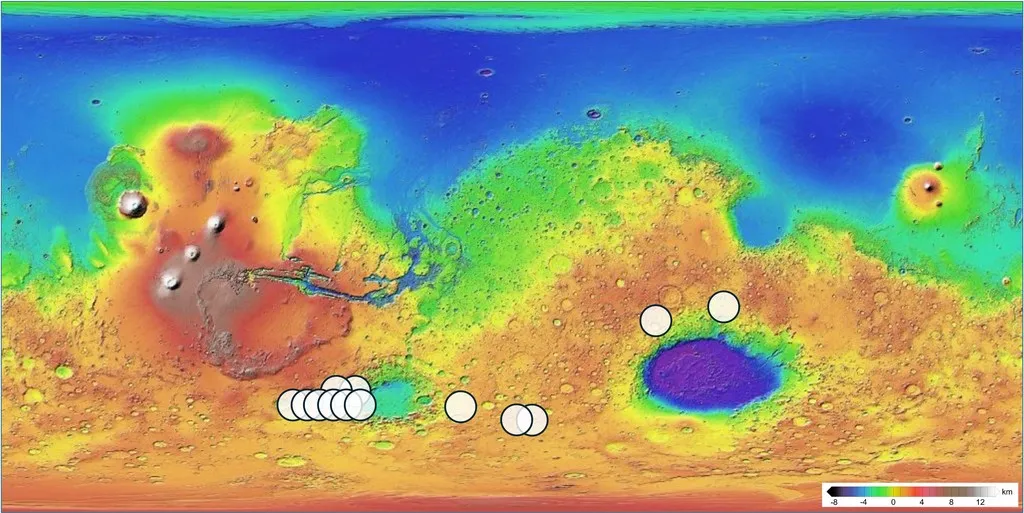
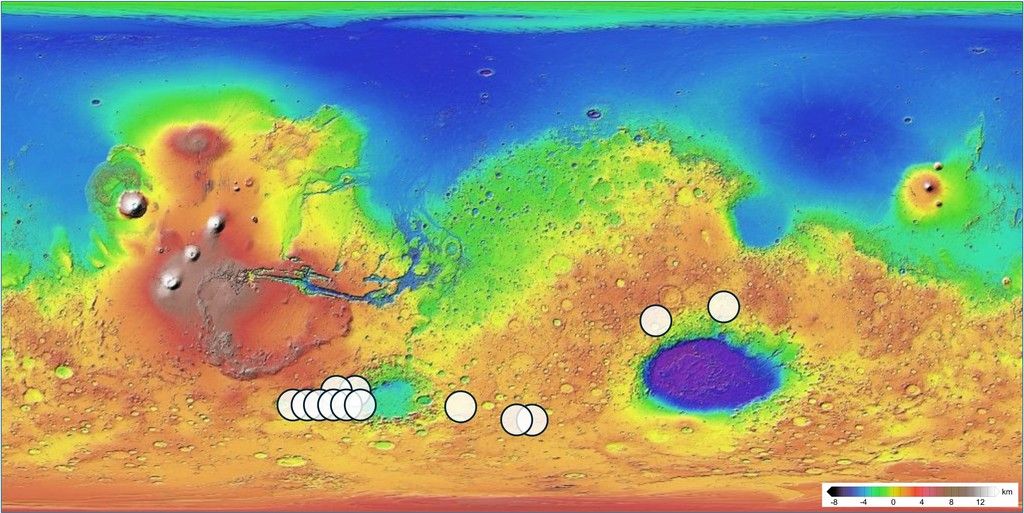
Teghaza 001, a 4.1-billion-year-old Martian meteorite, was analyzed to study its mineralogy and chemistry, revealing clues about the formation of Mars' ancient crust and its interaction with water. (Image credit: Darryl Pitt / Maine Mineral & Gem Museum)
A rose-colored rock discovered in the Sahara Desert may hold some clues to Mars' ancient geological history.
The
meteorite , named Teghaza 001 after the salt plain in Mali where it was discovered in 2022, weighs roughly 1.8 pounds (800 grams) and formed more than 4.1 billion years ago. Blasted off
Mars by an impact before eventually landing on Earth, it is one of the three oldest Martian meteorites ever found.
The extraordinary age and unusual mineral composition of Teghaza 001 offer a rare glimpse into the formation of Mars' early crust and how volcanic materials may have been altered by water, according to
a statement from NASA’s Jet Propulsion Laboratory in Southern California.
"It was only after we started looking closely that we realized this…