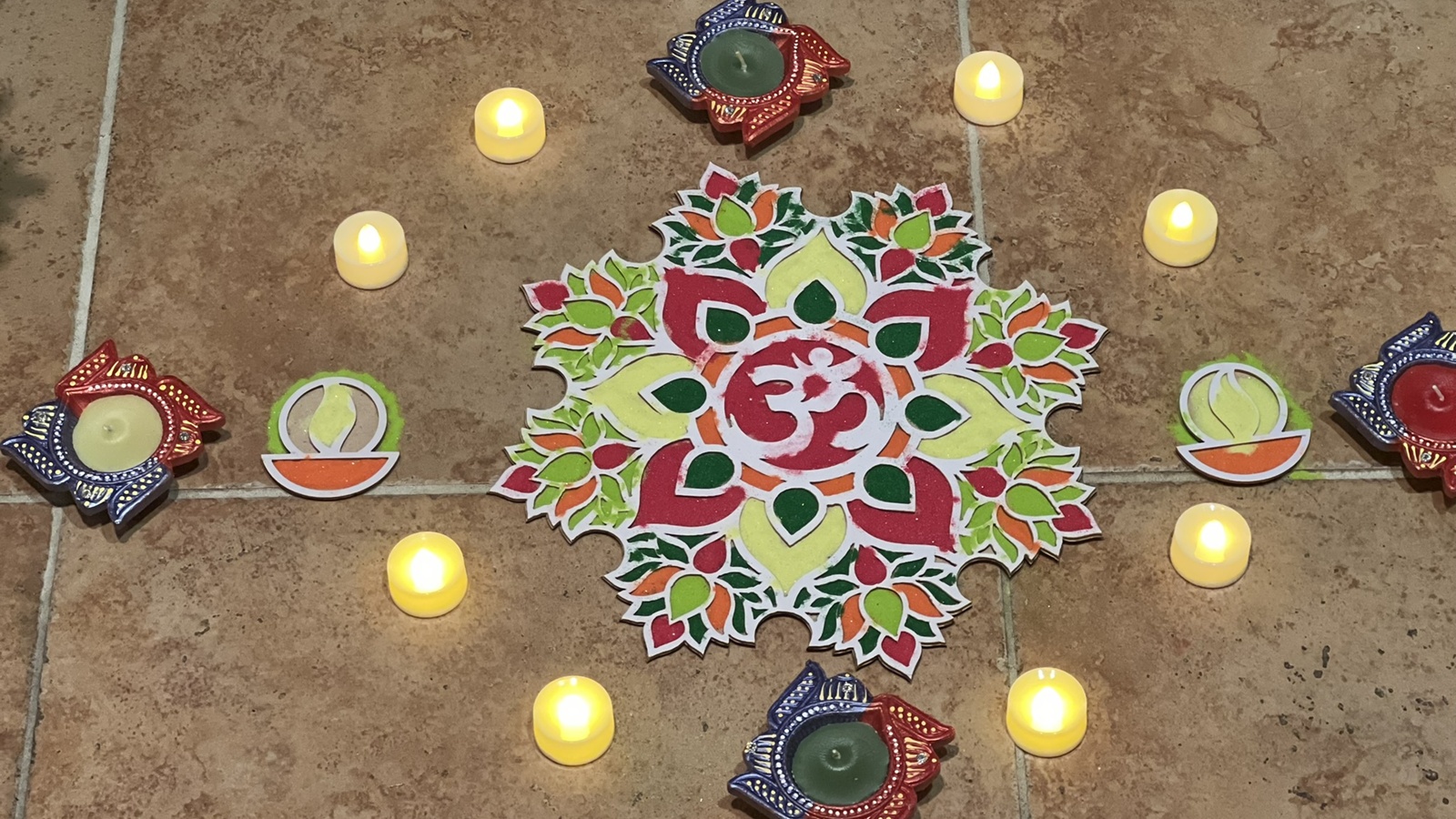
T he festive season in India begins with small wall paintings, rangolis , alponas , or kolams in courtyards and at home entrances. Traditionally made with rice powder, atta and lentils, these designs were also believed to feed birds, insects, and ants looking for food in the early hours. Over time, more colourful patterns and interpretations of these colours emerged.
Kolam, particularly associated with southern India, often features geometric, symmetrical designs made with rice flour to create delicate white patterns.
Around Diwali, marigolds, which are abundant during the season, their petals, and other flowers, coloured powders, kumkum, haldi, rice paste, geru, chuna, and atta are used to make beautiful rangolis as a symbol of welcoming and auspiciousness.
In West Bengal, around Durga Puja, vibrant red-and-white alponas illuminate homes and community spaces.
Ecological belonging
Seasonal blooms of white, red, and yellow chrysanthemums, marigolds, hibiscus, and roses come alive, turning verandahs and…