At a glance
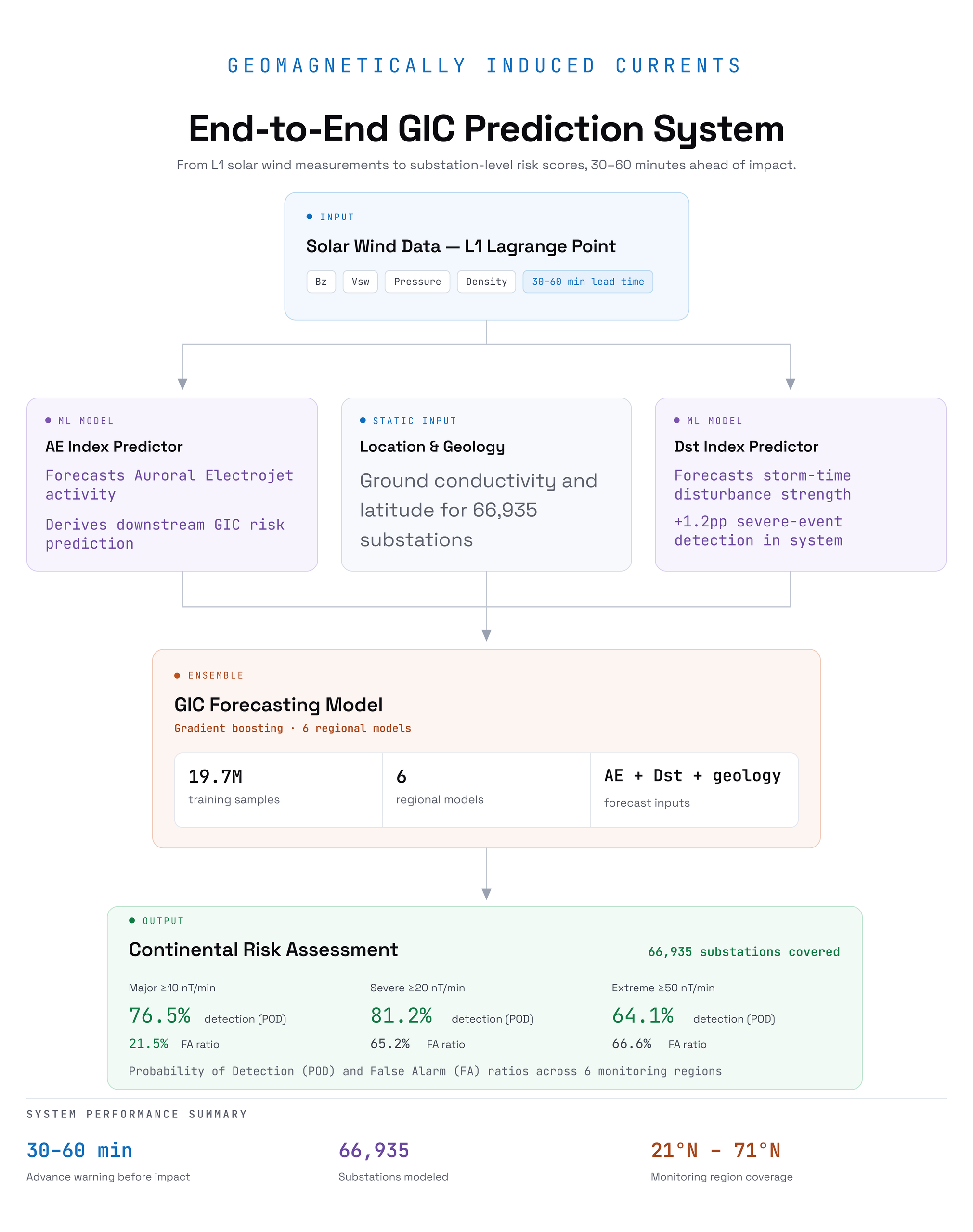
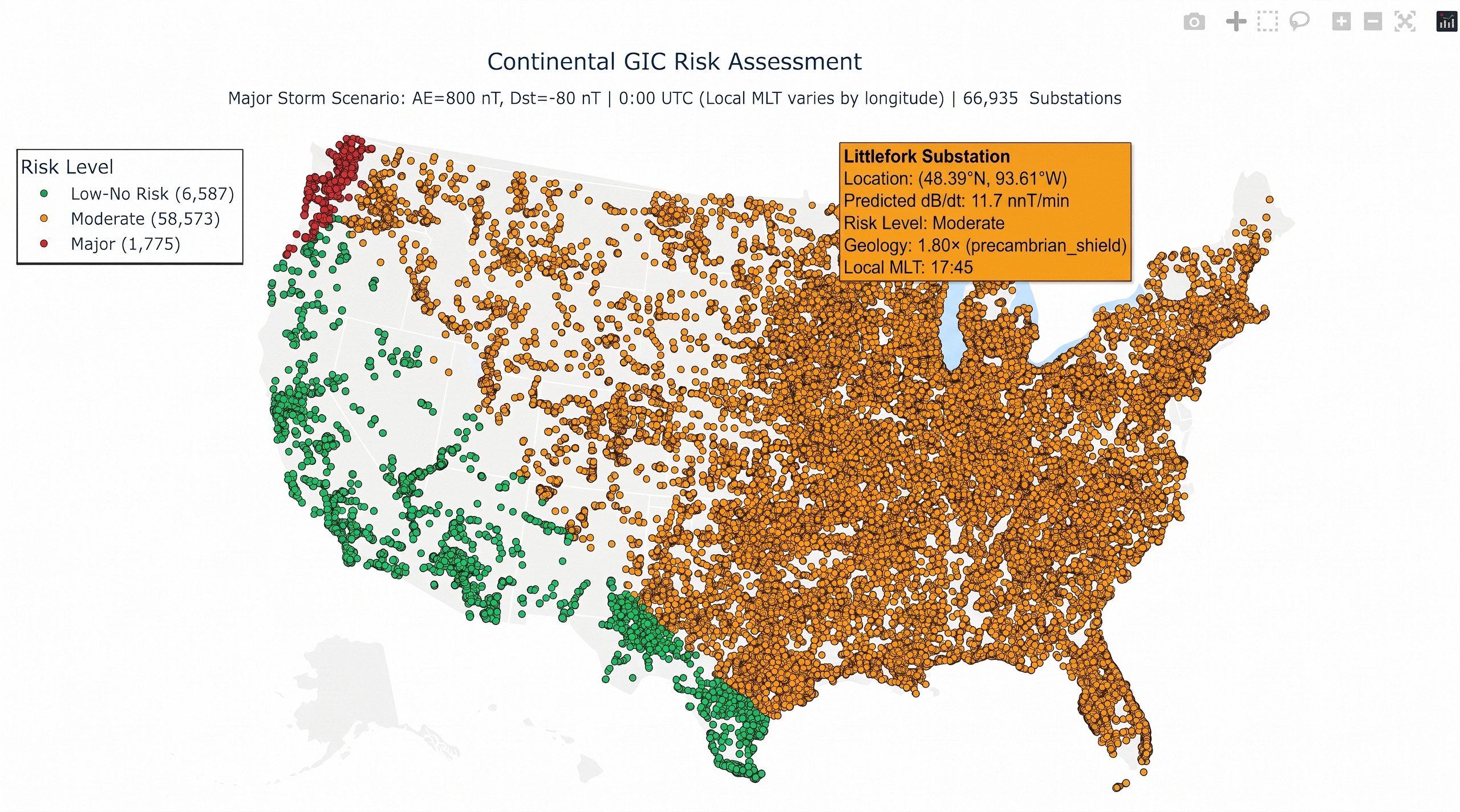
End-to-end forecasting: A machine learning pipeline uses forecast-time solar-wind information to generate location-specific risk estimates for 66,935 substations in the continental United States.
Physics and place: The system combines Auroral Electrojet (AE) and Disturbance Storm Time (Dst) forecasts with local latitude, geology, and ground conductivity.
Advance warning: The pipeline detected nearly 80% of major space-weather events during the evaluation period and can warn grid operators 30 to 60 minutes before a specific risk appears.
Forecasting a threat to critical infrastructure
During the May 2024 geomagnetic storm, utilities across North America prepared for possible impacts as auroras extended far beyond their usual range. The storm would degrade GPS accuracy and satellite operations, impacting farm operations in North America and Europe.…