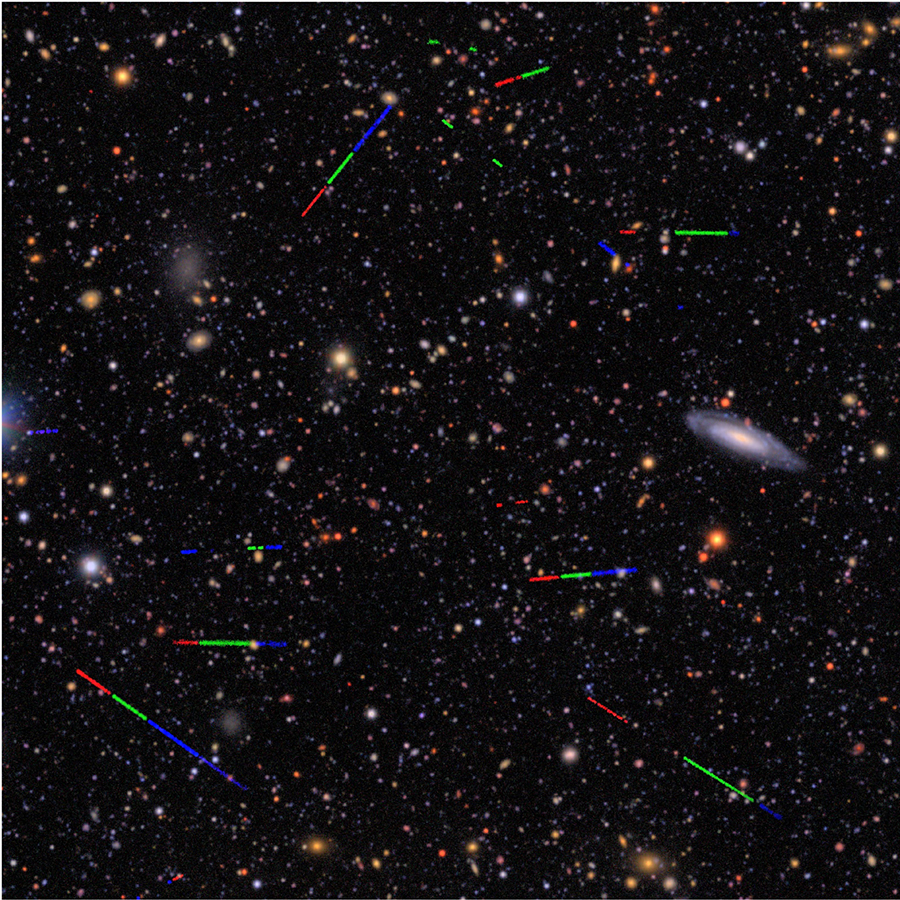
The Rubin Observatory has detected thousands of new asteroids, including several that spin a lot faster than expected for typical rubble piles.
Update (October 28, 2026):
At the meeting of the Division for Planetary Sciences in Spokane, Washington, Dmitrii Vavilov (University of Washington) updated the tally of record-breaking rotating asteroids, first presented earlier this year (see story below). With new data from the Vera C. Rubin Observatory, Vavilov reported that the totals now stand at 66 super-fast rotators and six large asteroids that spin around within 10 minutes.
Vavilov added that all of these large asteroids, rotating at a rate that should bring them close to breaking up, must be made of something stiff, like rock, to hold them together. Yet they are classified as C-type , a classification that also applies to the “rubble piles” that have received recent spacecraft visits: Benny and Ryugu.…